I’ve been thinking about audience recently. If you’re reading this, who are you? A reader, a writer, someone who’s come to this because you know me from my education work, a member of my family who reads whatever I write, either out of curiosity or familial reflected glory – what my Jewish mother would call shepping naches or kvelling. You don’t have to buy a book to read this blog, or make a big time investment. It will take you just a few minutes if you get to the end. It may be that you just happened upon it and, if I’m doing a decent enough job, hopefully I will have drawn you in well enough for you to stay.
A blog is a relatively rule-free thing, which makes it both a pleasure to write and frighteningly open. It can be an erudite argument, a serious commentary, or as in this one, just an accumulation of thoughts on a topic. In this sense a blog is a luxurious, wanton, delightfully unruly form. But the unknowability of the audience for a blog makes it hard to judge the tone and know whether you’re likely to be carrying anyone with you. With one decisive key stroke you might leave me.
If you’re still here, dear unknown reader, thank you very much. And now I’ll get back to why I’ve been thinking such a lot about audience. I’ve always written, from a very early age, but mainly just for myself, or for a teacher to mark or a parent to comment on. But then, after a long entirely audienceless period as a young adult, I started teaching, and found myself writing in small, experimental ways for other people – the occasional poem written specially for a class, a bit of doggerel for someone’s leaving do, a contribution to the Christmas panto.
It was when I had children that I suddenly found myself with a proper fully-fledged audience. I started telling stories and then writing ones that had the children in mind – Michaelmas Mouse stories for my toddler daughter and son, picture book ideas, and then later, when my son was at primary school, a book for him about a boy called Zachary, who is visited and befriended by a demanding, zany, perplexing but loveable grandpa-like figure who lands on his doorstep from outer space. I wrote a novel for my teenage daughter about a girl who is knocked down by a car and has to find new ways of living with a brain injury. I managed to get a children’s literary agent to take me on for these two books, but sadly, though I came close on a couple of occasions, I never managed to get a publisher for them – they didn’t think they’d attract a big enough audience.
When I started working for a teachers’ centre for English teachers, a few opportunities to write presented themselves. Running courses on classroom English, I always tried to weave in short writing experiments, exercises and activities that teachers could use with their students. Getting the teachers to try out the activities themselves was not only good fun for them, but also in my view gave them confidence and experience to apply in their teaching. I always joined in, and gradually accumulated a little collection of experiments in poetry and fiction – often sparked by another text – a parody mash-up of Pride and Prejudice and Cormac McCarthy’s The Road, a pastiche of William Carlos Williams’ ‘The Red Wheelbarrow’ all about an infuriating air-conditioning unit in a hotel, a memory in the style of a favourite writer (in my case Tim Winton’s opening of Cloudstreet).
These experiments had a fleeting audience, shared in sessions, laughed over and then put to one side. But I got a taste for some adult writing, shared with others in a workshop, and decided to do a Creative Writing MA. At Birkbeck, one night a week for two years, I began to take my adult fiction more seriously, and I’m sure that that was in no small part because there were people to share it with – a living audience for it.
The very first time I had to write a piece to share with my seminar group I had a sleepless night. Literally sleepless, which is quite unusual for me, someone who has had to face challenges at work, difficult classes and much more. I was terrified. But the terror was important. The fact of people reading my work was a catalyst for development. It forced me to up my game. I imagined the responses, stepping outside of myself to think about how someone else might react to that thing I’d just written.
Salman Rushdie said last year of a new writing project,
‘The infallible test of anything I write is embarrassment […] If I’m embarrassed to show it to you, then it’s not ready. There comes a point where I’m not embarrassed to show it and actually I’m kind of eager to show it.’
I love that idea of embarrassment as a driver for producing your best work! I will never be able to thank my fellow students enough, for their honest, open, serious engagement with my writing, whether it be to criticise, question, praise or, above all, to offer me opportunities not to embarrass myself.
I went on to write two adult novels and a collection of short stories, for which I have had a modest audience. Hooray! But now audience is right back in my head because, perhaps unsurprisingly, the arrival of two grandchildren has plunged me back into the waters of writing for children. I started telling a few stories and then writing some poems for my toddler grandson, Max. He has a wonderful device called a Tonie, where, by digital means, you can add stories and poems from afar. He can select Granny and Grandpa’s avatar, which sits on the top of the device, and by pressing it down onto the box, he can listen to whatever we’ve recorded for him.
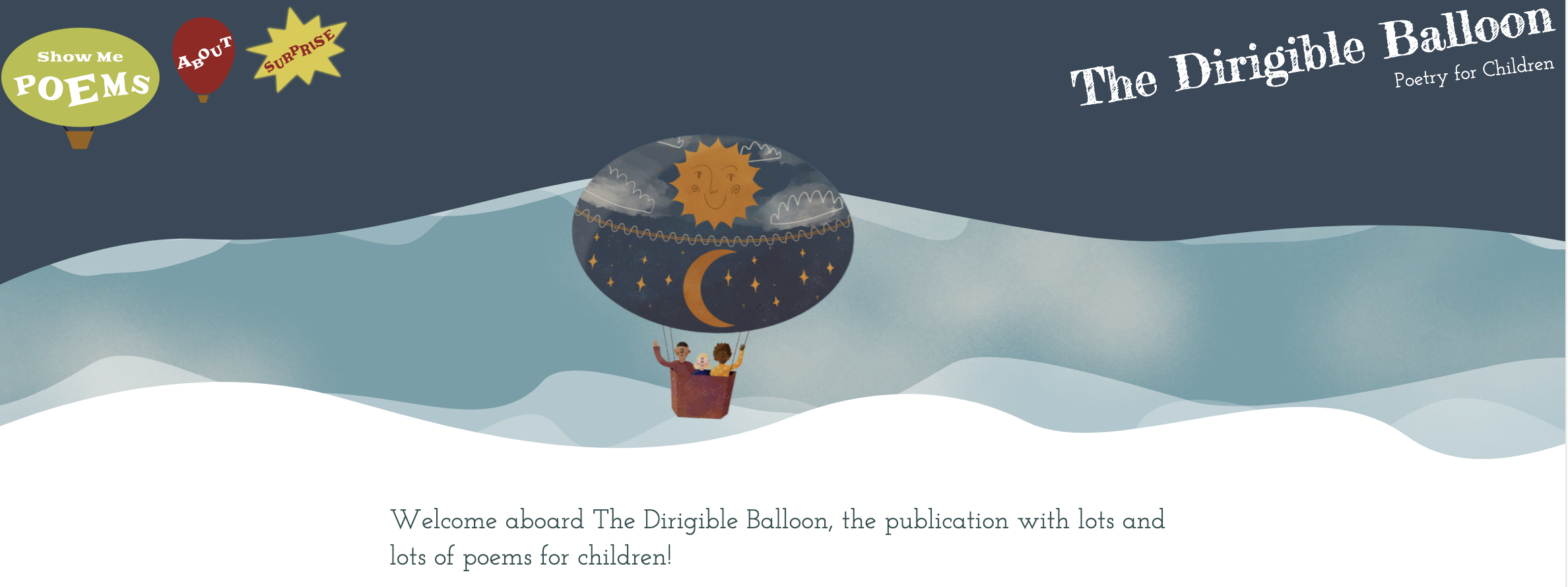
As one might imagine, he is the perfect audience for my efforts. He responds – with honesty. I know which of my efforts are his favourites and which barely get a mention, and the requests for more are an impetus to write. Recently I sent a couple of poems I’d written for him off to a wonderful children’s poetry website, The Dirigible Balloon, and was thrilled to have them accepted. Hopefully my audience will now encompass more children.
Just one last audience-related experience…I’ve written and had published a collection of short stories for young adults, An Inspector Called and Other Stories. (For more on this, see my blog) In the past, I might have bravely shared these with colleagues and, if they liked them, we might have gone straight to publication. But these days it doesn’t feel quite so simple. There’s a nervousness for writers and publishers about inadvertently causing offence, upsetting readers, saying something too edgy or writing in a way that is ambiguous enough to be misinterpreted. So, in this case, as well as sharing stories with colleagues, friends and family, as I always would, we put together a reading group of teachers to comment on the stories and the collection as a whole. Nerve-wracking, but thankfully the responses were very good and the book is now out. I’m especially excited that my audience this time will be young people in English classrooms.
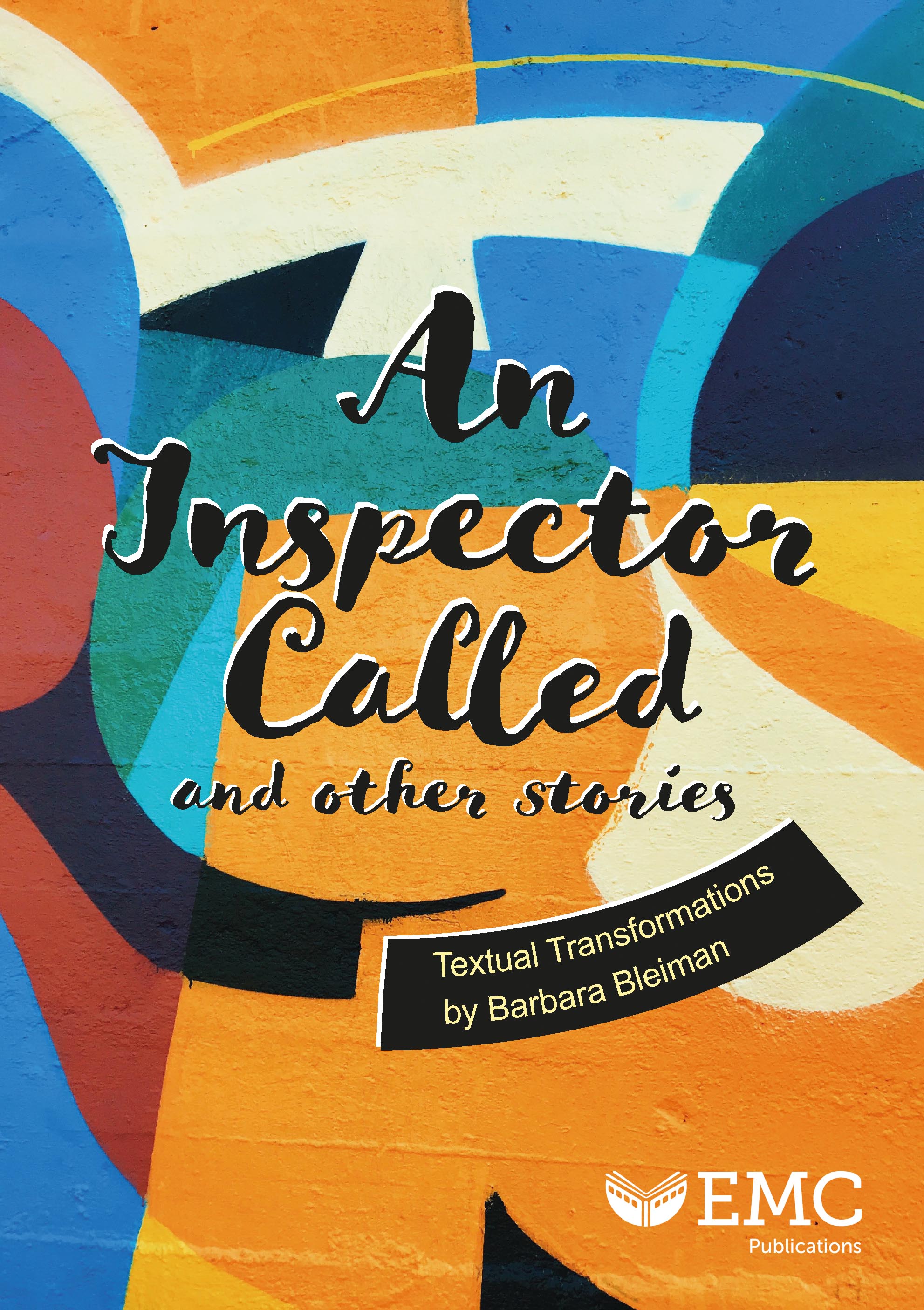
My aim in the collection has been to offer interpretations and angles on texts that they are required to study, some of which they probably find quite heavy-going. My stories try to offer something that speaks more directly to them. Pretty soon, I’ll start finding out whether I’ve done a good job and whether I’ve judged my audience well.
So, for me, the audience for writing is essential. It is the spark, the catalyst, key to development, vital for stepping outside of oneself as a reader to understand how others might see things. It’s a reality check, a source of anxiety and sometimes, when something you’ve written is liked by others, of great joy. Truth be told, I don’t write just for myself – I want to be read.
If you’re still here, thank you for staying. If you stayed, do feel free to comment and even perhaps break the anonymity of the online audience and tell me who you are. Mum, that doesn’t mean you, though, of course, feel free to share your maternal pride (or embarrassment) in private!
Barbara Bleiman
To find out more about my writing and work, visit BarbaraBleiman.com
Details of An Inspector Called can be found here
 Blue Door Press