Being ‘commissioned’ — if that’s the right word — to write this ‘Of Note’ blog for Blue Door Press set me thinking about the whole issue of notes. The word is a very old one, going back to Latin and Old English when it meant to mark…
Isn’t ‘mark’ an evocative word? Marks on cave walls: handprints, pictures of horses; marks on walls; graffiti; marks on wax, vellum, papyrus, parchment, paper and on digitised interfaces: screens, phones, watches.
Notes are partly what make us distinctively human.
By making notes, we join the ancient lineage of homo sapiens who have left their mark somewhere.
Notes from the past can seem unbearably poignant: love hearts and initials on trees and rocks and prison walls where their authors are undoubtedly dead; a timely reminder to the living of the emotional rollercoaster of being conscious.
Notes are emotional! They are full of feeling — even the most boring ones from tedious meetingsare
invested in the desperation to make a mark, to be heard, to be understood.
All this set me thinking about the ways in which notes have enriched my life.
In this blog, I outline four major points. Indeed, making my mark here has helped me realise how important notes are: they have a spiritual quality to them because they are all about making a mark.
Notes have helped me remember
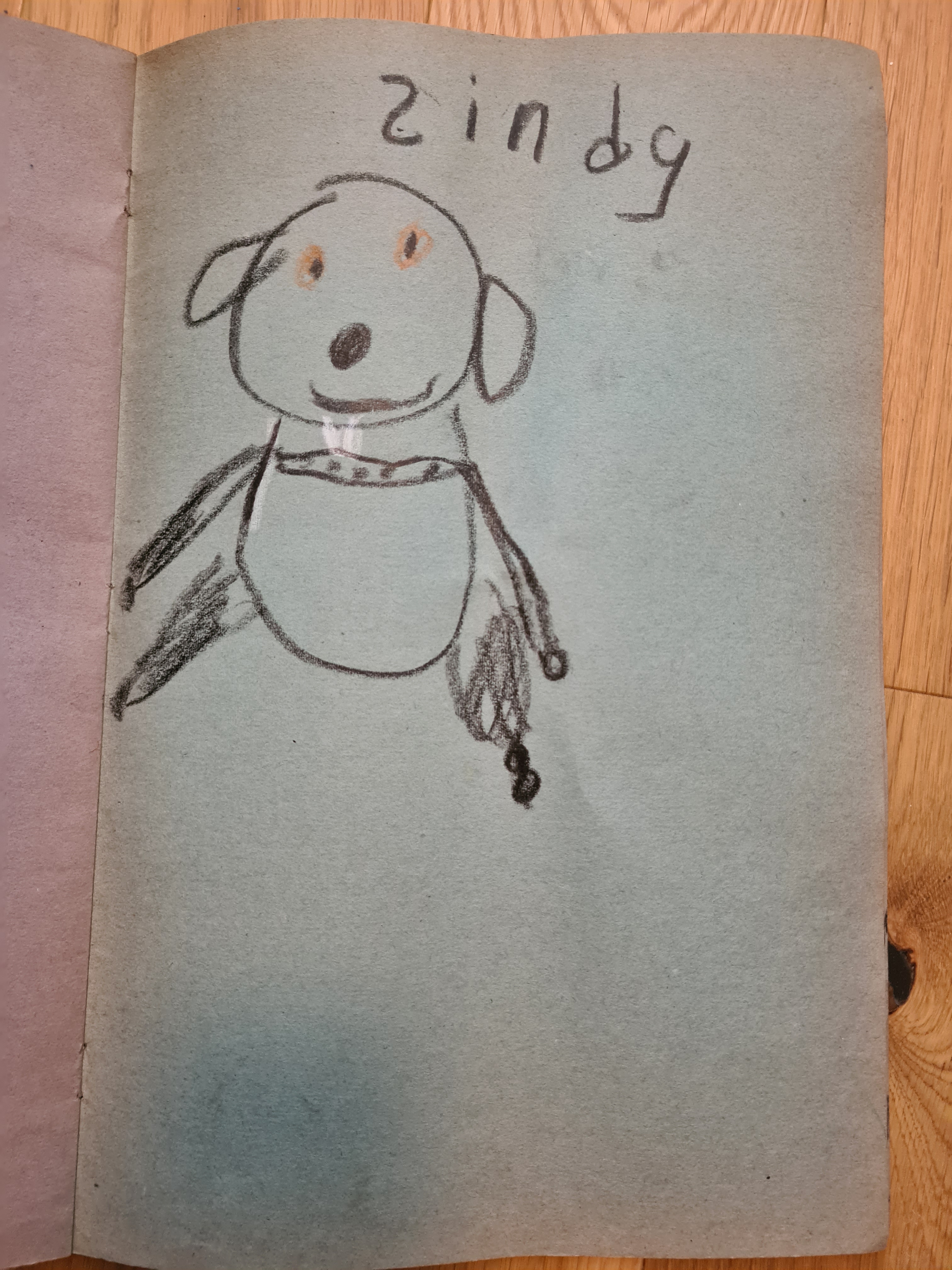
My grandmother, Ruth Gilbert (1919-2003) always encouraged me to write and draw, giving me as a six-year-old a big scrap book to put all my notes about life into. Here’s a picture and drawing I did of Sindy, their black Labrador that I loved so much:
My parents divorced acrimoniously when I was young, and my mother remarried.
I went to live with her and her second husband, my stepfather, in the suburbs of east London, Wanstead, which was then, if not now, classic ‘net curtain’ land, aspirational middle classes.
I was not happy at home and absorbed the message that my very survival depended upon doing well at school.
Both my parents had other children by this time, leaving me feeling unwanted.
Every morning for many years, I would wake up and revise all the topics I needed to know about by writing notes: reading the relevant text book or novel and making notes. These notes were an advanced form of copying, but I learnt a lot from them.
They became my memory. I achieved highly in exams because I used these notes to learn vocabulary and a lot of facts about my school subjects, history, science, Latin, French, geography.
Notes are my safe space
In the latter half of my teenage years, I realised that notes could be more personal, and I began writing in notebooks. I recorded my observations, copied quotes from books I read, kept a diary, jotted down phone numbers and addresses in these books.
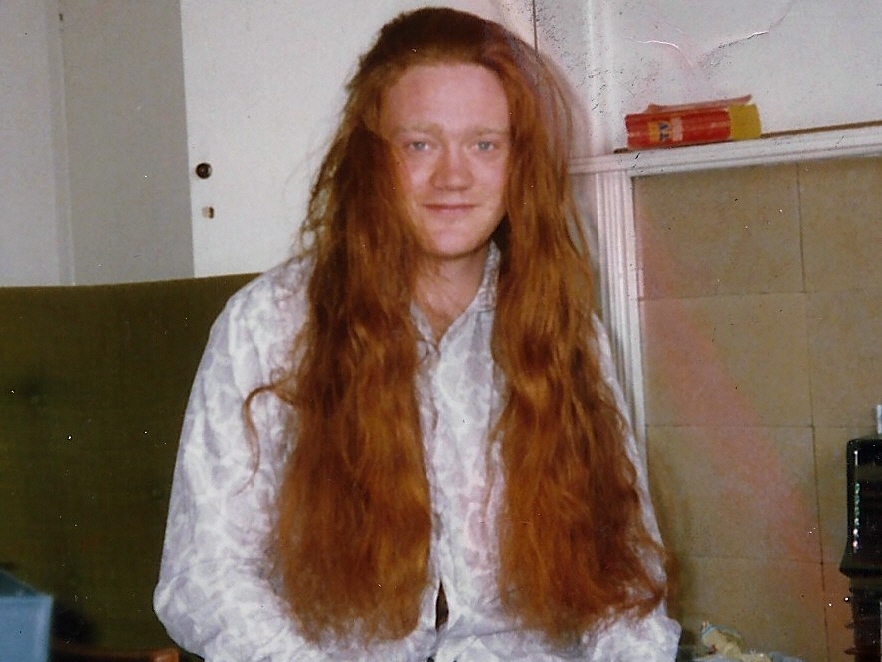
Overwhelmingly these notebooks had a poetic resonance for me. I studied English Literature at Sussex University, grew my hair down to my waist (see photo above), and sought refuge from a lot of anxiety in reading William Blake and the Romantic poets, Joseph Campbell, Carlos Castaneda, John Fowles, Donna Tart, JD Salinger and others.
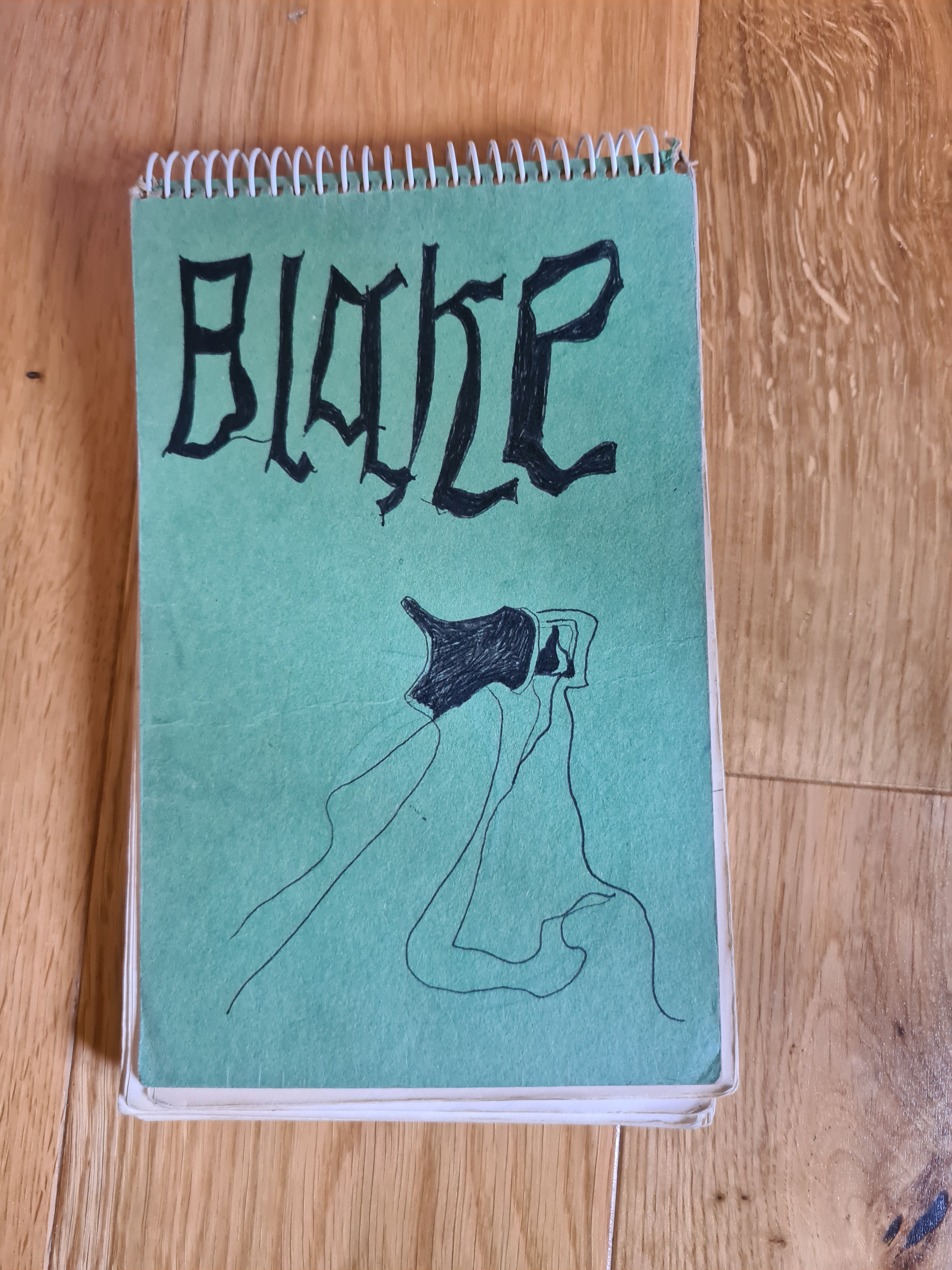
The notebooks were filled with my perceptions of the world filtered through these writers. Here’s the cover of my one of my notebooks from 1988.
Now these notebooks have become part of my memory, because I itemised the minutiae of my lived experiences.
I can dip in and out of them and learn what was happening to me back then. Although as you would expect they are full of navel gazing, they offer me an important window on that time. I have very few photographs from my childhood and teenage years, but these notebooks somehow fill the gap.

Notes are therapeutic
My personal note-taking has continued throughout my life. I write a diary, a personal diary, virtually every day now early in the morning for about ten-fifteen minutes. I handwrite my notes onto a Rocket notebook which is re-usable: I take photos of the pages and upload them as PDFs to my cloud storage on Dropbox, then I wipe the washable ink off the Rocketbook, obliterating all that I’ve written. I find this whole process deeply therapeutic.
These notes are my own private space to say whatever I want to say, and I say it in handwriting. I used to type my diaries but when I started doing mindfulness meditation in 2016, I began to notice that there can be something deeply meditative about handwriting personal notes for yourself.
It’s a form of ‘self-care’; by handwriting about what you are thinking and feeling, you take something out of your body I think; you carve words out of your body and onto the page by handwriting your deepest, truest thoughts.
Notes have liberated my imagination
Notes are a space to dream the impossible, to doodle, to scribble, to draw, to quote, to annotate, to feel free to say the unsayable. They have liberated my imagination throughout my life to remember what I really need to remember, to say what I feel, to set goals, and to make sense of the chaos of life.
 Blue Door Press