New Wine in Old Bottles – Writing Fiction for Young Adults

Coming up with a new idea for a book is always exciting. My latest adventure in fiction, though, is quite different to anything I’ve done before. You see, although I write fiction,  I also work for a teachers’ development centre for English teachers. While most of my time is spent working with teachers rather than students, and most of my writing is classroom resources about texts by other writers, I recently decided to have a serious, full-throttle go at writing fiction for students. I’ve written a few short stories for a YA audience in the past, one or two of which have found their way into anthologies but this time it’s a much more serious enterprise – writing a whole collection.

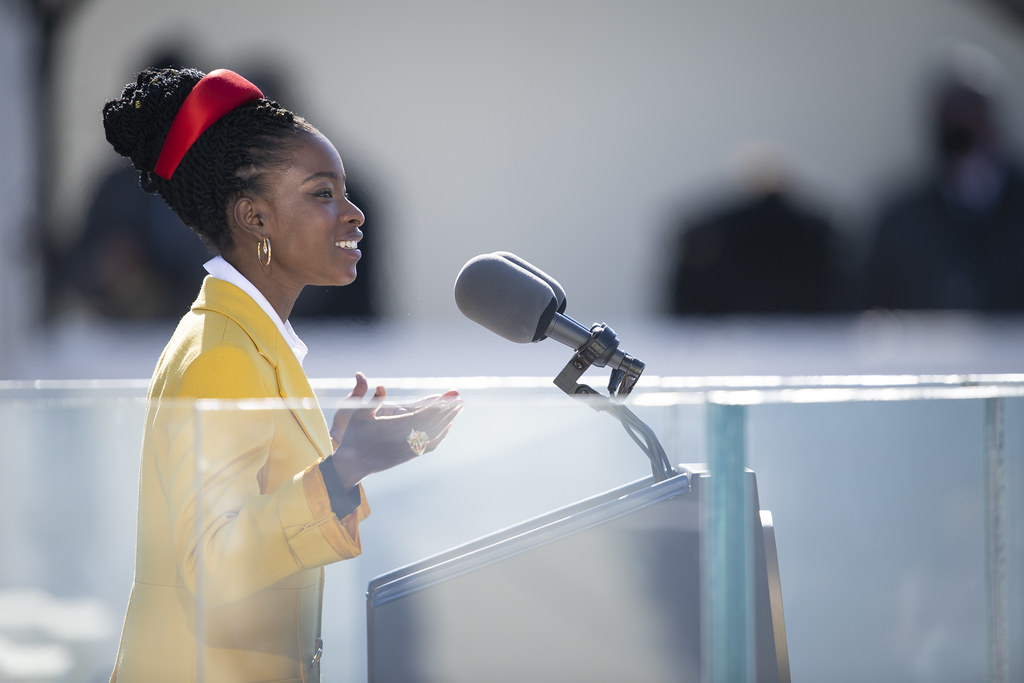
 Where did the idea come from? I’ve been working recently on publications in a series called Cultural Conversations, the idea being to show students how texts talk to each other over time; how they’re part of long traditions, rather than standing in isolation. The resources bring together texts that are considered to be iconic and culturally significant with others that have been inspired by them, drawing on their themes, characters, narratives, archetypes and conventions. So, as an example, Homer’s Odyssey is brought together with the many contemporary re-envisionings by writers like Derek Walcott, Simon Armitage, Margaret Atwood or Madeleine Miller. And Amanda Gorman’s poem for the inauguration of Joe Biden is read alongside Maya Angelou’s ‘Still I Rise’ that inspired her work, and in relation to the other iconic American texts that she paid homage to.
The most recent publication in the series, yet to be published, is on Antigone. Supported by a grant from the Classical Association, we commissioned four writers to produce new work based on Sophocles’ play. Poets Valerie Bloom and Inua Ellams, fiction writer Phoebe Roy and playwright Sarah Hehir have all written texts for 11-14 year olds inspired by the Greek play. While liaising with the writers and discussing their work, I thought I’d try my hand at a short story myself and ended up writing ‘Being Antigone’, a story about a contemporary school girl whose own life has some echoes of the original. I then wondered whether I might try doing some other ‘versions’, talking back to the famous texts that school students often find themselves studying.
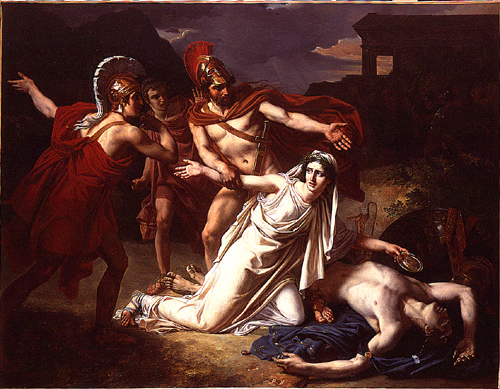
Antigone – painting by Sébastien Norblin

I was instantly captured by the idea, in part because it tied in closely with something that’s been preoccupying me for quite some time . When Michael Gove was Secretary of State for Education, his mission was to radically alter the curriculum, especially at GCSE.  Gone were American authors such as Arthur Miller or John Steinbeck. All students were required to study a pre-twentieth century novel. Some kinds of writing were proscribed, others were side lined, and in the supposed cause of ‘driving up standards’, ‘challenge’ and giving students ‘cultural capital’, lots of texts that enthused students and gave them a love of literature were ruthlessly excised. Ensuring a rich mix of diverse writers of different cultures and genders was not high up the minister’s agenda.

So, students are currently reading a diet of mainly canonical texts, which are not always suitable, not always accessible, often seriously hard work rather than pleasurable for all students in that age group. The majority of the texts are by dead white men.

My ‘versions’ idea suddenly sprang to life. What if I could write lots of different angles, re-tellings and interpretations of these texts , to open up new ideas and ways of reading them? My stories could act as fresh ways in; they could offer the viewpoint of a character left on the side lines, be prequels or sequels, pastiches or serious imitations, updated versions or adaptations. Equally, they could offer many different perspectives – for instance female views and voices alongside male ones, with characters and settings that are sometimes marginalised in those canonical texts, at least some of which reflect the realities of students’ lives.

I got started on the first stories soon before Christmas, sending them to colleagues for comment before committing to the whole project. Each time a story came back with a thumbs up, I was energised to have a shot at another, moving from Jekyll and Hyde and A Christmas Carol to The Tempest, from a Shakespeare sonnet to a poem by Thomas Hardy, from An Inspector Calls to Oliver Twist. It’s been a lot of fun writing them and the scope for writing in different genres – ones I’d never tried before – has been exhilarating, taking me out of my fiction-writing comfort zone. An Inspector Calls has become An Inspector Called, where a class, reading and studying Priestley’s play, suddenly find themselves, like the characters in the play, experiencing a spookily disturbing moral wake-up call. Oliver Twist is seen through the eyes of the Artful Dodger and for Macbeth, the story of the teenage Fleance, who only speaks a few words in Shakespeare’s play, is filled out. I thought that young people might be interested in the kind of dangerous world that a boy of their own age would have had to navigate to stay alive.

The Artful Dodger and Oliver

I have looked for angles that might be enjoyable for a young adult audience but not all the stories have a teenage perspective or protagonist. Hardy’s ‘Neutral Tones’, for instance, imagines the loss of love at the end of an adult relationship, the Nurse in Romeo and Juliet is given a narrative of her own, and one story is told by an ex-teacher, now a writer. In each case, I’ve been juggling lots of different elements –  how to use the source text itself and do justice to it, the teenage audience (alongside the teacher audience who will read it in the first instance and then share it with their students) and my own aesthetic judgements about what might make a good story and how I want to write it. Not easy holding all these things in mind, all at once, but it’s been immensely enjoyable to have a go at it.

The idea of intertextuality is at the heart of all literary creative endeavour. It’s also at the heart of all literary study – we appreciate Shakespeare for what he’s done with source material, for how he uses and adapts existing genres, for how his representations of race or gender compare with that of his contemporaries, for how his work has been interpreted, re-fashioned, drawn on for inspiration across the centuries. Likewise, all writers are constantly re-inventing traditions of writing, ‘putting new wine into old bottles’, as Angela Carter described it. In this project, I’ve been putting some new wine – hopefully rich-bodied and tasty rather than unpalatable and vinegary –  into a crate of bottles by a range of different writers and, along the way, offering new young readers an inviting way of tasting some old vintages.

Barbara Bleiman

26th April 2022

Of Note: Gratitude

By Annabel Chown

Today is Thanksgiving. It’s been a tradition in the United States since 1621, when the pilgrims celebrated their first successful corn harvest, in Plymouth Colony, Massachusetts. This national holiday has a history too complex to uncover here. But for many Americans, it’s a day on which to express gratitude and thanks. And as a British person, I too often reflect on this in late November.

Gratitude. A rather overused word. An eye-rolling cliché. Associated with pricey journals, T-shirts and mugs emblazoned with cheesy slogans. Plus, with all that’s going on in the world right now, there is much not to be grateful for.

But research (for example, by psychologist Dr. Robert A. Emmons, of the University of California, Davis) has shown practising gratitude actually works. Doing so can lead to an increased sense of wellbeing, and help protect us from stress and depression. Humans have a negativity bias, which means we’re wired to notice problems. A gratitude practice acts as an antidote, connecting us to the parts of our brain associated with positive thinking and reinforcing the neural pathways that boost resilience and optimism.

There are many ways you can practise: you could visualise what you’re grateful for, savouring whatever images bubble up. Or have a conversation with someone close, where you each share what good things happened that day. Or write a list.   

The latter is my favourite. Before bed, I’ll jot down three things I’m grateful for. Specific, not generic, ones. Yesterday’s were the delicious homemade granola I had for breakfast, the bright green moss I spotted on top of an old stone wall, walking back after the morning drop-off at school. And the kindness of the Brazilian male nurse, who held my hand throughout a routine MRI scan, because the machine’s tight tube made me horribly claustrophobic.

I find this practice particularly helpful when life feels heavy and challenging. Not to try and pretend, Pollyanna-style, that all is good, but to remind myself that even amidst hardship, there are still nuggets of goodness to be found. If we’re willing to seek them out.

A gratitude practice calls us to pay attention to life, to keep our eyes open and engage with the world, as we seek out moments of beauty, wonder, joy and connection. And as we hunt these down, we might also start to discover them in unexpected places. Like I did a few days ago, standing in the bitter cold of a deserted London square at dusk, admiring the bare black branches of a cherry tree.

The more we train ourselves to look for these moments, the more of them we uncover, widening our lens of what we can be thankful for. Which not only supports our mental wellbeing, but also infuses our creative pursuits. Because our writing or painting or photography will only become richer, the more attention we pay to the world around us. The more attuned we are to the pale orange of a pre-dawn sky, to the shape and feel of the porcelain that holds our steaming coffee in a favourite café, or to the smell of smoke on an autumn evening, the more we can weave these felt experiences into our creations. 

Gratitude is no cliché, really. Rather, it invites a deep engagement with the pulse of life and reminds us that alongside its darkness and horror is also so much goodness and beauty.

As the poet Mary Oliver, who spent much of her life paying attention to the world and writing about what she perceived reminds us, in Praying:

It doesn’t have to be 
the blue iris, it could be 
weeds in a vacant lot, or a few 
small stones; just 
pay attention, then patch 

a few words together and don’t try 
to make them elaborate, this isn’t 
a contest but the doorway 

into thanks, and a silence in which 
another voice may speak

What can the opera ‘Carmen’ teach us about domestic violence?

Rihab Chaieb in a modern production of Carmen

This question came to me after seeing a production of Bizet’s opera Carmen at the Proms (August 29th 2024). I was blown away by the power of the music, the singing, the acting, the staging and the story itself. Rihab Chaieb played Carmen, and interpreted the character using a feminist lens, eschewing the normal ‘femme fatale’ tropes that many productions opt for. Look, for example, at this representation of Carmen:

Significant research shows that women experience much higher levels of domestic violence than men, in terms of severity, duration and impact.

I felt this version of Carmen, Diane Paulus’s Glyndebourne production managed by Adam Terrance for this prom’s outing, really brought home how patriarchal structures and discourses were, and still are deeply oppressive to women. The modern staging revealed a militaristic, authoritarian society where the army appear to be policing their own people. In particular, in the absence of any ‘real’ work to do, the army’s chief occupation becomes sexually harassing, humiliating and trying to seduce the women working in the neighbouring cigarette factory.

Chaieb’s Carmen was a powerful woman aware of her sexuality and the way the world responds to it. She was also a vulnerable woman, who is portrayed as a victim of male violence. She is a beautiful girl who works in the cigarette factory and falls for ose for complex reasons. Jose is a tortured character. He is a confused soldier who has joined the army, leaving behind his possessive, woebegone mother. When Carmen gets into a physical fight with another girl from the factory over a man, she is arrested and Jose is commissioned to look after her. He becomes besotted with her teasing, seductive personality, dancing and songs, and then deserts the army so he can free and be with her.

Rather than being the destructive force she is often portrayed as, Chaieb’s Carmen is a more insecure woman, searching for certainty in a febrile world. Chaieb’s Carmen is attracted to the singularity of Jose’s love; his obsession with her.

However, we observe her grow and learn about herself as she tires of Jose’s clingy, jealous behaviour. In this production, her attraction to the superficial, showy bullfighter is presented as knowing. Her looks and gestures show she doesn’t take him very seriously. She ostentatiously performs ‘being in love’ with him. Her approach is emancipatory: she is clearly escaping Jose and his jealousy, rather than actually falling in love with the narcissistic bullfighter.

When Jose returns after seeing his dying mother, Carmen is adamant in her rejection of him. As a result, she is aware that she has more or less signed her own death warrant, but she chooses freedom rather than imprisonment. In this production, Jose strangles her to death — and doesn’t stab her as it’s outlined in the original script. The strangulation is both metaphoric and literal: a choking of the very breath that creates such sublime music.

This production of the opera teaches us about domestic violence because the stage becomes claustrophobic, the lights darken, the scenery and other actors hem in Carmen. We watch real people (not pixels on a screen) enact the symbolic drama of a controlling, possessive man treat a woman like a prized possession which can’t be given away. We see how Jose quickly dehumanises Carmen in a way that much of the world does: she is consistently criticised for being a ‘free woman’, in particular for expressing herself sexually. Her famously seductive song spells her doom. The very thing that makes her attractive kills her.

In this production, it was very clear to me that Jose’s possessiveness and controlling behaviour towards Carmen emerged out of this context.

Several operas have what might be called in old-fashioned, patriarch parlance the ‘fallen’ or ‘loose’ woman as their central character such as La Boheme, La Traviata, and Madam Butterfly. Like Carmen, they all have the female protagonist in the title. They all explore male desire in the context of women who are deemed to have ‘failed’ in some sort of way; they all exoticise and objectify their heroines, and they all give their female protagonists the best melodies. Modern productions have succeeded, when like this version of Carmen, they undercut the opera’s inherent sexism through the staging, costumes and acting.

So to answer the question: what can Carmen teach us about domestic violence? Well, I would say a great deal. The stage, the music, the songs can illustrate how and why such violence unfolds, and most importantly, bring home to us the horror of such violence.

OF NOTE: Big Books and Other Overly Long Things

I’ve been enjoying writing the smallest of texts – children’s poems. At the same time, I’ve been reading fiction for my own pleasure, for my book group and also, a fairly recently joined French reading group. These experiences have led me to think a lot about size and length of texts –  in fact the size and length of all cultural creations, including concerts, plays and films, even mini-series.

Perhaps it’s just that I’m getting older, the clock is ticking, bedtime has never looked more inviting and can’t come soon enough, and coping with something that goes on and on, however good, feels increasingly hard. This is especially so if it is not stunningly high quality and utterly riveting. Whatever happened to the ruthless editor, who stripped out unnecessary guff? Gordon Lish, Raymond Carver’s editor, famously slashed his stories, in one case by 70%, in many others by over 50%.  At one point Carver wrote to Lish,

‘I can’t undergo the kind of surgical amputation and transplant that might make them someway fit into the carton so the lid will close.’

As it turns out, he could and did, and his writing was all the better for that.

It is said that Ezra Pound cut T.S.Eliot’s  ‘The Waste Land’ in half.  Some writers, of course, are their own demanding editors. Diana Athill is quoted in The Guardian (Sept 16 2000) saying of Jean Rhys,

‘what she aimed for was ‘getting it right, getting it as it really was’; and that one must cut and cut and cut again.’

Rhys’ most well-known book, Wide Sargasso Sea is one of my favourites of all time and is a miracle of tight construction, brevity and the richness that comes from honing and refining rather than indulging in an expansive splurge of ideas.

So back to my current reading for pleasure, and here are a few observations. Lots of contemporary novels seem to me to be far too long, particularly those by writers whose reputations assure them publication. Reading Maggie O’Farrell’s The Marriage Portrait and Barbara Kingsolver’s Demon Copperhead I longed for a bit more restraint – fewer episodes, less description, a little less banging the reader on the head with a large hammer, saying ‘pay attention to my messages’ in the case of Kingsolver, or ‘look how much research I’ve done and how beautifully I can write’, in the case of O’Farrell. I loved Hamnet but honestly, in The Marriage Portrait there’s a limit to how much poetic description of 16th century clothing I can take over five hundred pages of a narrative text. Kingsolver was, of course, trying to evoke Dickens, who wrote famously big tomes. But there are a few major differences. Dickens was a master of light and shade, managing to entertain with humour, caricature, evoking multiple voices and swings of fortune, bringing the reader with him as he made his points about justice, wealth and poverty and human behaviour. Demon Copperhead tracks David Copperfield but, for me, without the same lightness of touch. It is social comment rather than satire, and has a relentless grimness that is hard to live with over the many hours it takes to read.

I could say the same about films and theatre. Several trips to the National Theatre to watch new plays have started with a sense of excitement and promise, and ended with a wish that at least half an hour had been shaved off by a Gordon Lish-like director. In particular, in my view, many contemporary playwrights need to ask themselves questions about what happens after the interval (or sometimes, sadly, intervals). All too often, the play seems to tail off, flap around a bit and then end in a disappointingly lame dénouement. Arthur Miller and Tennessee Williams, and one of my personal favourites, Sam Shepherd, knew exactly how to ratchet up the tension and end with a punch to the gut. I want to go away wishing it weren’t over, rather than longing for the end to come!

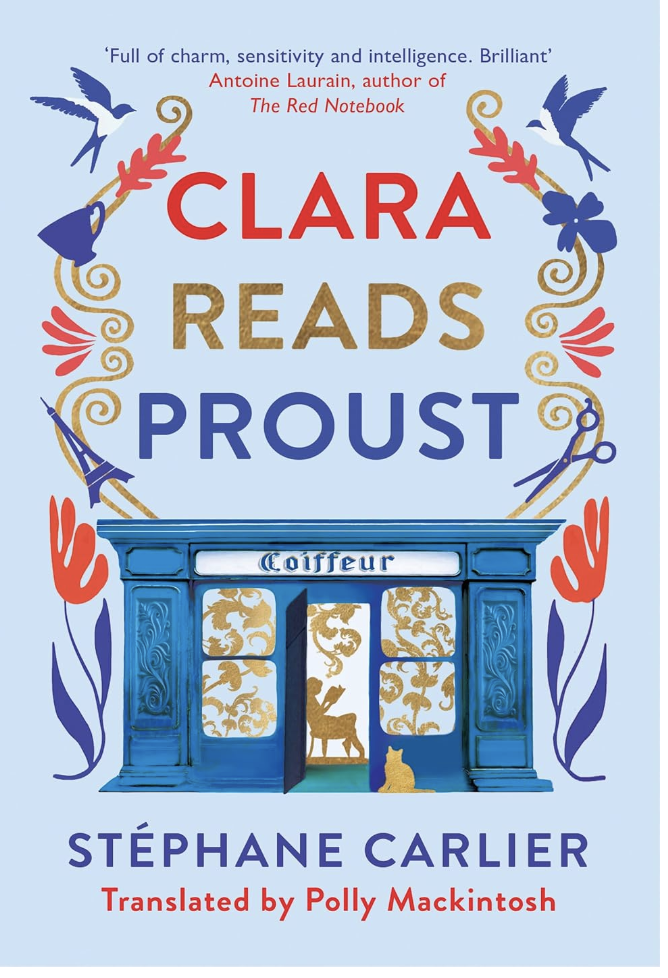
By contrast, the contemporary novels that I have been reading for my French reading group have all been short ones – we’ve deliberately imposed a strict page limit on our choices, to allow for the struggle of reading in another language. And my goodness what superb writing we’ve encountered! Perhaps there are also contemporary French novelists who are churning out doorstops but the ones who are not are absolutely first rate. Clara Lit Proust by Stéphane Carlier (192 pages) is a marvellous book about the power of reading, rather unexpectedly but brilliantly set in a hairdressing salon. Likewise, with novels by Amelie Nothomb, Philippe Besson and Faïza Guène, among others.

There are some exceptions to this, of course, and perhaps I could now be accused of making differential rules for books I happen to like or not. But I think there has to be a strong rationale for excessive size. Family sagas, some historical novels, books grappling with complex material would come into this category for me. So, for instance, Apeirogon by Colum McCann is a highly original and complicated exploration of the Israel/Palestine question, with one thousand and one short sections mirroring The Arabian Nights. There’s good reason for its size. And Paul Murray’s The Bee Sting is a fabulously written story of different generations of a family, bringing in different perspectives and surprising revelations right up to the very end.

What about personal essays and their length? I’ve hit nine hundred words or so now. Too long? Too wordy? In need of a good editor?  I’ll leave that to you to decide.

Barbara Bleiman

September 26 2024

OF NOTE: connecting threads

I’ve been reading Broken Threads: my family from Empire to Independence, the memoir of journalist, Mishal Husain. This engrossing story connects her family history with the larger forces at work in the early twentieth century as India moved towards partition. The stories of her grandparents offer perspectives that sometimes run counter to official versions of these complicated events. 

This is not a review of the book, though I would highly recommend it. What is OF NOTE is the way in which the book reveals the importance of individual family stories, even partial ones, in understanding the past in all its complexity.   

Three of Husain’s grandparents left accounts of the period, up to and just after partition. Only one of these was produced with publication in mind. Her paternal grandfather began his memoir shortly after his wife died as a way of holding onto his memories of her. His writing remained in the family. Tapes of her maternal grandmother, recalling family life, came to light in the 1980s. It was Husain’s maternal grandfather, Shahid Hamid, who published Disastrous Twilight: a personal record of the partition of India, in 1986. This work drew on diaries he’d kept during the period of partition when, as a military man, he had contact with the Viceroy, Mountbatten. From these accounts, emerge rich details of daily life, inter-faith marriage, changes in education, medicine and the military, particularly within the Muslim community in the last decades of British rule in India. As well as personal observations of the politics of that time. Without these accounts, Husain could not have written this book.  

Understanding the past has never been more important. So many conflict points around the world have deep roots going back decades if not centuries. Views are easily polarised through the fast pace of social media. Looking back at the rapid changes that drove through the 20th century, it’s so easy to forget, or even have no knowledge of, what came before.  

At a personal level, it’s worth understanding the people who came before you, in particular the social conditions in which they grew up. Looking at my own family story I discovered that my great-grandmother, who died less than a 100 years ago, couldn’t write her name. Tracing her history back, I found that by the time compulsory schooling for all children was introduced in 1870 she was already too old, at ten, to benefit. She seems to have been a bright woman who ran a bakery but had to sign official documents with X. I read up on successive Education Acts to see how increasing school provision shaped the life-chances for the next three generations. On one side, an important strand of our family history includes the way it is intersected by the history of education in the UK.

Understanding my great-grandmother and the circumstances in which she lived, has led me to more stories. It’s been a rich experience. I’ll be offering these stories to my children. It puts a new perspective on the many years of their education to post-graduate level. Handing on such stories is a gift to succeeding generations. It can lead to better understanding of why those who went before might have behaved as they did.

Have you ever wondered if a story in your family was worth telling? It is. Even if it’s a particular angle, or partial account. It’s worth writing the specifics of experience, to hand on. That way, you keep the threads between the generations connected. It’s particularly important for ‘ordinary’ people, whose lives rarely figure in official histories, to write their version of events. This happened in World War Two with Mass Observation, which still continues with some projects that record ordinary lives.  

 So what to note?

  • Did you keep a journal during Covid? If so, left for your grandchildren to read, it will take them right into a global story.
  • Is there a story of how education had a significant impact on your family?
  • Perhaps it’s a workplace story?
  • What about changing technology. I was using a typewriter up until the late 1980s, now we have AI. My grandchildren have no idea what a telephone with a dial is.
  • If you don’t want to write, and you have a smart phone, use its voice recognition software to do the writing for you.
  • Climate change – if you are a gardener, or a farmer you must have witnessed shifts in seasons, the effects on plants and insect life.
  • Do you have an elderly relative who likes to talk about the past? Why not record their stories?

Stories matter. Mishal Husain’s book is a timely reminder that, they matter even more at times of great change. It’s worth writing yours if not for the world at large, then for those that come after you to understand better where they have come from. Leave a few threads for children or grandchildren to pick up and connect to their lives. That way, the texture of life lived can be felt years later.

Pamela Johnson, August, 2024

Of Note: birdsong

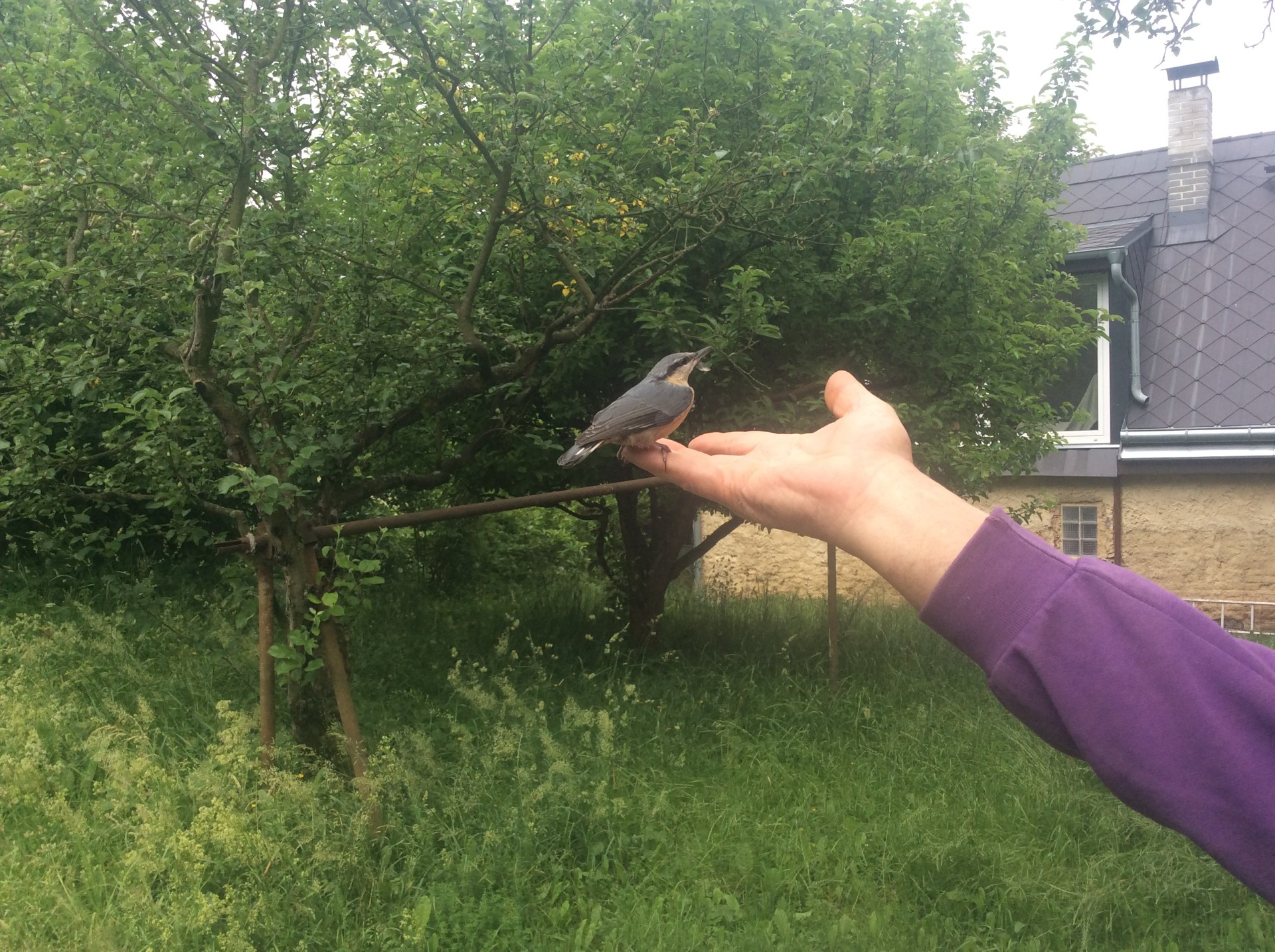
Thinking about the phrase ‘Of Note’ while lying in the hammock, I was surrounded by birds making their presence felt, and remembered that birdsong can be more of a warning than a celebration.

Apparently the dawn chorus can record a brutal contest for territory much as the fighting described daily on the radio; this garden is in the middle of a Europe involved in another territorial war, a nightmare. A nightmare that’s being repeated globally.

Meanwhile this bird has knocked itself unconscious on the glass window and was slowly recovering, so by listening to some shrill bird song while looking at one shocked but recovering bird this poem emerged.

Of course this bird has vanished from the final poem.

Of Note

A pause in the whine of combine mower chainsaw

a silence

then the same bird cry, a note so insistent

it’s a whistle from a neighbour a summons

not the butcher bird with its pouch of fledgling prey

not shrill enough for the shrike

whatever it is it’s something

that will soak the trees

then be quiet again sedate

and deadened

the restless flocks of starlings are ready

a shudder of wings

and there in the background

a circle saw

sense it this uncertain hour

the urge to close down

*

It’s a summons

from behind Novak’s empty house

or now, beyond Mrs Lorrydriver’s shed

an insistent whistle shifting away

nothing can lure it back

the cry fades they listen

they do nothing

yesterday they said isn’t it strange

to feel quickly detached from homes they’ve only just left

yet now, this call

they thought they had cut ourselves off

no twinge of guilt at their escape

ruthlessly snipping the strings then this bird.

*

Night is life, in technicolour, anxious and spluttering

without boundaries

caves of forgetting

under a goose-feather duvet

a cave is day day might have walls and no doors but a cave is day

a timetable for survival

for avoiding terror

while in night’s over-abundance of colour

all is activity and pleading

a world that’s neon-pink and glittering green

– though waiting in a train carriage, the thud of a bullet

is also night –

day is dark and located

it’s in that abandoned shuttered house

enticing

erupting from the body with an urgency that’s awe

as in part fear testing the edge the explosion

but concealed

turn of the lane nightdark

the day is dark the night the past

day returns to that house in the forest

no windows no doors

night blurred in a disco of jangled music

that house more than temptation

day the urgency to be there

*

On the distant bank are low buildings, the mill at Zvikovec,

dense red brick

inside those windowless walls: birches, larch,

outside is the roar of the weir.

Following the river, squelching through mud to swim, they ask

– do we want to be where we are?

Last night dreaming in a managed landscape

all the bits with power are

all the parts of our night-world are without power.

Inside those brick walls among the trees are landings, stairs, corridors.

These are the woods they walk in

or lying by the river

watching in the distance a heron paying attention. Quite still

silent there in the centre of the meadow

the heron staring beyond the weir. A long still wait.

*

The neighbour invited them for coffee. He didn’t know,

nor did they

his next July will become June, April slide into March,

young leaves crinkle to tight buds.

It was the back-to-frontness,

the cuckoo too early and sharp among the missing walnuts.

The blackbirds rootling

insisting on their rat-a-tat chorus until the very last light.

His gift to them of apricots, their drunken sway of lilac,

they didn’t know by sunset it will wither.

Not his nor theirs. This garden, orchard, forest. On loan

the empty hives, the hard-packed earth

the birdsong, the sharp note of the thrush.

That same bird cry, a note so insistent it’s a whistle

a summons

a shadow behind the fence.

The hoarse protest from his rooster, the honeysuckle

reaching towards him,

the tuk-tuk of redstarts, the silence.

OF NOTE: Lured by words

I’d wanted to visit Trieste for over 20 years, since reading Trieste and the Meaning of Nowhere by Jan Morris. During those two decades, other cities got me first, more obvious places, like Venice. But Trieste had lodged itself in my psyche, its name alone igniting longing: triste means sad in Italian. And the addition of the extra ‘e’ seemed to perfectly evoke the city Morris described as being ‘almost like an ecstasy of the poignant.’

I pictured it like a de Chirco painting, with vast piazzas, majestic yet empty, its past grandeur, as the Austro-Hungarian empire’s main seaport, now faded. 

But when we arrived, from the nearby Slovenian border, it seemed like so many other bustling European cities, with its wide boulevards, flanked by nineteenth century apartment buildings with pasticcerias and farmacias at street level, and its narrower, winding backstreets. Where was the otherness Morris had so beautifully described? 

I first encountered it the next day, at Miramar, a castle built from white Istrian stone, on a promontory at the city’s western edge. It was the love-project of Maximilian, the Hapsburg Duke, who created it for his young bride, Carlotta. A home they inhabited only briefly, before being posted to Mexico, where Maximilian was later shot dead. Standing in its luxurious and still pristine rooms, overlooking the blue Adriatic, I sensed the ache of abandoned dreams, of life’s unpredictability. 

I found it again as I meandered through the city: in the quiet of its vast main square, Piazza Unita D’Italia, with its imposing civic buildings and mere scattering of people, its fourth side giving way to an expanse of sea. And in the cool, dark interior of one of the world’s most beautiful cafés, Antico Caffè San Marco, its glass cabinet filled with Sachertorte, Apple Strudel and the latticed crust of Linzertorte an ode to Mitteleuropa. And where, on a Thursday lunchtime, a mournful-lookingman in sunglasses drank white wine at one of the few occupied tables. 

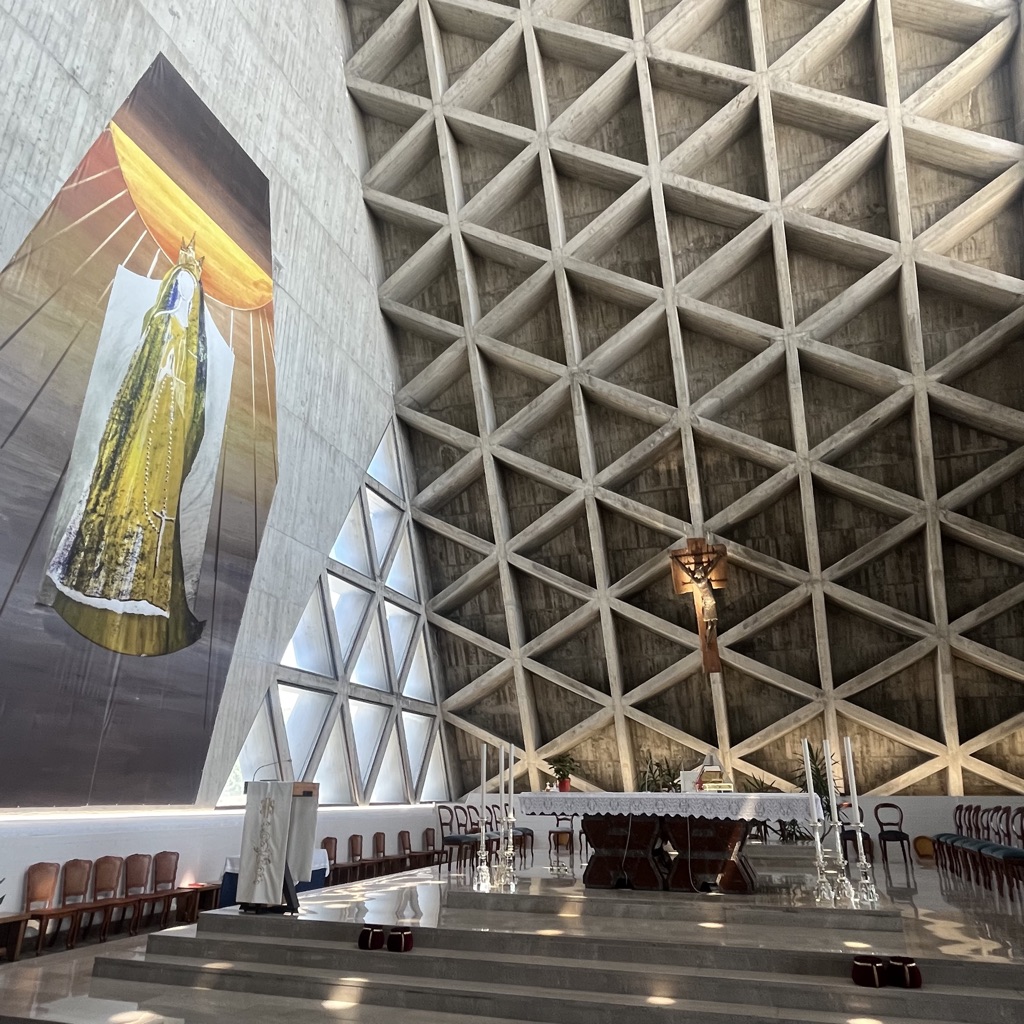
And, finally, I found it standing in a chapel, perched on a hill above the city. We’d been intrigued by its concrete form, visible from the promenade, and shaped like a truncated pyramid. We hadn’t expected a 45-metre high space, some fifty thousand feet in volume. Nor to be the only ones there on this June afternoon. 

Would I have experienced its otherness had I not read Morris’s book? Possibly. But the beauty of words and stories is they hold the potential to resculpt our vision, guiding us towards what we might otherwise have overlooked. 

Annabel Chown, June 2024

Of Note- Four Ways Taking Notes have Enriched My Life

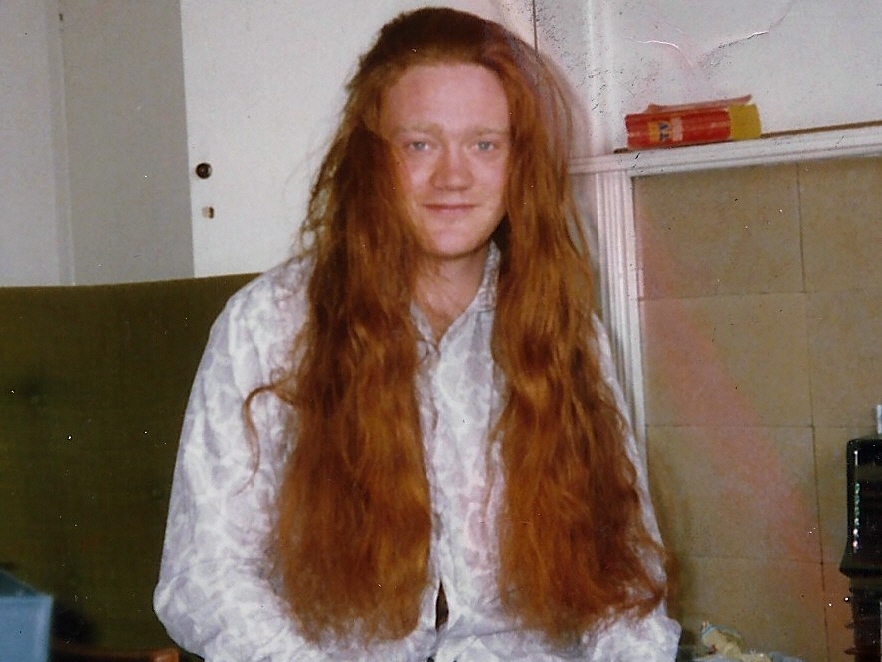
A photo of me taken by my brother in 1989 when I had grown my hair for three years and was writing a lot notes in my notebooks.

Being ‘commissioned’ — if that’s the right word — to write this ‘Of Note’ blog for Blue Door Press set me thinking about the whole issue of notes. The word is a very old one, going back to Latin and Old English when it meant to mark…

Isn’t ‘mark’ an evocative word? Marks on cave walls: handprints, pictures of horses; marks on walls; graffiti; marks on wax, vellum, papyrus, parchment, paper and on digitised interfaces: screens, phones, watches.

Notes are partly what make us distinctively human.

By making notes, we join the ancient lineage of homo sapiens who have left their mark somewhere.

Notes from the past can seem unbearably poignant: love hearts and initials on trees and rocks and prison walls where their authors are undoubtedly dead; a timely reminder to the living of the emotional rollercoaster of being conscious.

Notes are emotional! They are full of feeling — even the most boring ones from tedious meetingsare
invested in the desperation to make a mark, to be heard, to be understood.

All this set me thinking about the ways in which notes have enriched my life.

In this blog, I outline four major points. Indeed, making my mark here has helped me realise how important notes are: they have a spiritual quality to them because they are all about making a mark.

Notes have helped me remember

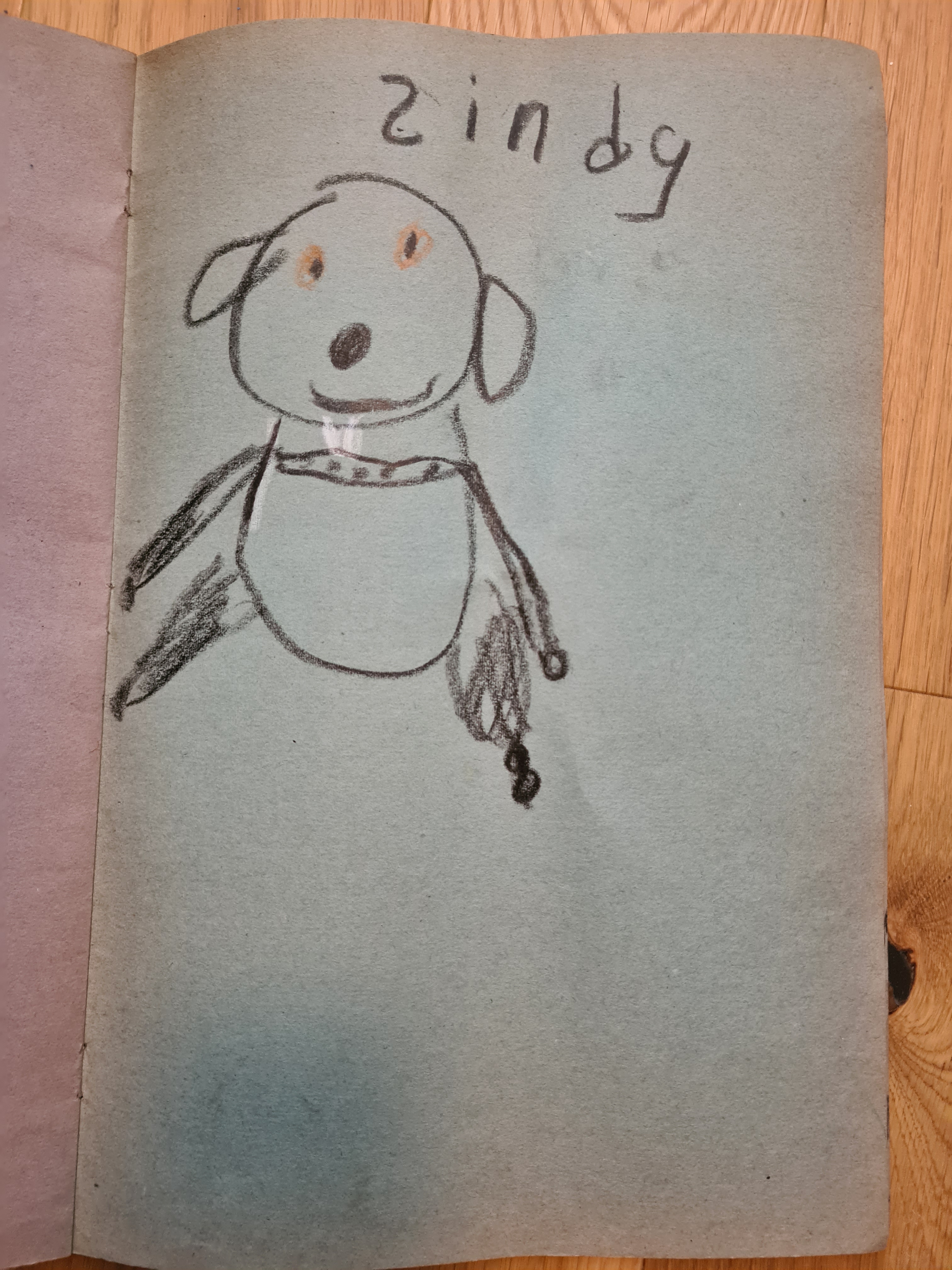
My grandmother, Ruth Gilbert (1919-2003) always encouraged me to write and draw, giving me as a six-year-old a big scrap book to put all my notes about life into. Here’s a picture and drawing I did of Sindy, their black Labrador that I loved so much:

A picture I drew of my grandmother’s dog, Sindy, in 1974.

My parents divorced acrimoniously when I was young, and my mother remarried.

I went to live with her and her second husband, my stepfather, in the suburbs of east London, Wanstead, which was then, if not now, classic ‘net curtain’ land, aspirational middle classes.

I was not happy at home and absorbed the message that my very survival depended upon doing well at school.

Both my parents had other children by this time, leaving me feeling unwanted.

Every morning for many years, I would wake up and revise all the topics I needed to know about by writing notes: reading the relevant text book or novel and making notes. These notes were an advanced form of copying, but I learnt a lot from them.

They became my memory. I achieved highly in exams because I used these notes to learn vocabulary and a lot of facts about my school subjects, history, science, Latin, French, geography.

Notes are my safe space

In the latter half of my teenage years, I realised that notes could be more personal, and I began writing in notebooks. I recorded my observations, copied quotes from books I read, kept a diary, jotted down phone numbers and addresses in these books.

Overwhelmingly these notebooks had a poetic resonance for me. I studied English Literature at Sussex University, grew my hair down to my waist (see photo above), and sought refuge from a lot of anxiety in reading William Blake and the Romantic poets, Joseph Campbell, Carlos Castaneda, John Fowles, Donna Tart, JD Salinger and others.

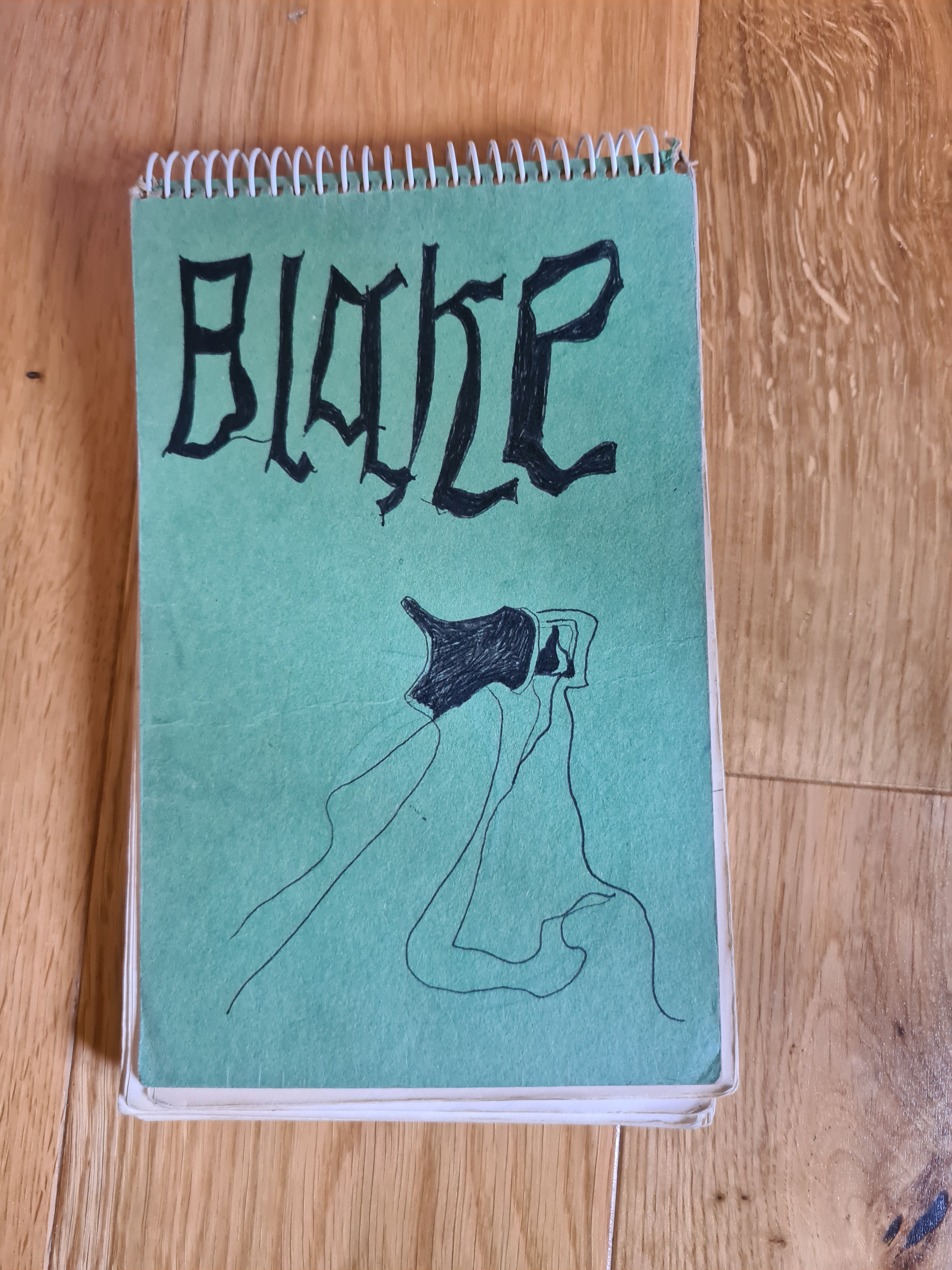
The notebooks were filled with my perceptions of the world filtered through these writers. Here’s the cover of my one of my notebooks from 1988.

A notebook I wrote when I was 20 years old in 1988.

 Now these notebooks have become part of my memory, because I itemised the minutiae of my lived experiences.

I can dip in and out of them and learn what was happening to me back then. Although as you would expect they are full of navel gazing, they offer me an important window on that time. I have very few photographs from my childhood and teenage years, but these notebooks somehow fill the gap.

An entry from 11th November 1988 when I took a train to Whitby and Staithes in the north of England.

Notes are therapeutic

My personal note-taking has continued throughout my life. I write a diary, a personal diary, virtually every day now early in the morning for about ten-fifteen minutes. I handwrite my notes onto a Rocket notebook which is re-usable: I take photos of the pages and upload them as PDFs to my cloud storage on Dropbox, then I wipe the washable ink off the Rocketbook, obliterating all that I’ve written. I find this whole process deeply therapeutic.

These notes are my own private space to say whatever I want to say, and I say it in handwriting. I used to type my diaries but when I started doing mindfulness meditation in 2016, I began to notice that there can be something deeply meditative about handwriting personal notes for yourself.

It’s a form of ‘self-care’; by handwriting about what you are thinking and feeling, you take something out of your body I think; you carve words out of your body and onto the page by handwriting your deepest, truest thoughts.

Notes have liberated my imagination

Notes are a space to dream the impossible, to doodle, to scribble, to draw, to quote, to annotate, to feel free to say the unsayable. They have liberated my imagination throughout my life to remember what I really need to remember, to say what I feel, to set goals, and to make sense of the chaos of life.

Of Note – Children’s Poetry

I’ve been writing poetry for children – small children, the kind who, like my 5-year-old grandson, find the word ‘poo’ very funny if said out loud, and even funnier if the word is strongly hinted at but never quite materialises. I’ve been having a great time with all of this, also enjoying getting more immersed in the children’s poetry world, but now from a writer’s perspective, rather than that of a teacher and education person (my normal professional role).

There are masses of amazing writers and groups, blogs and events focused solely on children’s poetry. This is despite the fact that it’s long been regarded as the Cinderella of the children’s publishing world. Recently, there have been strenuous efforts by some individuals and organisations to elevate its status and support the writing, performing and publishing of it.  Here are five things that have been ‘of note’ to me recently, in my new engagement in this world.

  1. 50 Years of Michael Rosen’s Children’s Poetry

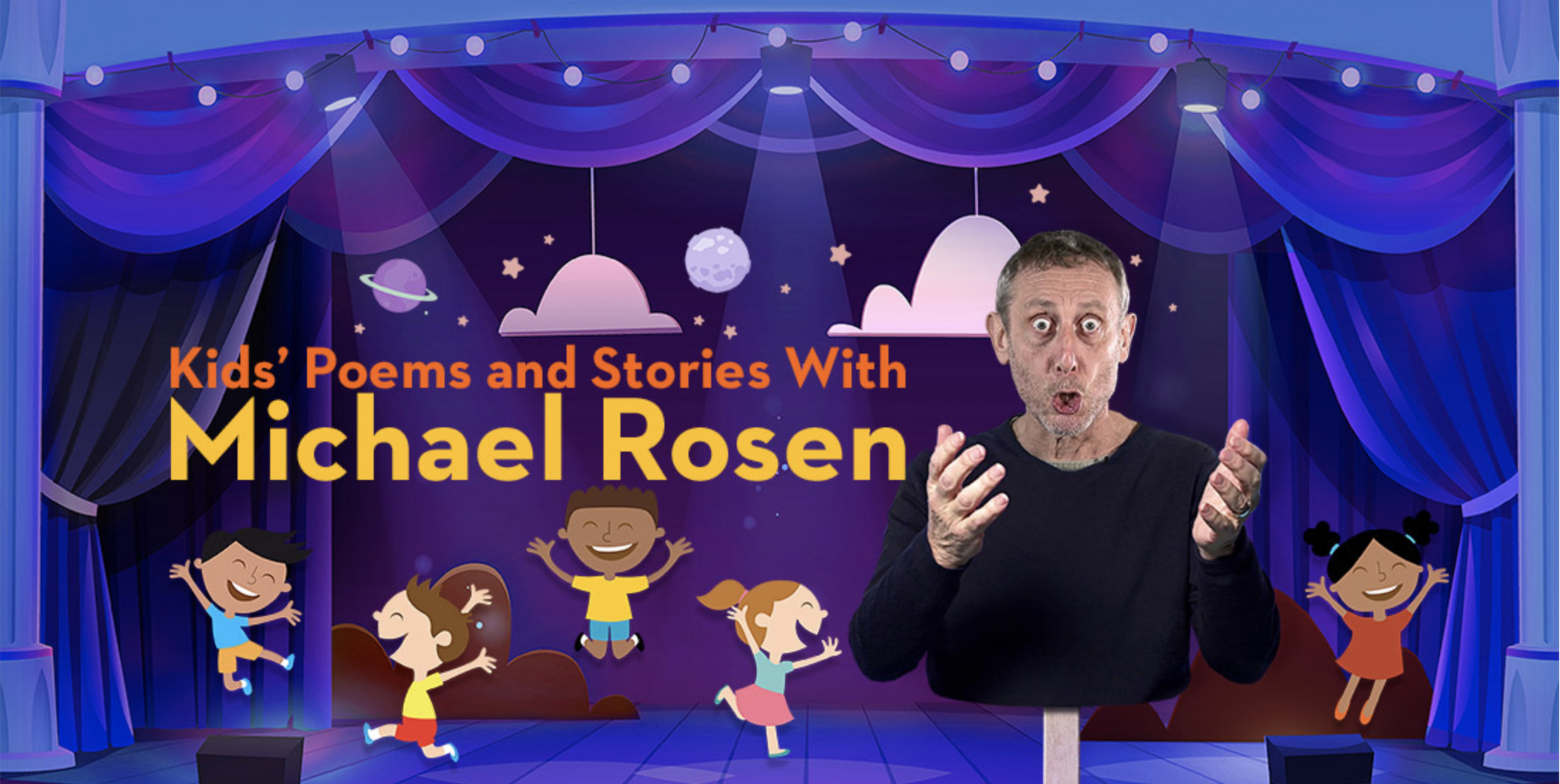
This year is the 50th Anniversary of Michael Rosen’s first forays into writing for children. Can you imagine that? Rare is the child in England who hasn’t heard one of his poems – from ‘Don’t Eat Mustard with the Custard’ to his ‘A Great Big Cuddle’. Rarer still are those who cannot recite, with great fondness, a good portion of ‘Bear Hunt’. He has been doing lots of events and new publications this year – even more than his usual energetic output, with special events to mark his 50th anniversary. https://www.michaelrosen.co.uk/events/

2. Zig Zag Stanza

Poetry Society’s Stanzas – workshops for poetry writers – include one called ZigZag Stanza, co-ordinated by poet and editor, Rachel Piercey. It is a monthly gathering online where writers workshop their poems. Some are very well established and well-known, with several publications behind them and others are more new to this, like me. I attended my first one in March and found it a great source of constructive talk, sharing of ideas and experiences and most important of all, excellent workshopping suggestions on the poems that group members brought along. A personal revelation for me was the idea of being much more inventive and experimental with the look on the page. Having mainly read my poems out loud to my 5-year-old grandson, I hadn’t really been thinking enough about the visual impact on the page for children who are reading the poems themselves, especially if without accompanying illustrations.

https://poetrysociety.org.uk/stanzas/online/zig-zag-stanza-for-childrens-poetry

3. The CLIPPA Award

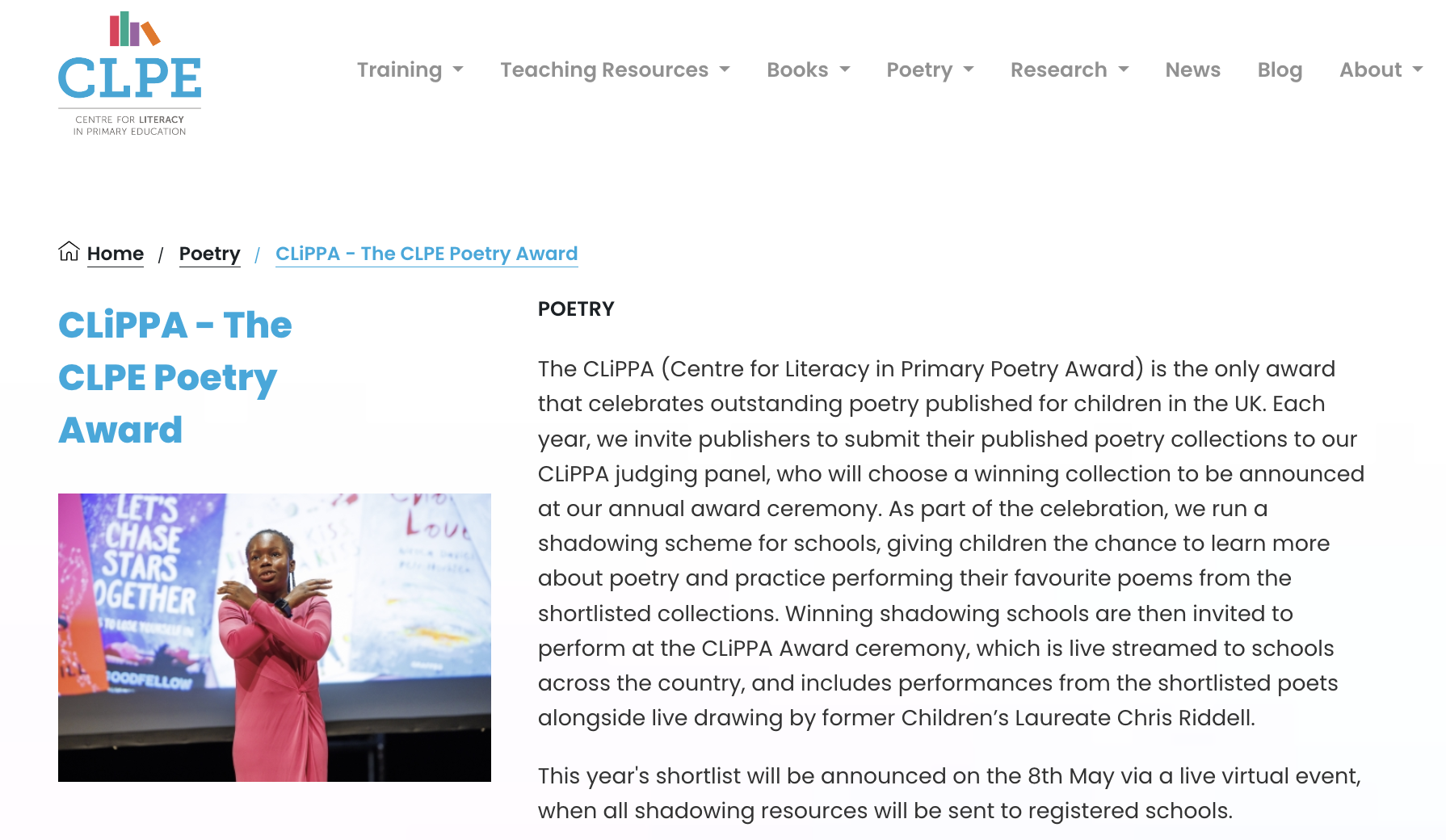
The CLIPPA Award for children’s poetry is run by CLPE (Centre for Literacy in Primary Education) and has given a terrific boost to children’s poetry publishing. The 2024 prize judging panel is chaired by poet Liz Berry. It has a Shadowing Scheme, where schools can read poems from the shortlist and send in videos of themselves performing their favourite poems. The shortlist will be announced on 8th May. https://clpe.org.uk/poetry/CLiPPA

4. The Children’s Poetry Summit

This is a UK network of individuals and organisations actively interested in poetry for children that shares ideas and good practice, and acts as a campaigning pressure group. It has a fabulous blog, with a regular stream of pieces by people of note in the children’s poetry world – Pie Corbett, Gaby Morgan, Brian Moses, Rachel Piercey and others. A recent piece by Cheryl Moskowitz was a great set of reflections on the rediscovery of the child in the poet and the way ‘the poet, like the child, achieves revelation by noticing, being open to possibility, making connections in the imagination, taking one thing for another.’

https://childrenspoetrysummit.com

5. The Dirigible Balloon

Finally, a special shout out to The Dirigible Balloon website, created and curated by the amazing poet and editor, Jonathan Humble. The site is lovely to look at, populated with poems of every kind, by well-known writers (Michael Rosen, Coral Rumble, Chrissie Gittens and A.F. Harrold among others) and newbies like myself. It’s a great resource for teachers (with a vast thematic as well as an author search) but it’s also an excellent showcase for poems, going beyond the narrow confines of magazine submissions, competitions and that most challenging of avenues – book publishing. Do look out for my own poems on the site, and for the anthology which has just been announced and will be published at the end of the year. I’m thrilled that one of my poems, ‘In the Garden’, will be included! https://dirigibleballoon.org/

Barbara Bleiman

April 2024

For more examples of my children’s poetry, go to http://www.barbarableiman.com

Of Note: The Nix by Nathan Hill

The Nix has been my surprise read of 2024, so far. What drew me to it was the promise of a family mystery. Samuel’s mother walked out on the family when he was a boy. They never heard from her again. But, two chapters in, I was on the point of abandoning it. Adult Samuel, an academic, is secretly playing the video game Elfscape, late at night in his university office. Fantasy fiction and video games – this is not for me, I thought. But I persisted.

The book is impossible to summarise and this isn’t intended as a review. Suffice to say, it’s an expansive state-of-America novel; a satire that also has a heart. At its centre is the affecting story of a broken family. In order to see how those individuals have been pulled apart by sweeps of history, we get involved the in 1968 Chicago riots and protests, have a glimpse of the German occupation of Norway. Along the way Samuel falls victim to contemporary concerns: cancel culture in academia, a presidential election, the absurdities of the publishing industry, and the Occupy Wall Street protests. It’s also about writing and storytelling – you’ll encounter Scandinavian folk tales (the Nix of the title.) Apart from the Elfscape moments (these are short, I speed read them) each section, the time shifts, held me, an absorbed reader. Sentence by sentence Hill’s prose drew me in. The writing is digressive but Hill knows how to control a sentence. I was never bored.

How did Nathan Hill manage to stitch together this patchwork of a novel? I sensed some of the material might once have been attempts at short stories. It turns out that is the case. It took Nathan Hill 10 years to complete The Nix.

Of note, then, is the idea that maybe you shouldn’t be too hasty in abandoning those short stories you never finished. You may have snippets of memoir or a burning issue of the day you really want to write about. If you have material lying around that still has some life in it and issues you really want to get stuck into, perhaps the way forward is to play around with the writing that has energy until you find a thread that might stitch it all together into a brand new and compelling whole.

Pamela Johnson, March 2024

Of Note: Re-reading Milkman

Reading a novel again …. in a different world.

Milkman Anna Burns Faber 1st pub 2018

Milkman is a novel about, among many other things, reading. The narrator’s habit of reading as she walks, basically anywhere, and 19th century novels mostly, is the main crime that she, referred to throughout as middle sister, commits.

Volunteering to present Milkman to a book group was perhaps a mistake; I’d foolishly set myself up as over-enthusiastic. I first read the book a year or so after Anna Burns won the Booker and then readers had been split. ‘It’s a difficult book but worth it’, seemed the consensus. I had loved it, and was convinced that the others in the book group who had not yet read it must feel the same. They had something exceptional ahead of them.

But how did I feel going back to the novel? This time, when bogged down near the end in poison-girl’s sister’s fate, I nearly despaired. How much more?

But it was still a pearl of a novel, I didn’t want to miss out on introducing it to new readers, have it left permanently unopened on the shelf or in Oxfam. And once I’d finished it, I was back to feeling admiration. Anna Burns has been generous; this is a very generous novel with a lot to say.

What did I remember from first time around?

That we are told straight away the milkman is dead, and not knowing that is somehow not a relief.

“The day Somebody McSomebody put a gun to my breast and called me a cat and threatened to shoot me was the same day the milkman died. He had been shot by one of the state hit squads and I did not care about the shooting of this man. Others did care though, and some were those who, in the parlance, ‘knew me to see but not to speak to’ and I was being talked about because there was a rumour started by them, or more likely by first brother-in-law, that I had been having an affair with this milkman and that I was eighteen and he was forty-one.”

What else did I remember?

That it was a short novel. Wrong.

Her voice. That she was a compelling narrator. Absolutely. Though a bit irritating, mostly amazing.

I needed to read it again…slowly. What did I find?

That it was harder to read a second time. Right.

That there were an enormous number of relatives.

Another first memory which stuck was dread: the heady immersion in that terrifying world that resembles Northern Ireland, Belfast, in the Seventies, in the middle of the Troubles.

Although it is recognisable as this skewed form of Belfast, it’s not really Belfast in the 70s. I would like to think it could be seen as any sort of totalitarian, closed society existing in similarly oppressive conditions,” Burns explains. “I see it as a fiction about an entire society living under extreme pressure, with long-term violence seen as the norm.”

I was re-reading when the world was killing itself. The newspapers were delivering accounts of regimes where truth has been turned on its head, where gangs and powerful groups rule and neighbour murders neighbour.


Did I like it? I did. If ‘Like’ can be qualified. Yes, it’s a triumph but what a burden. Packing in a crazy density of events that successfully builds up to such anxiety.

Throughout is the heroism and the gift for self-preservation of middle sister. The Ardoyne is no place to grow up female…or male. The men in their tacky balaclavas are pathetic but Anna Burns still manages to show how terrifying they were. The women were a more-mixed bag but they were in many cases feminist, they might condemn middle sister’s refusal to marry, but they supported each other with meals and babysitting, with their neighbourhood pharmacies; hospitals were to be avoided so the women stepped in.

Living in the middle of fear where voicing dissent, just saying the wrong thing could be a death sentence, middle sister would not join a protest, she was trying to stay under the radar of the status quo. I’d been thwarted into a carefully constructed nothingness by that man. Also by the community, by the very mental atmosphere, that minutiae of invasion.”

Was the stalking of middle sister by the milkman at all erotic? There was nothing or no sexual energy that I could feel, even when Ma was competing with the holy women for the real milkman. Maybe-boyfriend was sweet, if obsessed by cars, but he was deaf to middle sister’s warnings about the scary, homicidal milkman.

Milkman was a sexual predator, a sleazy stalker. Middle sister needed protecting. She realised that he was picking up on her secret desires and she was being diminished to nothingness. No one was sympathetic with her refusal to take the normal path – marriage, babies, don’t ask questions – rather than peaceably continue with what she was up to with maybe-boyfriend, their maybe-relationship. She refused to answer questions. If only she’d taken advice, then that way she’d be protected.

Burns holds a mirror to the “communal policing” that takes place among “a whole community, a whole nation, conditioned too, through years of personal and communal suffering, personal and communal history, to be overladen with heaviness and grief and fear and anger.“

Sometimes re-reading was a bit like pushing through clay; another digression and we were back in time getting another story, moving forward then backwards becoming dizzy as more detail and more expansion is piled on. I was bogged down in digressions.

Yet there are so many gems, threads of stories to be followed forward and back: those genius ‘wee sisters’ so bizarrely precocious. Third brother-in-law who is so obsessed by running he cannot hear that middle sister has been poisoned, and is almost dying. (That sequence is so crazy it must be true.) Going to evening classes but missing the chance of Classics and ending up doing French. Coming home one evening after class, finding a cat’s head in the ten-minute area. Wrapping it carefully in cotton handkerchiefs then the sudden appearance of the ghastly milkman. Rescued by the real milkman whose protection is ‘he loves no one’. He is so normal. Ma’s warning, her reminder that no one asks questions, as she accepts the real milkman’s gift of double cream. Middle sister’s father’s death-bed account of being abused as a child. Wee sisters listening.

…this is a book about rumours, gossip, the power of gossip, the power of history and also the power of fabricated history, when rumours become the history.”

It’s a novel that shows how living in fear can destroy but some heroic individuals cannot be defeated.

Is there something more that the reader can get second, or third, fourth time round?

Of course, there is. Anna Burns has been generous with her own experience, and her own fears; this is a very generous novel with a lot to say and reading it now with the world killing each other it’s not just about Northern Ireland.

Burns’s agenda is not to unpack the dreary tribal squabbles that so characterised Troubles-era Northern Ireland; rather she is working in an altogether more interesting milieu, seeking answers to the big questions about identity, love, enlightenment and the meaning of life for a young woman on the verge of adulthood …” The Irish Times

Anna Burns says “I see it as a fiction about an entire society living under extreme pressure, with long term violence seen as the norm.”

And those societies are all around us. As she says in Milkman:

As for the killings, they were the usual meaning they were not to be belaboured, not because they were nothing but because they were enormous, also so numerous that rapidly there became no time for them.”

Which is all hideously familiar.

And the group were unanimous. They loved the book.

Jane Kirwan  February 2024