Evening light spills through the south-facing bay window, beyond which my neighbour’s wild garden sprawls, in its May exuberance. In front of the bay, and in what will become my living space, sits a lone toilet, surrounded by piles of rubble, ripped-out bits of plasterboard and studwork.
‘Goodness,’ says my friend, surveying the building site. She wanted to see my new flat before we went out to dinner. And the look on her face says, you must be mad to do this.
But I am not mad. I am an architect, used to refurbishing old buildings. Who knows demolition must precede reconstruction; that it has to get worse before it gets better.
I wanted this flat as soon as I spotted its photos and floorplan on the estate agent’s blurb, which arrived while I was on holiday. By the time I returned, someone had already made an offer. Week after week, I called the agent to check progress on the sale. ‘Going great’ he always said. Until one week, it no longer was.
I was the first one in when it was put back on the market. A diagonal partition wall divided its 4-metre high south-facing room into two awkward bedrooms. In one, a used condom lay discarded on the floor. A couple of young DJs were living there, the agent told me.
I made an offer within minutes. It would be perfect for my new life; a freelance one where I worked from home. The tiny kitchen off the hallway could become my office. A cancer diagnosis, three springs ago, had put an abrupt end to my forty-five minute commute to an architect’s practice in Clerkenwell for twelve-hour days. Life was too short for that. Ever since, I’d been living with and working from my parents’. Now it was time to recreate my own home. And, hopefully, one day, find someone to share it with.
2.
The news arrives by telephone on a Wednesday morning in late winter, eight years after I have moved into my flat. It’s not exactly unexpected. Still, I have to sit down to digest it.
A woman from the genetics team at The Royal Marsden Hospital informs me I have tested positive for the BRCA1 gene. A genetic mutation that has, in recent years, killed two of my first cousins, only in their forties. And puts me at an up to 80% lifetime risk of a new breast cancer, not to mention a 40% one of ovarian cancer.
I sit on the sofa shivering, unsure whether it’s from the news or from the chill of the March day. The heating is on, but the single-glazed, tall bay window is a poor buffer against the weather. To my husband-to-be’s horror, I refuse to put up curtains. I don’t want to conceal the window’s panelled surrounds.
The hospital recommend a risk-reducing double mastectomy with optional reconstruction. Alternatively, I can continue with annual MRI screening, until I’m ready for surgery. I am not ready. Even though I ought to be. I am also busy planning my September wedding and trying to conceive a child. Plus, I’ve remained cancer-free for over a decade, so surely I can risk postponing surgery for a bit?
3.
‘You could go on the beach today in a tiny bikini, and no-one would guess a thing, says Ana, a Spanish doctor at The Royal Marsden, when I see my reconstructed breasts for the first time, on a December morning, two years after my wedding. It is ten days since the four-hour operation in which my breast tissue was cut away and silicon implants inserted.
I was scared I might hate these new breasts of mine. Even though my skin is still bruised yellow from surgery, I have to admit they look good. A little bigger. More uplift. And perfectly symmetrical.
My body recovers fast. But by spring, I am crumbling. I should be happy, I reason. My lifetime risk of breast cancer has been slashed to less than 5%. But inside there’s disquiet. Is it from four years trying and failing to conceive? From having had part of my body chopped off? A part from which I’d hoped to feed the child I am increasingly uncertain I will ever have.
I can’t be sure. But what I do know is I’ve lost my ability to take pleasure in life’s small delights: a movie and sushi with my husband; brunch with my girlfriends; a good novel. Even a holiday to Venice and Croatia doesn’t quite hit the spot.
Anxiety pulses through me. Soon, I’m barely sleeping. An hour here, an hour there. Similar to the new mother I may never become. I try everything. Meditation. Medication. More yoga. Less yoga. More greens and fish. Cake. Even jogging. None of it makes much difference.
I get to the point where I think, thank God I’ll probably never become a mother. What kind of a mother would I be in this state?
4.
Everyone tells me it gets easier after the first year. And what a year: my sister’s sudden death nine days before my son arrived; my ovaries ripped out six months after his birth (another risk-reducing surgery) and the ensuing plunge into surgical menopause.
And it does get easier. For a while. I adapt to a life in which my sister no longer exists and my son does. He starts sleeping through the night. I start HRT and the hot flashes melt away.
Then come the stories: a strange virus from China, whole cities there being locked down. Never in London, I reassure myself.
A few weeks later, I walk through Regent’s Park to Marylebone High Street. On this mid-week morning, it is deserted, most of its shops closed. A premonition of what is to come.
The following Monday, we go into lockdown. Building work is, however, allowed to continue. And our downstairs neighbours have just started a six-month refurbishment of their flat.
Clank, clank, clank all day long. Three of us marooned at home, my husband attempting to work from a makeshift desk in our bedroom. My son failing to nap in the tiny room that was once my office, as drills grate and angle grinders shriek.
I ask the builders if they’ll consider timing their lunchbreak with his nap, a blessed pause in the day for me, too. Or at least only do quiet work then. A resolute no comes back. Very busy. Must get on. Many jobs lined up.
So I take the pram out and walk and walk, mostly through the local parks, which smell so fragrant this spring. In the distance, I see City towers and picture its ghost town, buildings and streets emptied out. What will become of us all? Will London ever return to her former self?
5.
I wake early and walk through the cool of the elderflower-scented park to Marylebone High Street. I arrive at the café in time to avoid the queue, which builds even on a weekday.
No traces of Patisserie Valerie’s chandeliers, green walls and gilt-framed mirrors remain. It closed a couple of years ago, sometime during 2021, and the new café, with its terrazzo floor, giant skylight, and Aussie-inspired menu is more to my architectural and culinary tastes.
Still, I miss the Continental comfort of the old place, its glass display case filled with eclairs, strawberry tarts and mille-feuille. It was where I came, twenty-one years ago today, on the day my life as I knew it was bulldozed by three simple words: you have cancer. My best friends and I drank Earl Grey and ate scones with clotted cream and jam. In my shock, I thought it was quite nice to be spending a Monday afternoon in a café with them, rather than at the office, drafting construction details.
Today, I’m alone. I sit near the window and look out over the high street. The sun is starting to come out, the shops are unlocking their doors. Just a few units remain boarded up.
I drink a flat white and eat toasted coconut bread and contemplate what I’ll do with myself today. A rare Saturday to myself, as my husband and son are away. I want to do it all. The movies. An exhibition. A spa. Go shopping. Lie in the park and read. Go to yoga. See friends.
In the end, I decide to walk back through the park and savour the rare peace of my home, without a four-year-old running around and strewing the floor with toy trains, diggers and cars.
I sit at the smooth white desk in the living room, from which I can see my neighbour’s lush May garden. I bought the desk when I was seven months pregnant and had transformed my office into a white-painted nursery. In this reconstructed life, which I could never have dared dream of twenty-one years ago, I now use my desk to construct stories, not buildings.
Annabel Chown, June 2023
You can subscribe to Annabel’s Blog This Beating Heart, here
‘Square, King’s Cross’ is a story from Annabel Chown’s work-in-progress, ‘Blueprint of Love,’ a sequence of interconnected stories, in which the lives of thirteen Londoners interconnect, sometimes fleetingly, at other times intimately.
The characters in ‘Blueprint of Love’ navigate their individual desires and challenges against the backdrop of contemporary London. Some own multi-million pound architect-designed houses, others live in squats or in homes that are about to be demolished.
This is a book which grew out of Annabel’s passion for London and its architecture. In this story, we meet Ilona, a young woman, who left her small village in Hungary for London, and dreams of creating a future in this complex yet intoxicating city.
Ilona spun the wheel. The ball skittered round and round and hands darted across the board, placing chips. As it slowed down the hands moved faster, until Ilona waved hers across the table and said ‘No more bets.’
There was a hush, as if everyone were holding their breath. Eyes fixated on the tiny white ball, minds willing it, willing it.
Fourteen.
A hissed ‘Shit’ from the young Chinese guy in the baseball cap she saw almost every shift. A sigh of relief from a middle-aged woman with unruly black hair and deep rings under her eyes. What was she doing here, alone at three in the morning, Ilona wondered, sweeping away the chips.
The room had now thinned, but even at this hour a trickle of newcomers still descended the curved glass stair, sucked into this pit where day and night merged. Fruit machines shrieked and bleeped, chips rattled and clicked, and the music played on and on.
The first time she came she’d been excited by the glamour; huge chandeliers with dripping strings of crystals, rich with gold light. Now she also saw the grasp it had, saw the hunger, the addiction, the same faces appearing day after day.
#
After her shift, she showered and ate a bowl of Rice Krispies and two slices of buttered toast at the casino, before walking the short distance to Leicester Square tube. She caught a grumbling eastbound train, her lower back and feet aching after hours of standing, her jaw sore from so much smiling. At least after a night shift there were always seats. Her few fellow passengers were a random mix of early-risers and all-nighters.
It was still dark when she reached King’s Cross, and St Pancras was lit up. With its turrets and spires, it was more like a castle than a train station.
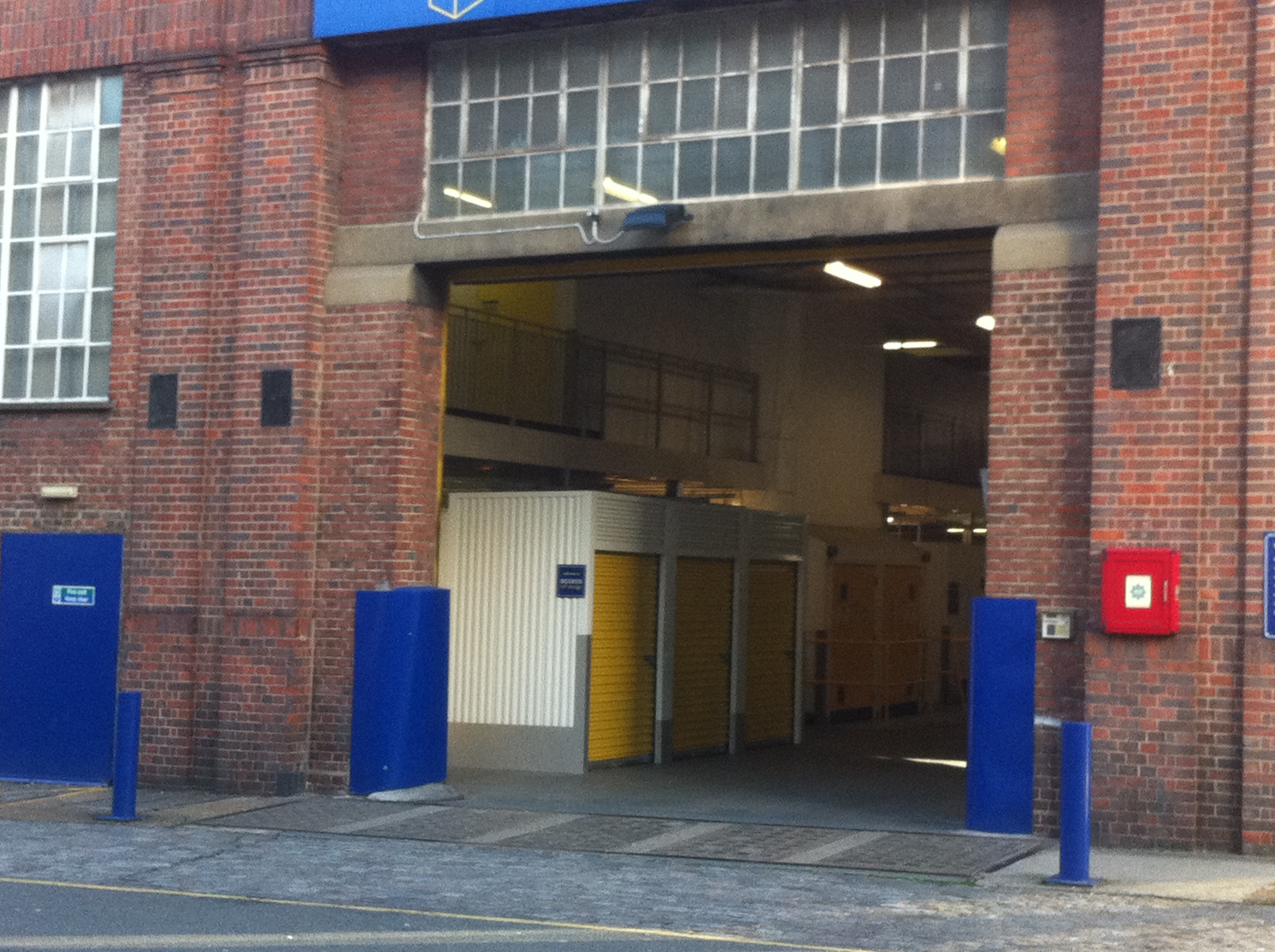
Most of the curtains on Belgrove Street were still drawn. One side was hotels, the other taken up by the brick storage building. Her ‘home’ for the moment.
Joe was on duty this morning.
‘Good to see you, Ilona. How’s it going?’
He was always cheerful, even though he claimed not to be an ‘early-bird.’ She liked this phrase.
‘Looking forward to sleep!’
‘I’ll bet.’
She was glad when he was around. Not that the other guys there were unfriendly.
‘I’ve explained our arrangement and they’re ok with it,’ he’d said. ‘Just keep yourself to yourself. Management wouldn’t allow it, but no need for them to know. A few weeks I’ve told the boys. Until you get yourself sorted.’
She’d already been here a fortnight. How many weeks did ‘a few’ mean? It was not a precise expression. She had not yet found somewhere else to live. Had searched only half-heartedly, reluctant to visit tiny rooms, some without even a window, in areas like Leyton, New Cross or Arnos Grove, which would take at least fifty pounds a week from her. She wished she could find another squat. Was ‘keeping her ears open,’ as they said, for these were not advertised. Since she first left Hungary, she’d lost count of the number of places she’d lived in.
Joe was the neighbour of the friends she’d gone to after she’d left her room in Dollis Hill the previous month. She’d arrived home from work one morning to find her landlord, a man in his fifties who owned the house, in the kitchen, a bottle of whiskey on the table. She was pouring cereal into a bowl, her back to him, when he pressed himself against her and put his arms around her. She turned around and pushed him away, shoving her knee between his legs, screaming as loud as she could. She left that day. Stale breath, hot against her ear, the bristle of stubble against her cheek. She still felt sick remembering it.
Her friends lived in a tiny studio near Mornington Crescent. The first couple of days there her shifts at the casino finished at six in the morning, and she slept while they were at work, was gone soon after they arrived home. But then came nights with the three of them crammed into the room, Ilona on the floor, her friends in their bed.
It was lucky she got chatting to Joe in the hallway.
‘If you’re really stuck I might be able to help you out with somewhere. Just for the short-term.’
She wasn’t expecting a storage unit.
‘How much will this cost?’
‘Nothing.’
‘Really?’ People never gave you things for free in this city. Why was he doing this?
‘There are always empty units. Seems a crying shame people can’t use them – I hate to see wasted space. You can buy me a beer in return sometime.’
At first she’d been on alert with Joe. But he was always just his usual good-natured self.
#
Ilona walked down a corridor, past identical closed doors the colour of egg yolks. Fluorescent lights, evenly spaced, hung from the ceiling and were reflected in the pale grey metal walls to the units. Hers was in the basement, right in the centre of the building. Joe had told her it was one of the warmest spots. And one of the bigger ones. Big enough for the mattress, which he’d got her from an abandoned unit, to take up only half the floor area. ‘You’d be surprised how often people stop paying up and just leave their stuff,’ he’d added.
When she switched off the light, her space, with its four metal walls and metal ceiling, was thrown into blackness. In this respect only it reminded her of her bedroom at home, especially on nights where the moon was barely visible. In London there was always light, pushing through thin curtains or under-sized blinds.
That morning she slept soundly. Sometimes there was noise. The rattle of trolleys when people moved their things in or out. Conversations.
‘We get all sorts here,’ Joe had said, describing an actress who lived in a ‘shoebox’ nearby and hired a unit for her wardrobe. ‘There’s an old fellow opposite you. Uses it to store his collection of globes. His wife won’t let him keep ‘em in the house. Comes in most days.’
His door was ajar when she opened hers. She’d never seen him though. More often than not there was no-one around. Just all their possessions waiting quietly.
#
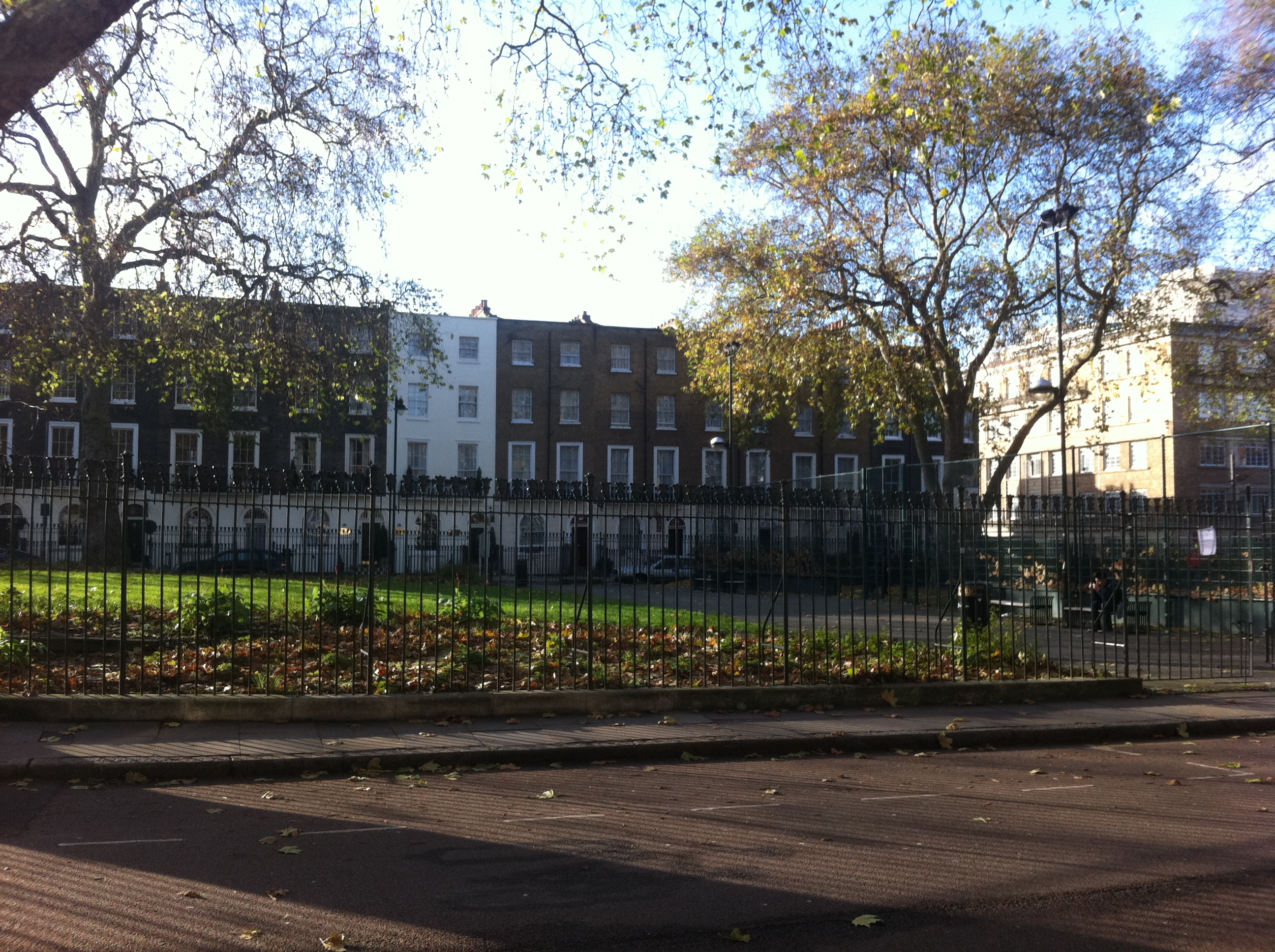
Early afternoon she stepped through the wide doorway onto Belgrove Street, blinking. It was so sunny for late October. And warm enough to eat lunch in the square behind the storage building. She had been taught that the word square meant a shape with four equal sides, but this one was more like a rectangle, and with its far end on an angle. On the next bench sat a man with very short dark hair, speaking Polish on his phone. He’d also been here last week. And she thought she’d even seen him before, somewhere in the city. At the casino? Or had it just been a person who looked similar?
He’d noticed her too, was looking in her direction as his voice rose. He finished his call and walked towards her.
‘Hello,’ he said. ‘I know you. We meet before.’
‘Maybe. But where?’
‘With Antek.’
Hearing his name, she flinched.
‘He bring you to see house we make in Primrose Hill.’
Of course. ‘Boss man,’ as Antek had described him. They’d been to the house just before they broke up. It was on a tiny street. ‘Is called mews in English,’ Antek had explained.
‘Just two people will be living here?’ she asked, walking through room after room with him.
‘Boss man’ – she couldn’t remember his name – said something in Polish to Antek after he was introduced to Ilona. They both laughed, and he thumped Antek on the back.
‘What is he saying?’
‘That he is not surprised I have kept beautiful girlfriend hidden.’
Beautiful girlfriend. So beautiful Antek couldn’t stop himself having sex with the waitress from the Moroccan restaurant. The one she’d always been suspicious of. After almost a year it still angered her that she’d had to leave the squat in Mayfair because of what he’d done.
‘What’s your name?’ Ilona asked the man.
‘Pawel. And yours?’
‘Ilona.’
They shook hands.
‘You are working near here?’
‘No, staying nearby. And you?’
‘Working.’ He pointed at a house on the corner, whose dark brick walls and high white-framed windows Ilona had admired. ‘We make refurbishment. So how is the Antek?’
‘I don’t know. We are not together. He is not with you anymore?’
‘No. I have to fire him many months ago.’
She was relieved.
‘Was very good,’ Pawel said. ‘Then he change. I don’t know why. Maybe too much vodka!’
‘Perhaps we are meeting up again sometime?’ Pawel suggested to Ilona before he left. ‘This weekend?’
#
On Sunday afternoon he drove them to Greenwich, crossing the river at the bridge with the two towers. It was one of the few times Ilona had travelled through London in a car.
The weather was still fine. They walked through the park to the Observatory and took photos from each other’s phones, one foot either side of the meridian line. From the top of the hill the silver-grey towers of the financial district appeared very close. When she’d worked at the Savoy, on a clear day she could see them in the distance from the windows in some of the top floor bedrooms.
They drank coffee and ate cake in a small white building. Always watchful of how much she was spending, she was relieved when he insisted on paying.
‘This building is hexagon,’ he said. ‘In Polish we say szesciokat. I have to learn this word in English as I have client who ask me to make small building in her garden in this shape because she say six is her lucky number.’
‘And did it bring her luck?’
‘She think so.’
They laughed.
‘That’s good. Do you enjoy being a builder?’
‘Actually I am contractor. Owning company. Interesting work, but also stressful. Complicated clients. Always changing mind. I think is aging me.’ He smiled, touching the greying hair above his ears. ‘And now everyone wanting basements. One even with swimming pool. Another lady ask for two kitchens – hiding maid in one to do real cooking!’
‘Lucky people.’ Had any of them come from nothing, or had they been born into such a lifestyle? ‘And lucky for you to be getting so much work.’
‘Lucky, yes. And some days I think unlucky too. Everybody always wanting, wanting. Perhaps they drive me to early grave!’
‘I hope not.’
‘And what are you doing?’
‘I work at a casino. As a croupier.’
‘You like gambling?’
‘I’ve never tried. I used to clean at the Savoy hotel. But I became bored – I was always alone in the rooms, doing the same thing every day. This job has good prospects. And it is interesting to watch all the people who come, to speak with them.’
Most were harmless, many lonely. They told her things – their girlfriend leaving, their business failing – that she would not say to a stranger. Occasionally, inappropriate comments were made, in anger or in lust, but she had learnt the ‘kiss-up’ – making a kissing expression with her lips and placing her hand around her mouth – to call over an inspector to sort it out. After four months there she was still not able to believe the amounts of money people were willing to risk. Yesterday someone had put down ten thousand pounds on her table. And lost most of it.
‘You will stay in London?’ he asked.
‘I want to.’
She didn’t tell him her plan to work for a few years and save up enough to study here. To one day be a lighting designer for the theatre. Sometimes it seemed a crazy and impossible dream. This city bled money from you. There were even times she thought about returning to Hungary, days when she could not see anything beautiful about this harsh, rainy northern place.
But it had a hold on her. Like a lover who could be both cruel and kind, whenever she’d had enough, it would pull her close again, reminding her there was no other quite like it. It might be lying in a deckchair by the river, listening to a free jazz band outside the National Theatre, the sun hot on her face. Or discovering a beautiful room – used for breakfast only – at the home of an architect called Sir John Soane, with a domed ceiling and tiny round mirrors that looked like windows. Or simply the pink of an autumn sunset, surprising her on the Euston Road as she exited the tube at rush hour.
#
‘Do you like him?’ her friend Tatjana asked.
‘He’s nice. But it’s not like that between us.’
She didn’t mention how, when they’d met again that last weekend, to go skating at the Natural History Museum, Pawel had grabbed her hand while they were slithering around, trying to balance on their blades, and said ‘We will fly Ilona,’ and how the sensation of his large, warm palm in her own had felt safe, yet gently electric.
‘What does he do?’
‘Building contractor. With his own company.’ She respected that he had worked hard and made something of himself here.
‘Successful?’ Ilona could almost see Tatjana’s brain working, calculating opportunities.
‘If you mean how much money does he make, I have no idea. I don’t want to be reliant on a guy. I’m not even sure I want a relationship at the moment.’
It was safer to stay alone. There had been no-one since Antek. And boyfriends could be a distraction. She wanted to do her job well, save as much money as she could.
‘You can’t always plan these things. You have to grab your chances. Is he attractive?’
‘Not bad.’ There was a solidity to him, which was reassuring and very masculine. She particularly liked his eyes, large and green with long dark lashes. ‘But at least ten years older than me.’
‘Older is good.’
‘I am hoping to have family soon,’he’d said over hot chocolate, after the skating. ‘Maybe even with you if I am very lucky,’ he’d teased.
‘You’ll have to wait years then,’ she’d teased back. ‘I am too young for that.’
‘So I wait.’
‘What have you been up to?’ Ilona asked Tatjana, to change the subject.
‘The same as before. But now I’m studying too. In Business.’
Tatjana had the ability to provoke envy in Ilona, a reaction she disliked in herself. It was not just the news of her part-time degree, but also the soft grey wool coat, the fitted pale blue sweater, which looked like cashmere, the golden highlights in her blonde hair. In her eight-hour shift at the casino, Ilona earnt less than Tatjana made in an hour.
‘I think I have a long wait until I can study.’
‘You know how you can speed it up. Have you thought about it any more?’
Of course she had. And when she heard Tatjana describe how she mentally cut off those hours from the rest of her life – ‘almost like they belong to another person,’ and how they were a small percentage of her week anyway, and bought her huge amounts of freedom – it was tempting. In Tatjana’s eyes, living as Ilona did had a far higher price to pay.
‘It’s just work,’ she’d once said. ‘Using your body instead of your brain. And the men are mostly ok, some attractive even – normal people. And if I don’t like someone I just imagine they’re someone else.’
Ilona’s rational mind had brought her close to calling the agency. But something – call it her heart, her soul – always pulled her back, protected her. You did not just let anyone near your body.
‘I have. And it’s not for me,’ she told Tatjana.
Tatjana appraised her.
‘Shame. You’d be popular. We could even do a double act! Blonde and curvy with petite and dark. You can earn a fortune that way!’
Tatiana always had been precocious, even back home. Ilona had not told her that at twenty-one she had only ever slept with two people.
‘Leave it Tatjana. I’m not going to.’
#
The weather had now turned. In the basement, Ilona shivered and tried to get back to sleep, wrapping the quilt tightly around her. It smelt like it had not encountered fresh air for a long time. It was noisy this morning, and an hour later she was awake again. She massaged wax earplugs in her palms, until they were soft enough to insert into her ears.
A crashing sound woke her from a dream in which she and Tatjana, wearing only white lace underwear and with white feathers pinned in their hair, were standing on a stage. Tatjana was tugging her by the hand, urging her forward, but she was resisting. For a second she thought the sound was her falling off the stage.
Instinct pulled her upright. She opened the door to the unit, peering into the harsh light of the corridor. A man was slumped there.
‘Help,’ she screamed, when she reached reception. ‘Help.’
#
It had been the old man with the globes. A heart attack.
‘If you hadn’t heard him he’d probably be a goner by now,’ Joe said later. The ambulance had come quickly, the hospital only a few blocks away.
‘But I’m really sorry, you’re not going to be able to stick around any longer. It’s too risky. If he’d dropped dead, the police would’ve been in, and you’d have been questioned. Management would have found out you were here, and I’d have probably lost my job.’
‘I understand,’ said Ilona. Someone like Tatjana might have known to stay quiet at the sound of anything that could suggest trouble.
#
The globe-man’s heart attack was like a forewarning. Four days later, when she was staying at a nearby hostel, twenty to a room and missing having her own space, her father called.
‘I’m so sorry. Bad news. Granny has died.’
Her parents had found her, in her bed, after she’d failed to arrive for lunch. She’d shown no signs of ill-health.
‘I’m coming home,’ said Ilona. ‘When is the funeral?’ She wanted to see and touch her parents, especially her mother, who’d cried when she came on the phone, and not just hear their voices, separated by many hundreds of kilometres.
‘You don’t need to come. I know you are busy, it is expensive. Everyone will understand,’ said her father.
Walking along Caledonian Road, towards King’s Cross, the wind blew in her face. People rushed about their business, eyes fixed ahead or on their phone screens. A car sounded its horn at her when she crossed the street just after the green man had turned red.
Her body felt shaky, the edges of her skin no longer quite so solid. Today she didn’t want to be alone. Yet she realised how few people she knew well enough here to call. She dialled Tatjana’s number, then cancelled it before it even rang. Would she understand? She wanted to speak to Pawel. His voicemail asked her to try again later. She was very near Argyle Square. Perhaps he would be at the building site.
The front door of the house was open. She heard sawing and a radio in the distance. She went up the stairs, peering into rooms. There was so much wood. Not just the floors, but the cupboards and some of the walls too. Its fresh smell reminded her of home, of logs stacked up for winter, of her grandmother making a fire. Her eyes prickled.
She found three workmen at the top of the house.
‘Is Pawel here?’
‘Coming maybe one hour.’
‘Tell him to look for Ilona in the square.’
#
‘Probably best you going home. One week, two weeks. Important to be with family.’ He sat next to her on the bench, ignoring the ringing of his phone.
Ilona nodded. How much would a last minute flight will be?
‘You need help to pay for ticket?’
‘You are very kind. But I am ok.’
‘Tell me when flight is, and I drive you to airport.’
#
Early morning and they headed away from the city centre, towards Luton. Tall streetlamps glowed pale orange. Soon the buildings became lower and she was given a glimpse of the open land beyond. They turned onto a bigger, faster road, the lights now a brighter orange. Inside the car it was warm. Pawel’s hands held the wheel. She remembered the feeling of his palm, the day they’d skated.
‘When are you coming back?’ he asked.
‘In one week.’
‘Good.’
She leant back in her seat. It was good, it felt good.
There was a strange beauty to this dark landscape they sliced through; motorway lights, almost floating in the darkness, tracing the curve of the road ahead like endless miniature suns.
Biography
Annabel Chown was born in London and studied architecture at Cambridge University. She worked as an architect in London and in Berlin, and taught architecture at Kingston University. Her memoir, Hidden: Young, Single, Cancer was published in 2020 by Blue Door Press. Her writing on breast cancer has also been published in Red magazine and The Telegraph.


 Blue Door Press