I’ve been enjoying writing the smallest of texts – children’s poems. At the same time, I’ve been reading fiction for my own pleasure, for my book group and also, a fairly recently joined French reading group. These experiences have led me to think a lot about size and length of texts – in fact the size and length of all cultural creations, including concerts, plays and films, even mini-series.
Perhaps it’s just that I’m getting older, the clock is ticking, bedtime has never looked more inviting and can’t come soon enough, and coping with something that goes on and on, however good, feels increasingly hard. This is especially so if it is not stunningly high quality and utterly riveting. Whatever happened to the ruthless editor, who stripped out unnecessary guff? Gordon Lish, Raymond Carver’s editor, famously slashed his stories, in one case by 70%, in many others by over 50%. At one point Carver wrote to Lish,
‘I can’t undergo the kind of surgical amputation and transplant that might make them someway fit into the carton so the lid will close.’
As it turns out, he could and did, and his writing was all the better for that.
It is said that Ezra Pound cut T.S.Eliot’s ‘The Waste Land’ in half. Some writers, of course, are their own demanding editors. Diana Athill is quoted in The Guardian (Sept 16 2000) saying of Jean Rhys,
‘what she aimed for was ‘getting it right, getting it as it really was’; and that one must cut and cut and cut again.’
Rhys’ most well-known book, Wide Sargasso Sea is one of my favourites of all time and is a miracle of tight construction, brevity and the richness that comes from honing and refining rather than indulging in an expansive splurge of ideas.

So back to my current reading for pleasure, and here are a few observations. Lots of contemporary novels seem to me to be far too long, particularly those by writers whose reputations assure them publication. Reading Maggie O’Farrell’s The Marriage Portrait and Barbara Kingsolver’s Demon Copperhead I longed for a bit more restraint – fewer episodes, less description, a little less banging the reader on the head with a large hammer, saying ‘pay attention to my messages’ in the case of Kingsolver, or ‘look how much research I’ve done and how beautifully I can write’, in the case of O’Farrell. I loved Hamnet but honestly, in The Marriage Portrait there’s a limit to how much poetic description of 16th century clothing I can take over five hundred pages of a narrative text. Kingsolver was, of course, trying to evoke Dickens, who wrote famously big tomes. But there are a few major differences. Dickens was a master of light and shade, managing to entertain with humour, caricature, evoking multiple voices and swings of fortune, bringing the reader with him as he made his points about justice, wealth and poverty and human behaviour. Demon Copperhead tracks David Copperfield but, for me, without the same lightness of touch. It is social comment rather than satire, and has a relentless grimness that is hard to live with over the many hours it takes to read.


I could say the same about films and theatre. Several trips to the National Theatre to watch new plays have started with a sense of excitement and promise, and ended with a wish that at least half an hour had been shaved off by a Gordon Lish-like director. In particular, in my view, many contemporary playwrights need to ask themselves questions about what happens after the interval (or sometimes, sadly, intervals). All too often, the play seems to tail off, flap around a bit and then end in a disappointingly lame dénouement. Arthur Miller and Tennessee Williams, and one of my personal favourites, Sam Shepherd, knew exactly how to ratchet up the tension and end with a punch to the gut. I want to go away wishing it weren’t over, rather than longing for the end to come!
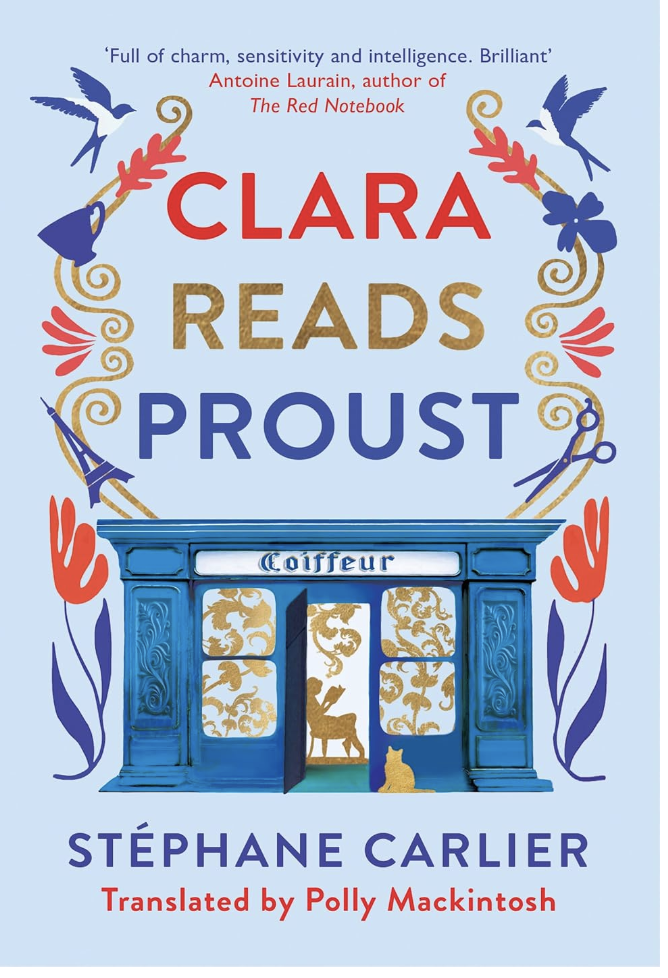
By contrast, the contemporary novels that I have been reading for my French reading group have all been short ones – we’ve deliberately imposed a strict page limit on our choices, to allow for the struggle of reading in another language. And my goodness what superb writing we’ve encountered! Perhaps there are also contemporary French novelists who are churning out doorstops but the ones who are not are absolutely first rate. Clara Lit Proust by Stéphane Carlier (192 pages) is a marvellous book about the power of reading, rather unexpectedly but brilliantly set in a hairdressing salon. Likewise, with novels by Amelie Nothomb, Philippe Besson and Faïza Guène, among others.
There are some exceptions to this, of course, and perhaps I could now be accused of making differential rules for books I happen to like or not. But I think there has to be a strong rationale for excessive size. Family sagas, some historical novels, books grappling with complex material would come into this category for me. So, for instance, Apeirogon by Colum McCann is a highly original and complicated exploration of the Israel/Palestine question, with one thousand and one short sections mirroring The Arabian Nights. There’s good reason for its size. And Paul Murray’s The Bee Sting is a fabulously written story of different generations of a family, bringing in different perspectives and surprising revelations right up to the very end.
What about personal essays and their length? I’ve hit nine hundred words or so now. Too long? Too wordy? In need of a good editor? I’ll leave that to you to decide.
Barbara Bleiman
September 26 2024
 Blue Door Press