OF NOTE: Big Books and Other Overly Long Things

I’ve been enjoying writing the smallest of texts – children’s poems. At the same time, I’ve been reading fiction for my own pleasure, for my book group and also, a fairly recently joined French reading group. These experiences have led me to think a lot about size and length of texts –  in fact the size and length of all cultural creations, including concerts, plays and films, even mini-series.

Perhaps it’s just that I’m getting older, the clock is ticking, bedtime has never looked more inviting and can’t come soon enough, and coping with something that goes on and on, however good, feels increasingly hard. This is especially so if it is not stunningly high quality and utterly riveting. Whatever happened to the ruthless editor, who stripped out unnecessary guff? Gordon Lish, Raymond Carver’s editor, famously slashed his stories, in one case by 70%, in many others by over 50%.  At one point Carver wrote to Lish,

‘I can’t undergo the kind of surgical amputation and transplant that might make them someway fit into the carton so the lid will close.’

As it turns out, he could and did, and his writing was all the better for that.

It is said that Ezra Pound cut T.S.Eliot’s  ‘The Waste Land’ in half.  Some writers, of course, are their own demanding editors. Diana Athill is quoted in The Guardian (Sept 16 2000) saying of Jean Rhys,

‘what she aimed for was ‘getting it right, getting it as it really was’; and that one must cut and cut and cut again.’

Rhys’ most well-known book, Wide Sargasso Sea is one of my favourites of all time and is a miracle of tight construction, brevity and the richness that comes from honing and refining rather than indulging in an expansive splurge of ideas.

So back to my current reading for pleasure, and here are a few observations. Lots of contemporary novels seem to me to be far too long, particularly those by writers whose reputations assure them publication. Reading Maggie O’Farrell’s The Marriage Portrait and Barbara Kingsolver’s Demon Copperhead I longed for a bit more restraint – fewer episodes, less description, a little less banging the reader on the head with a large hammer, saying ‘pay attention to my messages’ in the case of Kingsolver, or ‘look how much research I’ve done and how beautifully I can write’, in the case of O’Farrell. I loved Hamnet but honestly, in The Marriage Portrait there’s a limit to how much poetic description of 16th century clothing I can take over five hundred pages of a narrative text. Kingsolver was, of course, trying to evoke Dickens, who wrote famously big tomes. But there are a few major differences. Dickens was a master of light and shade, managing to entertain with humour, caricature, evoking multiple voices and swings of fortune, bringing the reader with him as he made his points about justice, wealth and poverty and human behaviour. Demon Copperhead tracks David Copperfield but, for me, without the same lightness of touch. It is social comment rather than satire, and has a relentless grimness that is hard to live with over the many hours it takes to read.

I could say the same about films and theatre. Several trips to the National Theatre to watch new plays have started with a sense of excitement and promise, and ended with a wish that at least half an hour had been shaved off by a Gordon Lish-like director. In particular, in my view, many contemporary playwrights need to ask themselves questions about what happens after the interval (or sometimes, sadly, intervals). All too often, the play seems to tail off, flap around a bit and then end in a disappointingly lame dénouement. Arthur Miller and Tennessee Williams, and one of my personal favourites, Sam Shepherd, knew exactly how to ratchet up the tension and end with a punch to the gut. I want to go away wishing it weren’t over, rather than longing for the end to come!

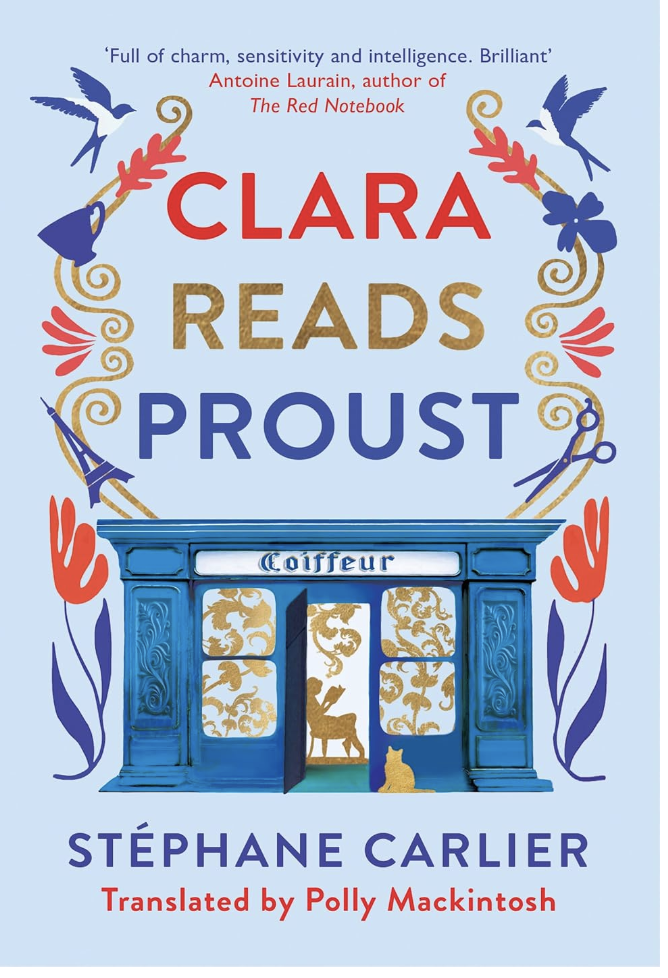
By contrast, the contemporary novels that I have been reading for my French reading group have all been short ones – we’ve deliberately imposed a strict page limit on our choices, to allow for the struggle of reading in another language. And my goodness what superb writing we’ve encountered! Perhaps there are also contemporary French novelists who are churning out doorstops but the ones who are not are absolutely first rate. Clara Lit Proust by Stéphane Carlier (192 pages) is a marvellous book about the power of reading, rather unexpectedly but brilliantly set in a hairdressing salon. Likewise, with novels by Amelie Nothomb, Philippe Besson and Faïza Guène, among others.
There are some exceptions to this, of course, and perhaps I could now be accused of making differential rules for books I happen to like or not. But I think there has to be a strong rationale for excessive size. Family sagas, some historical novels, books grappling with complex material would come into this category for me. So, for instance, Apeirogon by Colum McCann is a highly original and complicated exploration of the Israel/Palestine question, with one thousand and one short sections mirroring The Arabian Nights. There’s good reason for its size. And Paul Murray’s The Bee Sting is a fabulously written story of different generations of a family, bringing in different perspectives and surprising revelations right up to the very end.

What about personal essays and their length? I’ve hit nine hundred words or so now. Too long? Too wordy? In need of a good editor?  I’ll leave that to you to decide.

Barbara Bleiman

September 26 2024

Of Note: Re-reading Milkman

Reading a novel again …. in a different world.

Milkman Anna Burns Faber 1st pub 2018

Milkman is a novel about, among many other things, reading. The narrator’s habit of reading as she walks, basically anywhere, and 19th century novels mostly, is the main crime that she, referred to throughout as middle sister, commits.

Volunteering to present Milkman to a book group was perhaps a mistake; I’d foolishly set myself up as over-enthusiastic. I first read the book a year or so after Anna Burns won the Booker and then readers had been split. ‘It’s a difficult book but worth it’, seemed the consensus. I had loved it, and was convinced that the others in the book group who had not yet read it must feel the same. They had something exceptional ahead of them.

But how did I feel going back to the novel? This time, when bogged down near the end in poison-girl’s sister’s fate, I nearly despaired. How much more?

But it was still a pearl of a novel, I didn’t want to miss out on introducing it to new readers, have it left permanently unopened on the shelf or in Oxfam. And once I’d finished it, I was back to feeling admiration. Anna Burns has been generous; this is a very generous novel with a lot to say.

What did I remember from first time around?

That we are told straight away the milkman is dead, and not knowing that is somehow not a relief.

“The day Somebody McSomebody put a gun to my breast and called me a cat and threatened to shoot me was the same day the milkman died. He had been shot by one of the state hit squads and I did not care about the shooting of this man. Others did care though, and some were those who, in the parlance, ‘knew me to see but not to speak to’ and I was being talked about because there was a rumour started by them, or more likely by first brother-in-law, that I had been having an affair with this milkman and that I was eighteen and he was forty-one.”

What else did I remember?

That it was a short novel. Wrong.

Her voice. That she was a compelling narrator. Absolutely. Though a bit irritating, mostly amazing.

I needed to read it again…slowly. What did I find?

That it was harder to read a second time. Right.

That there were an enormous number of relatives.

Another first memory which stuck was dread: the heady immersion in that terrifying world that resembles Northern Ireland, Belfast, in the Seventies, in the middle of the Troubles.

Although it is recognisable as this skewed form of Belfast, it’s not really Belfast in the 70s. I would like to think it could be seen as any sort of totalitarian, closed society existing in similarly oppressive conditions,” Burns explains. “I see it as a fiction about an entire society living under extreme pressure, with long-term violence seen as the norm.”

I was re-reading when the world was killing itself. The newspapers were delivering accounts of regimes where truth has been turned on its head, where gangs and powerful groups rule and neighbour murders neighbour.


Did I like it? I did. If ‘Like’ can be qualified. Yes, it’s a triumph but what a burden. Packing in a crazy density of events that successfully builds up to such anxiety.

Throughout is the heroism and the gift for self-preservation of middle sister. The Ardoyne is no place to grow up female…or male. The men in their tacky balaclavas are pathetic but Anna Burns still manages to show how terrifying they were. The women were a more-mixed bag but they were in many cases feminist, they might condemn middle sister’s refusal to marry, but they supported each other with meals and babysitting, with their neighbourhood pharmacies; hospitals were to be avoided so the women stepped in.

Living in the middle of fear where voicing dissent, just saying the wrong thing could be a death sentence, middle sister would not join a protest, she was trying to stay under the radar of the status quo. I’d been thwarted into a carefully constructed nothingness by that man. Also by the community, by the very mental atmosphere, that minutiae of invasion.”

Was the stalking of middle sister by the milkman at all erotic? There was nothing or no sexual energy that I could feel, even when Ma was competing with the holy women for the real milkman. Maybe-boyfriend was sweet, if obsessed by cars, but he was deaf to middle sister’s warnings about the scary, homicidal milkman.

Milkman was a sexual predator, a sleazy stalker. Middle sister needed protecting. She realised that he was picking up on her secret desires and she was being diminished to nothingness. No one was sympathetic with her refusal to take the normal path – marriage, babies, don’t ask questions – rather than peaceably continue with what she was up to with maybe-boyfriend, their maybe-relationship. She refused to answer questions. If only she’d taken advice, then that way she’d be protected.

Burns holds a mirror to the “communal policing” that takes place among “a whole community, a whole nation, conditioned too, through years of personal and communal suffering, personal and communal history, to be overladen with heaviness and grief and fear and anger.“

Sometimes re-reading was a bit like pushing through clay; another digression and we were back in time getting another story, moving forward then backwards becoming dizzy as more detail and more expansion is piled on. I was bogged down in digressions.

Yet there are so many gems, threads of stories to be followed forward and back: those genius ‘wee sisters’ so bizarrely precocious. Third brother-in-law who is so obsessed by running he cannot hear that middle sister has been poisoned, and is almost dying. (That sequence is so crazy it must be true.) Going to evening classes but missing the chance of Classics and ending up doing French. Coming home one evening after class, finding a cat’s head in the ten-minute area. Wrapping it carefully in cotton handkerchiefs then the sudden appearance of the ghastly milkman. Rescued by the real milkman whose protection is ‘he loves no one’. He is so normal. Ma’s warning, her reminder that no one asks questions, as she accepts the real milkman’s gift of double cream. Middle sister’s father’s death-bed account of being abused as a child. Wee sisters listening.

…this is a book about rumours, gossip, the power of gossip, the power of history and also the power of fabricated history, when rumours become the history.”

It’s a novel that shows how living in fear can destroy but some heroic individuals cannot be defeated.

Is there something more that the reader can get second, or third, fourth time round?

Of course, there is. Anna Burns has been generous with her own experience, and her own fears; this is a very generous novel with a lot to say and reading it now with the world killing each other it’s not just about Northern Ireland.

Burns’s agenda is not to unpack the dreary tribal squabbles that so characterised Troubles-era Northern Ireland; rather she is working in an altogether more interesting milieu, seeking answers to the big questions about identity, love, enlightenment and the meaning of life for a young woman on the verge of adulthood …” The Irish Times

Anna Burns says “I see it as a fiction about an entire society living under extreme pressure, with long term violence seen as the norm.”

And those societies are all around us. As she says in Milkman:

As for the killings, they were the usual meaning they were not to be belaboured, not because they were nothing but because they were enormous, also so numerous that rapidly there became no time for them.”

Which is all hideously familiar.

And the group were unanimous. They loved the book.

Jane Kirwan  February 2024

The importance of patience: why it took 21 years to publish Snow on the Danube

9781916475403

I started writing Snow on the Danube in 1998, and I’m about to publish it 21 years later!

You can find details (including free tickets) about its launch here.

It was quite unlike anything I’d written before because it was not autobiographical at all, which most of my other work had been.

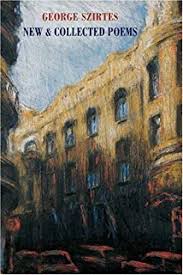
I became fascinated by Hungary because of my interest in the music of Franz Liszt and Béla Bartók; two very contrasting Hungarian composers. Liszt was the romantic showman, a dazzling virtuoso, and the composer of magnificent piano concertos that I fell in love with when I was a teenager. Bartók was, in many ways, the opposite to Liszt: an experimental composer who did very different things with rhythm and tonality. His Concerto for Orchestra is one of my favourite pieces of music. Reading about his troubled relationship with Hungary and his desperately sad and traumatic exile during the Second World War got me investigating the Magyar people’s history. I had also always loved Hungarian-born George Szirtes’s poetry; one of his early collections of poetry, Short Wave, greatly moved and excited me; I loved his elliptical Kafkaesque poetic narratives.

download
Clarissa Upchurch brilliant art adorns George Szirtes’ poetry

In 1998, I took the brave but foolhardy plunge to write a novel about Hungary. I visited the country a few times, following up on contacts provided by me by my New York in-laws, who knew quite a few Hungarian emigres. I had also met George Szirtes by then, and he helped me connect with some people in Budapest, including a wonderful editor of a Hungarian literary magazine. I spoke to them, and toured around Budapest, and bought the books translated into English. The internet had not become the great repository of information that it is now, and so the literature I found in Hungary had a magical, rare quality to me. I watched Hungarian films, and generally immersed myself in as much English-language based Hungarian material as I could.

330px-Bela_Lugosi_as_Dracula,_anonymous_photograph_from_1931,_Universal_Studios
Béla Lugosi’s interpretation of ‘Dracula’

I rediscovered Béla Lugosi’s interpretation of Dracula after watching Tim Burton’s Ed Wood (1994). Philip Glass wrote a new score for the film which was issued with the film in 1999. I felt drawn to the voice of a ‘count’ who was both a little similar to Count Dracula but in many ways very different: a coward, a hypochondriac, fussy, musical, someone who only adored himself and his sister. A voice emerged, and I found myself writing about the intense love between my protagonist Count Zoltán Pongrácz and his sister, Anna. I was reading Proust at the time, and used a sort of quasi Proustian voice for him in the sense that it was deliberately fussy, nostalgic, full of yearning.

History shaped Zoltán’s fate; he was born on the day of the Treaty of Trianon (1920), the disastrous treaty that robbed Hungary of its lands made in France after the First World War. In many ways, Zoltán’s fate was sealed by this denuded world; he was the last in a long line of Counts, doomed live on after his family lost everything.

asp_620_lanchid
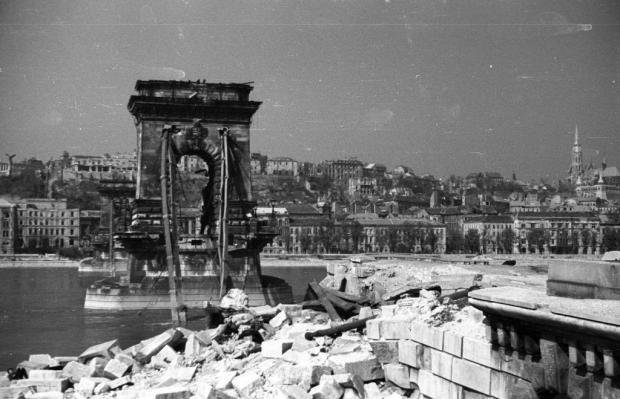
The destruction of Budapest’s chain bridge during the WWII.

Zoltan’s story, perhaps oddly, came relatively easily for me; I had completed a draft of it by 2001. But then I found it very difficult to give his historical story, set as it is before and during the Second World War, a ‘frame’: a contemporary story which explained why someone might want to discover his lost narrative. I felt the story needed such a frame; a reason as to why the reader might want to connect with the story, a British connection.

I wrote many contemporary ‘frames’ over the years, seeking to give Zoltán’s voice a suitable justification. Zoltan’s story was of interest to people. George Szirtes, as editor of an anthology of fiction and poetry, First Writing, published a section of it in 2001; an eminent agent liked the novel; other discerning readers such as a literary editor, now the editor of the New Statesman, Jason Cowley, and an audiobook publisher, Nicolas Soames, said nice things.

Zoltán was such a powerful character for me that I used him in my first published novel, The Last Day of Term (Shortbooks: 2011; new edition Blue Door Press: 2019). He was the great uncle of my main protagonist Béla Pongrácz, a disaffected teenager living in Bethnal Green and causing mayhem at the academy he had been expelled from. But Zoltán’s story remained hidden from Béla and all those around him; he was just a sad old man living in a down-at-heel council flat, listening to Radio 3, his head forever obsessing about the past.

It took the great editors at Blue Door Press to spot what the novel needed; Pam Johnson and Jane Kirwan read a draft and said they liked Zoltán’s story, but felt that the modern ‘frame’ for the story needed a lot of work. Pam suggested using the device of Béla finding Zoltán’s manuscript after the count died, and this, finally, was the trope that we all felt really worked. The idea of Béla thinking that he’d been left some money only to find a manuscript intrigued me; I saw the potential of Béla finding redemption in reading about his family’s past; the healing power of words, something that interests me a lot.

So, I’ve had to be patient. I’ve learnt to be patient. It’s made me also realise that fiction has a staying power which is quite unusual. Unlike journalism which ages very quickly, stories can linger, stay alive, stay fresh. You can’t easily pick up a piece of journalism you wrote many years ago, and revivify it, but with fiction this can be possible if there are still connections in it with the present day. I’d venture to say that the novel’s focus upon the destructive effects of fascism and anti-semitism have made it more relevant than when I started writing it in the more innocent era of the 1990s, pre-9/11, pre-Brexit, pre-Trump, and pre-the scary reprisal of Hungarian fascism which Victor Orbán’s terrible government seem intent upon resurrecting.