Of Note: Re-reading Milkman

Reading a novel again …. in a different world.

Milkman Anna Burns Faber 1st pub 2018

Milkman is a novel about, among many other things, reading. The narrator’s habit of reading as she walks, basically anywhere, and 19th century novels mostly, is the main crime that she, referred to throughout as middle sister, commits.

Volunteering to present Milkman to a book group was perhaps a mistake; I’d foolishly set myself up as over-enthusiastic. I first read the book a year or so after Anna Burns won the Booker and then readers had been split. ‘It’s a difficult book but worth it’, seemed the consensus. I had loved it, and was convinced that the others in the book group who had not yet read it must feel the same. They had something exceptional ahead of them.

But how did I feel going back to the novel? This time, when bogged down near the end in poison-girl’s sister’s fate, I nearly despaired. How much more?

But it was still a pearl of a novel, I didn’t want to miss out on introducing it to new readers, have it left permanently unopened on the shelf or in Oxfam. And once I’d finished it, I was back to feeling admiration. Anna Burns has been generous; this is a very generous novel with a lot to say.

What did I remember from first time around?

That we are told straight away the milkman is dead, and not knowing that is somehow not a relief.

“The day Somebody McSomebody put a gun to my breast and called me a cat and threatened to shoot me was the same day the milkman died. He had been shot by one of the state hit squads and I did not care about the shooting of this man. Others did care though, and some were those who, in the parlance, ‘knew me to see but not to speak to’ and I was being talked about because there was a rumour started by them, or more likely by first brother-in-law, that I had been having an affair with this milkman and that I was eighteen and he was forty-one.”

What else did I remember?

That it was a short novel. Wrong.

Her voice. That she was a compelling narrator. Absolutely. Though a bit irritating, mostly amazing.

I needed to read it again…slowly. What did I find?

That it was harder to read a second time. Right.

That there were an enormous number of relatives.

Another first memory which stuck was dread: the heady immersion in that terrifying world that resembles Northern Ireland, Belfast, in the Seventies, in the middle of the Troubles.

Although it is recognisable as this skewed form of Belfast, it’s not really Belfast in the 70s. I would like to think it could be seen as any sort of totalitarian, closed society existing in similarly oppressive conditions,” Burns explains. “I see it as a fiction about an entire society living under extreme pressure, with long-term violence seen as the norm.”

I was re-reading when the world was killing itself. The newspapers were delivering accounts of regimes where truth has been turned on its head, where gangs and powerful groups rule and neighbour murders neighbour.


Did I like it? I did. If ‘Like’ can be qualified. Yes, it’s a triumph but what a burden. Packing in a crazy density of events that successfully builds up to such anxiety.

Throughout is the heroism and the gift for self-preservation of middle sister. The Ardoyne is no place to grow up female…or male. The men in their tacky balaclavas are pathetic but Anna Burns still manages to show how terrifying they were. The women were a more-mixed bag but they were in many cases feminist, they might condemn middle sister’s refusal to marry, but they supported each other with meals and babysitting, with their neighbourhood pharmacies; hospitals were to be avoided so the women stepped in.

Living in the middle of fear where voicing dissent, just saying the wrong thing could be a death sentence, middle sister would not join a protest, she was trying to stay under the radar of the status quo. I’d been thwarted into a carefully constructed nothingness by that man. Also by the community, by the very mental atmosphere, that minutiae of invasion.”

Was the stalking of middle sister by the milkman at all erotic? There was nothing or no sexual energy that I could feel, even when Ma was competing with the holy women for the real milkman. Maybe-boyfriend was sweet, if obsessed by cars, but he was deaf to middle sister’s warnings about the scary, homicidal milkman.

Milkman was a sexual predator, a sleazy stalker. Middle sister needed protecting. She realised that he was picking up on her secret desires and she was being diminished to nothingness. No one was sympathetic with her refusal to take the normal path – marriage, babies, don’t ask questions – rather than peaceably continue with what she was up to with maybe-boyfriend, their maybe-relationship. She refused to answer questions. If only she’d taken advice, then that way she’d be protected.

Burns holds a mirror to the “communal policing” that takes place among “a whole community, a whole nation, conditioned too, through years of personal and communal suffering, personal and communal history, to be overladen with heaviness and grief and fear and anger.“

Sometimes re-reading was a bit like pushing through clay; another digression and we were back in time getting another story, moving forward then backwards becoming dizzy as more detail and more expansion is piled on. I was bogged down in digressions.

Yet there are so many gems, threads of stories to be followed forward and back: those genius ‘wee sisters’ so bizarrely precocious. Third brother-in-law who is so obsessed by running he cannot hear that middle sister has been poisoned, and is almost dying. (That sequence is so crazy it must be true.) Going to evening classes but missing the chance of Classics and ending up doing French. Coming home one evening after class, finding a cat’s head in the ten-minute area. Wrapping it carefully in cotton handkerchiefs then the sudden appearance of the ghastly milkman. Rescued by the real milkman whose protection is ‘he loves no one’. He is so normal. Ma’s warning, her reminder that no one asks questions, as she accepts the real milkman’s gift of double cream. Middle sister’s father’s death-bed account of being abused as a child. Wee sisters listening.

…this is a book about rumours, gossip, the power of gossip, the power of history and also the power of fabricated history, when rumours become the history.”

It’s a novel that shows how living in fear can destroy but some heroic individuals cannot be defeated.

Is there something more that the reader can get second, or third, fourth time round?

Of course, there is. Anna Burns has been generous with her own experience, and her own fears; this is a very generous novel with a lot to say and reading it now with the world killing each other it’s not just about Northern Ireland.

Burns’s agenda is not to unpack the dreary tribal squabbles that so characterised Troubles-era Northern Ireland; rather she is working in an altogether more interesting milieu, seeking answers to the big questions about identity, love, enlightenment and the meaning of life for a young woman on the verge of adulthood …” The Irish Times

Anna Burns says “I see it as a fiction about an entire society living under extreme pressure, with long term violence seen as the norm.”

And those societies are all around us. As she says in Milkman:

As for the killings, they were the usual meaning they were not to be belaboured, not because they were nothing but because they were enormous, also so numerous that rapidly there became no time for them.”

Which is all hideously familiar.

And the group were unanimous. They loved the book.

Jane Kirwan  February 2024
On Reading the Farm


I’m staying with my sister in Canada, find on a shelf one of my favourite books from childhood. One I read avidly (or so I thought). It was always my book: Jane’s Country Year. A young girl spends a year away from the city on a farm. I’ve carried an image of that farm safely through all those years, or thought I had.

I’m with my brother-in-law; we’re driving through Northern Alberta on our way to visit a real working farm. Our view is flat: sky, prairie, a few abandoned grain elevators. We’re going to collect furniture fifty miles beyond Beaver Lodge. I tell him what I’m expecting to find: a farmhouse in a green valley. Not this one, he says. It’s just a barn I rent.

But there would be a farm? He grunts, yes. He doesn’t seem curious about my book discovery so I don’t confess that I’ve already put it in my suitcase. Did any other story I read as a child have a farm? I read or was read to, and can vaguely remember a few things. There were themes the stories seemed to hold in common: an escape from somewhere not described. Out of the city? To the mountains or the countryside and security. Or Wind in the Willows. Follow Mole and be safer underground.

These were stories of houses, homes, burrows, cottages, farms, isolated in the countryside. Those accounts, those cosy illustrations of rural idylls, webbed into each other. Yet their content has slipped away leaving a sense of comfort in the strangeness. What did they add up to? A farm, a house I wanted as home – kettle on the stove, welcoming grown-ups, warm range, red-check table-cloth, jugs of milk.

He says we’re nearly there. I tell him that I’d just rescued from their shelves my favourite childhood book. He grunts. Our van bumps over potholes. Jane’s Country Year. I add that I’d remembered a cottage embossed in the centre of a green cloth cover but when I’d checked the cover I found it was not a cottage; it was a tree. So, not after all, a cottage deep down in a valley. He grunts again.

I’ve forgotten so much. When I found the lost book on their bookcase I’d remembered other titles that might have an image of that cottage, that valley. I’d googled and found an Enid Blyton with 1950s red-cheeked children: The Family at Red-Roofs. But this wasn’t the one I remembered where a wren was nanny to four children, making egg sandwiches. And was she really an overgrown bird? This one featured a cottage with red roofs but no chubby wren seemed to be catering?

Surely there was a farmhouse in a valley; there were barns and trees. I remember looking down from a height, that there below us was a house? I checked Jane’s Country Year again. It was there, inside, in an illustration. Not as I remembered it but certainly looking down at a valley, farmhouse, several barns. A year. Events like delivering baby lambs only came round once and then something else amazing to witness and then the child was gone away. Or did they invite her back? I must have checked the end of the story? I still could, now that I have the book. Or was it like Heidi with Grandfather? Seduced by the mountain slopes to go back and to keep returning. Whatever was left behind in the town was a longing and a blur. Or was it some threat that Heidi had to escape? Here and there, mountains, snow and a summer with the same vast extent of green.

Not magic but common sense. Down to earth. Like Mole and Ratty. There was food throughout that year, in all the stories. There was a journey there. And a leaving. But that was all right. While I was immersed in reading, it became my year in the countryside, nothing to do with ‘that girl’ at the centre of the story. A farm in a valley surrounded by the seasons, a range, a kitchen, a comfort. Each month accounted for.

As I started to read it again I realised I didn’t want to. I didn’t want to track down and re-read any of my childhood favourites. If I imagined myself back to that ‘Jane’s’ world, I might lose the security of that changing landscape. The warmth of hay in the barn. The cows swaying indifference as they crossed the yard. The steam popping from the cowpats. I didn’t want to relax any more in Mole or Ratty’s kitchen. What was it really like to be cuddled by Jenny Wren? Hardly comfortable.

The adults in the story didn’t consume the children but kept them fed and safe. It was a year that was built round that seasonal year of change. It was secure in the valley. As I read I could hear the conversations, I could hear people that sounded much like my imagined voices for Grandfather and Ratty as they described the workings of the farm. I was shown that countryside so it would never be lost to me. Always isolated, always in a green valley that surrendered to the seasons – bucolic, cows swaying their indifference on their way to the milking-shed. I was given the countryside as if that world was open to me.

That place was in a story, a picture and a feeling and all held in one year. The cycle. A small image embedded into the centre of the green cloth cover of a farmhouse and trees. Looking down from the height, there below us. Ok, it was actually just one tree embossed into the cover.

It was the year. Things only came round once and then she was gone. Or did they invite that girl back? I can’t remember and don’t want to check the book to see. Was it like Heidi with Grandfather, seduced by the mountain slopes? The same extent of green. Down to earth. Like Mole and Badger. There was food. There was a journey there. And a leaving. But that was all right.

My year in the country. All imagined. A farm in a valley surrounded by the seasons, a range, a kitchen, a comfort. Each month accounted for, it was such a long time that it stretches to now. If I go back there, I might lose the security of that changing landscape, the warmth of the hay heaped up in the barn, the cows’ udders swaying as they crossed the yard.

I was given a home in that book but I remember nothing about the young girl at the centre. She was probably too good and sweet to be true. It was the structure of the story that let me imagine my own adventures. It was secure in the valley but mainly I wanted to be back inside, in that warm kitchen. I didn’t always want the open road with Toad, I sometimes wanted to burrow down. Badger’s home in the middle of the Wild Wood would have been welcome.

My brother-in-law takes a sharp turn to the left. He says we’re there and I look out at yet more prairie. We rattle and bump down a track; a gate has been left half connected to a broken fence. We bounce and judder to a halt.

Suddenly I can see nothing. Not only is there no farm, no gentle cows, there is no anything. I don’t move. My brother-in-law has got out into a madness of mosquito and buzzing and is quite lost to me. There are denser shapes walking around that might be animal. A different buzz of energy seems human shaped, it breaks up into a couple who have come out of what must be the farmhouse.

They stand together in the front doorway in a daze of buzzing killers, their arms are crossed over their chests and they are watching. They seem sullen. I had started to get out of the van, not to be a coward, but am immediately covered and stung by these angry packets of hate. I get back in and wait while he loads up the back.

He does a thumbs-up to the blur that is the couple. They do not move; he gets into the van. You ok, he says?

I nod and we reverse, drive back down the track, take the road away to the town.

Jane Kirwan


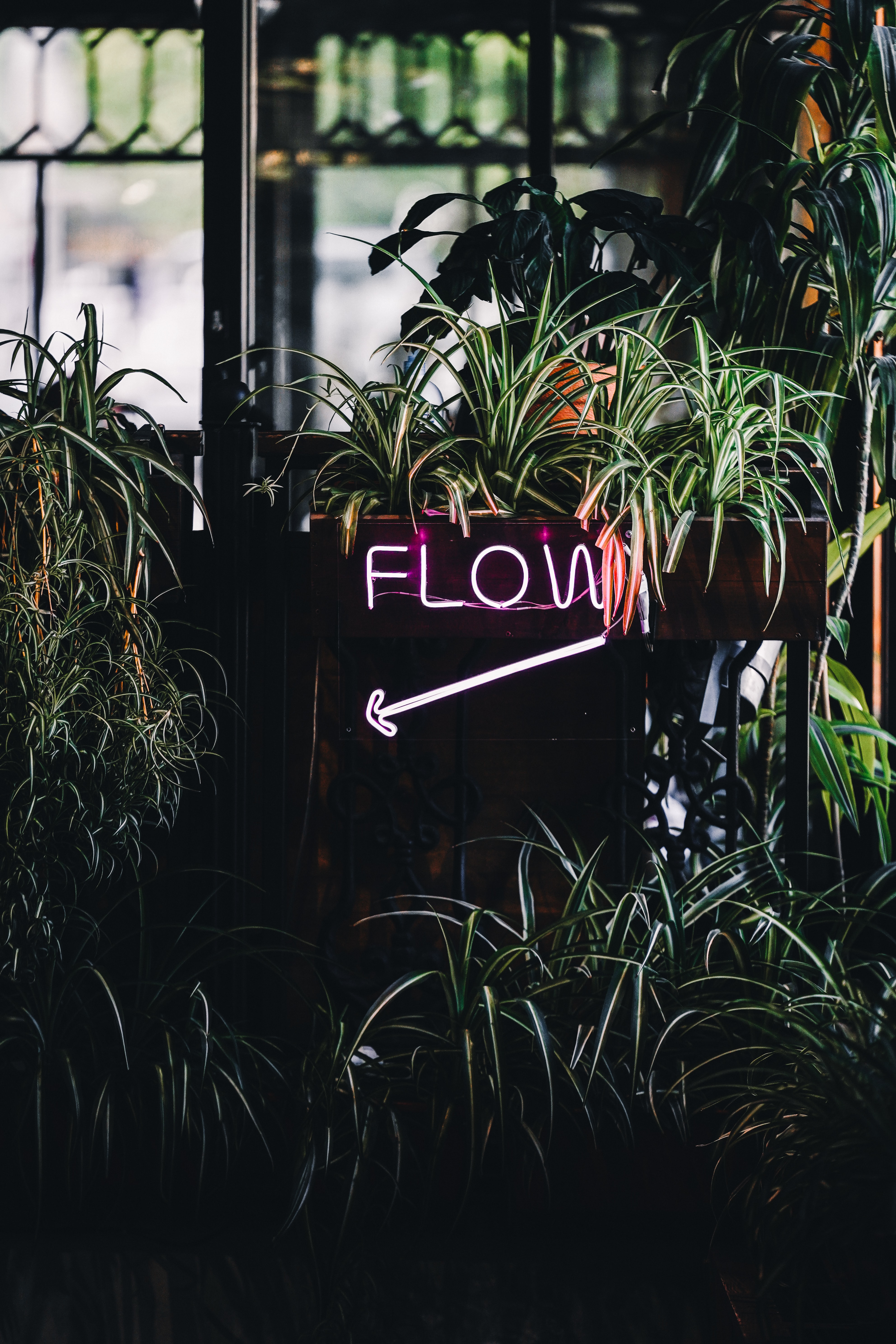
Finding flow and unlocking your creativity as a writer

What is flow?

The American-based psychologist, Mihalyi Csikseztmihaliyi, first coined the term ‘flow’ in the specialist way that I will examine in this blog. For him, ‘flow’ is ‘the way people describe their state of mind when consciousness is harmoniously ordered, and why they want to pursue whatever they are doing for its own sake. In reviewing some of the activities that consistently produce flow – such as sports, games, art, and hobbies – it  becomes easier to understand what makes people happy’ (2002: 6).

‘Flow’ is about people doing activities that they are completely immersed, these could range from making or eating food, talking in an engaged fashion, having sex, listening to or making music, doing exercise, playing games etc.

It is not necessarily about people doing things which are inherently relaxing. In fact, it can also be about participating in activities which can be significantly challenging, either physically or cognitively. In a section called ‘Flow and Learning’ in Creativity: Flow and the Psychology of Discovery and Invention (1997), Csikseztmihaliyi stresses the importance of humans finding states of ‘flow’ which is achieved when they undertake ‘painful, risky, difficult activities that stretch the person’s capacity and involve an element of novelty and discovery’ that cultivates an ‘almost automatic, effortless, yet highly focused state of consciousness’ (110). So, for Csikseztmihaliyi and the host of other researchers, finding flow is about engaging in creative activities which are difficult; it’s about ‘going for it’; it’s a bit like diving into a swimming pool and swimming fast enough to stop being cold. Doing an activity which is too easy may not generate flow because you could easily become distracted and think about other things. Finding flow is about having your concentration solely focused upon the experience of that activity. Flow experiences are about living in the moment, feeling deeply the experience that you are immersed in.

Csikseztmihaliyi’s research indicates that many top athletes, musicians, scientists and writers work most successfully when they are in ‘flow’ states. This is because finding that state of flow may be hard but it is also enjoyable. Csikseztmihaliyi writes of some research which examined people’s flow states at work and at home: ‘Whenever people were in flow, either at work or leisure, they reported it as a much more positive experience than the times when they were not in flow’ (2002: 159).

How do you find flow?

This is the big question. If Csikseztmihaliyi and his researchers are to be believed, finding flow is one of the keys to achieve what they call ‘optimal performance’. Can flow be taught? Can it be learnt? Csikseztmihaliyi would emphatically say yes. But it’s not about issuing people with a set of instructions on how to do it, it’s about liberating people so that they can figure things out for themselves.

In many ways, going to school and being ‘educated’ can inhibit flow. Many children become fearful of making mistakes at school and learn that it is the performance and appearance of learning that matters, not the process. Nurturing flow is about nurturing optimal processes. This is where skilful teachers and learners come in. A teacher who is constantly criticising learners will inevitably inhibit children’s flow experiences. A skilful teacher will unlock flow through a series of steps. So for example, a good teacher of reading will encourage children to take joy in turning the pages of a book, to look at the pictures, and will, in a step by step way, encourage children to read words on the page. If a child becomes frightened that they will punished or criticised for making a mistake, they may well stop feeling flow as they are reading. This is true for any learning. Carol Dweck, a co-researcher with Csikseztmihaliyi, developed her theory of ‘Growth Mindset’ to help understand how effective learners learn. For Dweck, learners who are effective enjoy challenges, and are not afraid to make mistakes, they see all learning as a form of ‘growth’, and have rich conceptions of learning, realising that it can happen all the time and in many spheres, not just school (Haimovitz & S Dweck 2017).

The implications for writers

There are many implications for writers if they are to take the theory of flow seriously.

The first might be that any writing activities which foster flow should be encouraged. A number of writing pedagogues – Dorothea Brande, Julia Cameron, and Peter Elbow – have all claimed that what is sometimes termed ‘freewriting’ is particularly effective. Elbow writes:

‘The most effective way I know to improve your writing is to do freewriting exercises regularly. At least three times a week. They are sometimes called ‘automatic writing’, ‘babbling’, or ‘jabbering’ exercises. The idea is to write for 10 minutes (later on, perhaps fifteen-twenty). Don’t stop for anything. Go quickly without rushing. Never stop to look back, to cross something out, to wonder how to spell something, to wonder what word or thought to use, or to think about what you’re doing. If you can’t think of a word or a spelling, just a squiggle or else write ‘I can’t think of it’. Just put something down. The easiest thing to do is put down whatever is in your mind.’ Peter Elbow, Writing without Teachers, OUP, 1998, p. 3

Freewriting generates flow because it requires writers to switch off their inner critic and use their learned experience of writing in a concentrated, uncensored fashion; it is the equivalent of an athlete sprinting, or a piano player practising scales. It exercises the muscle of writing without any interruptions.

Other strategies that might generate flow are things like concept mapping structures of stories, which deploy drawing to get writers thinking about the overall shape of their writing. The act of drawing an outline of a plot, the rudiments of a character or a poem can be liberating.

Getting writers to re-read their own work without making any changes – difficult as this might be – could also generate flow and enable writers to get a sense of the feeling of their work. This is not to say that they can’t go back and re-read their own work and edit it later, but this act of unfettered reading can again inculcate concentrated flow.

References

Csikszentmihalyi, M., (1997). Creativity: Flow and the Psychology of Discovery and Invention. 1st ed. New York: HarperPerennial.

Csikszentmihalyi, M., (2002) Flow: The Classic Work on How to Achieve Happiness. London: Random House.

Elbow P. (1998) Writing without Teachers, Oxford: Oxford University Press.

Francis Gilbert (2016) Aesthetic Learning, Creative Writing and English Teaching, Changing English, 23:3, 257-268, DOI: 10.1080/1358684X.2016.1203616

Haimovitz, Kyla, and Carol S Dweck, ‘The Origins of Children’s Growth and Fixed Mindsets: New Research and a New Proposal’, Child Development, 88.6 (2017), 1849–59