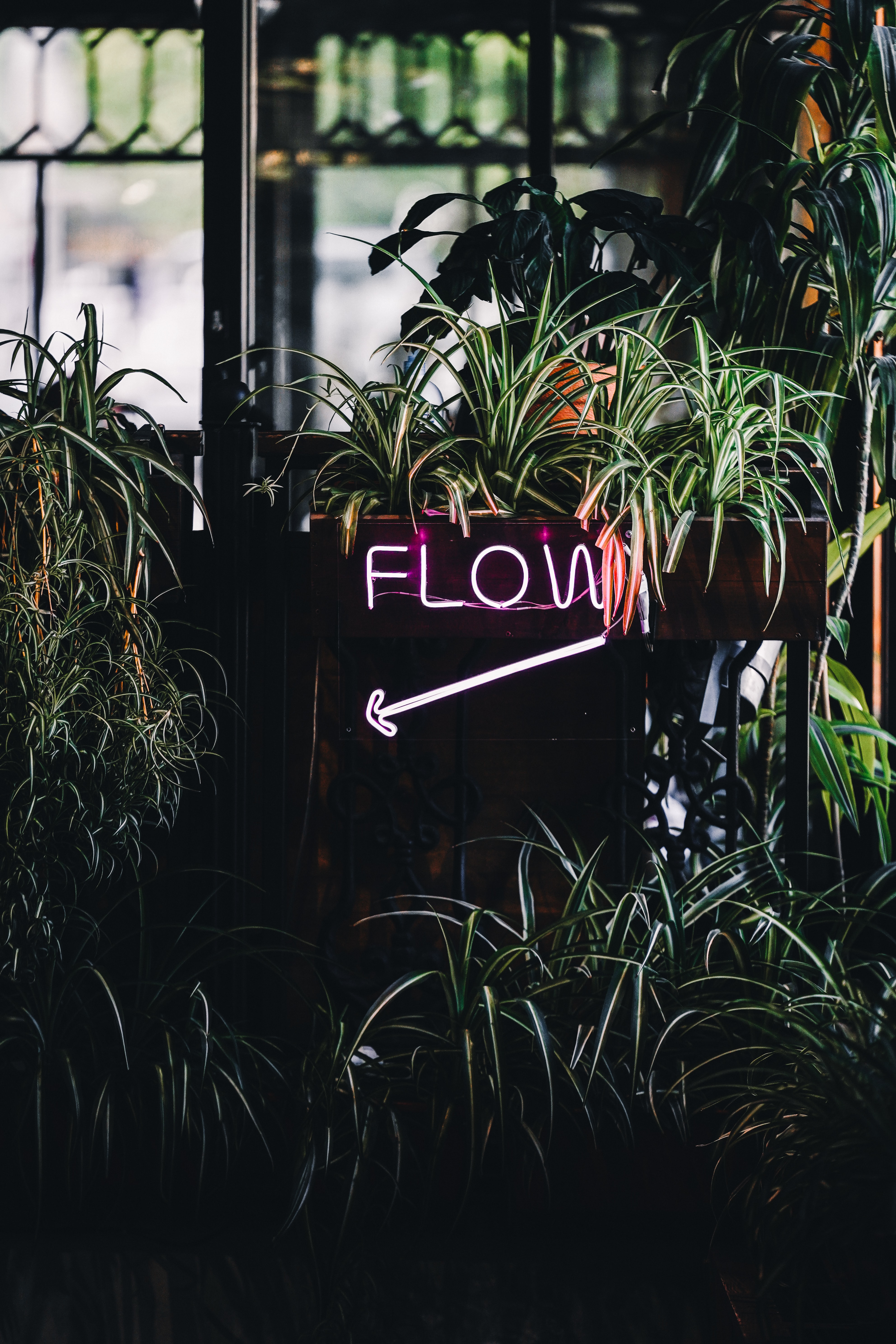
What is flow?
The American-based psychologist, Mihalyi Csikseztmihaliyi, first coined the term ‘flow’ in the specialist way that I will examine in this blog. For him, ‘flow’ is ‘the way people describe their state of mind when consciousness is harmoniously ordered, and why they want to pursue whatever they are doing for its own sake. In reviewing some of the activities that consistently produce flow – such as sports, games, art, and hobbies – it becomes easier to understand what makes people happy’ (2002: 6).
‘Flow’ is about people doing activities that they are completely immersed, these could range from making or eating food, talking in an engaged fashion, having sex, listening to or making music, doing exercise, playing games etc.
It is not necessarily about people doing things which are inherently relaxing. In fact, it can also be about participating in activities which can be significantly challenging, either physically or cognitively. In a section called ‘Flow and Learning’ in Creativity: Flow and the Psychology of Discovery and Invention (1997), Csikseztmihaliyi stresses the importance of humans finding states of ‘flow’ which is achieved when they undertake ‘painful, risky, difficult activities that stretch the person’s capacity and involve an element of novelty and discovery’ that cultivates an ‘almost automatic, effortless, yet highly focused state of consciousness’ (110). So, for Csikseztmihaliyi and the host of other researchers, finding flow is about engaging in creative activities which are difficult; it’s about ‘going for it’; it’s a bit like diving into a swimming pool and swimming fast enough to stop being cold. Doing an activity which is too easy may not generate flow because you could easily become distracted and think about other things. Finding flow is about having your concentration solely focused upon the experience of that activity. Flow experiences are about living in the moment, feeling deeply the experience that you are immersed in.
Csikseztmihaliyi’s research indicates that many top athletes, musicians, scientists and writers work most successfully when they are in ‘flow’ states. This is because finding that state of flow may be hard but it is also enjoyable. Csikseztmihaliyi writes of some research which examined people’s flow states at work and at home: ‘Whenever people were in flow, either at work or leisure, they reported it as a much more positive experience than the times when they were not in flow’ (2002: 159).

How do you find flow?
This is the big question. If Csikseztmihaliyi and his researchers are to be believed, finding flow is one of the keys to achieve what they call ‘optimal performance’. Can flow be taught? Can it be learnt? Csikseztmihaliyi would emphatically say yes. But it’s not about issuing people with a set of instructions on how to do it, it’s about liberating people so that they can figure things out for themselves.
In many ways, going to school and being ‘educated’ can inhibit flow. Many children become fearful of making mistakes at school and learn that it is the performance and appearance of learning that matters, not the process. Nurturing flow is about nurturing optimal processes. This is where skilful teachers and learners come in. A teacher who is constantly criticising learners will inevitably inhibit children’s flow experiences. A skilful teacher will unlock flow through a series of steps. So for example, a good teacher of reading will encourage children to take joy in turning the pages of a book, to look at the pictures, and will, in a step by step way, encourage children to read words on the page. If a child becomes frightened that they will punished or criticised for making a mistake, they may well stop feeling flow as they are reading. This is true for any learning. Carol Dweck, a co-researcher with Csikseztmihaliyi, developed her theory of ‘Growth Mindset’ to help understand how effective learners learn. For Dweck, learners who are effective enjoy challenges, and are not afraid to make mistakes, they see all learning as a form of ‘growth’, and have rich conceptions of learning, realising that it can happen all the time and in many spheres, not just school (Haimovitz & S Dweck 2017).
The implications for writers
There are many implications for writers if they are to take the theory of flow seriously.
The first might be that any writing activities which foster flow should be encouraged. A number of writing pedagogues – Dorothea Brande, Julia Cameron, and Peter Elbow – have all claimed that what is sometimes termed ‘freewriting’ is particularly effective. Elbow writes:
‘The most effective way I know to improve your writing is to do freewriting exercises regularly. At least three times a week. They are sometimes called ‘automatic writing’, ‘babbling’, or ‘jabbering’ exercises. The idea is to write for 10 minutes (later on, perhaps fifteen-twenty). Don’t stop for anything. Go quickly without rushing. Never stop to look back, to cross something out, to wonder how to spell something, to wonder what word or thought to use, or to think about what you’re doing. If you can’t think of a word or a spelling, just a squiggle or else write ‘I can’t think of it’. Just put something down. The easiest thing to do is put down whatever is in your mind.’ Peter Elbow, Writing without Teachers, OUP, 1998, p. 3
Freewriting generates flow because it requires writers to switch off their inner critic and use their learned experience of writing in a concentrated, uncensored fashion; it is the equivalent of an athlete sprinting, or a piano player practising scales. It exercises the muscle of writing without any interruptions.
Other strategies that might generate flow are things like concept mapping structures of stories, which deploy drawing to get writers thinking about the overall shape of their writing. The act of drawing an outline of a plot, the rudiments of a character or a poem can be liberating.
Getting writers to re-read their own work without making any changes – difficult as this might be – could also generate flow and enable writers to get a sense of the feeling of their work. This is not to say that they can’t go back and re-read their own work and edit it later, but this act of unfettered reading can again inculcate concentrated flow.
References
Csikszentmihalyi, M., (1997). Creativity: Flow and the Psychology of Discovery and Invention. 1st ed. New York: HarperPerennial.
Csikszentmihalyi, M., (2002) Flow: The Classic Work on How to Achieve Happiness. London: Random House.
Elbow P. (1998) Writing without Teachers, Oxford: Oxford University Press.
Francis Gilbert (2016) Aesthetic Learning, Creative Writing and English Teaching, Changing English, 23:3, 257-268, DOI: 10.1080/1358684X.2016.1203616
Haimovitz, Kyla, and Carol S Dweck, ‘The Origins of Children’s Growth and Fixed Mindsets: New Research and a New Proposal’, Child Development, 88.6 (2017), 1849–59
 Blue Door Press