I’ve been enjoying writing the smallest of texts – children’s poems. At the same time, I’ve been reading fiction for my own pleasure, for my book group and also, a fairly recently joined French reading group. These experiences have led me to think a lot about size and length of texts – in fact the size and length of all cultural creations, including concerts, plays and films, even mini-series.
Perhaps it’s just that I’m getting older, the clock is ticking, bedtime has never looked more inviting and can’t come soon enough, and coping with something that goes on and on, however good, feels increasingly hard. This is especially so if it is not stunningly high quality and utterly riveting. Whatever happened to the ruthless editor, who stripped out unnecessary guff? Gordon Lish, Raymond Carver’s editor, famously slashed his stories, in one case by 70%, in many others by over 50%. At one point Carver wrote to Lish,
‘I can’t undergo the kind of surgical amputation and transplant that might make them someway fit into the carton so the lid will close.’
As it turns out, he could and did, and his writing was all the better for that.
It is said that Ezra Pound cut T.S.Eliot’s ‘The Waste Land’ in half. Some writers, of course, are their own demanding editors. Diana Athill is quoted in The Guardian (Sept 16 2000) saying of Jean Rhys,
‘what she aimed for was ‘getting it right, getting it as it really was’; and that one must cut and cut and cut again.’
Rhys’ most well-known book, Wide Sargasso Sea is one of my favourites of all time and is a miracle of tight construction, brevity and the richness that comes from honing and refining rather than indulging in an expansive splurge of ideas.
So back to my current reading for pleasure, and here are a few observations. Lots of contemporary novels seem to me to be far too long, particularly those by writers whose reputations assure them publication. Reading Maggie O’Farrell’s The Marriage Portrait and Barbara Kingsolver’s Demon Copperhead I longed for a bit more restraint – fewer episodes, less description, a little less banging the reader on the head with a large hammer, saying ‘pay attention to my messages’ in the case of Kingsolver, or ‘look how much research I’ve done and how beautifully I can write’, in the case of O’Farrell. I loved Hamnet but honestly, in The Marriage Portrait there’s a limit to how much poetic description of 16th century clothing I can take over five hundred pages of a narrative text. Kingsolver was, of course, trying to evoke Dickens, who wrote famously big tomes. But there are a few major differences. Dickens was a master of light and shade, managing to entertain with humour, caricature, evoking multiple voices and swings of fortune, bringing the reader with him as he made his points about justice, wealth and poverty and human behaviour. Demon Copperhead tracks David Copperfield but, for me, without the same lightness of touch. It is social comment rather than satire, and has a relentless grimness that is hard to live with over the many hours it takes to read.
I could say the same about films and theatre. Several trips to the National Theatre to watch new plays have started with a sense of excitement and promise, and ended with a wish that at least half an hour had been shaved off by a Gordon Lish-like director. In particular, in my view, many contemporary playwrights need to ask themselves questions about what happens after the interval (or sometimes, sadly, intervals). All too often, the play seems to tail off, flap around a bit and then end in a disappointingly lame dénouement. Arthur Miller and Tennessee Williams, and one of my personal favourites, Sam Shepherd, knew exactly how to ratchet up the tension and end with a punch to the gut. I want to go away wishing it weren’t over, rather than longing for the end to come!
By contrast, the contemporary novels that I have been reading for my French reading group have all been short ones – we’ve deliberately imposed a strict page limit on our choices, to allow for the struggle of reading in another language. And my goodness what superb writing we’ve encountered! Perhaps there are also contemporary French novelists who are churning out doorstops but the ones who are not are absolutely first rate. Clara Lit Proust by Stéphane Carlier (192 pages) is a marvellous book about the power of reading, rather unexpectedly but brilliantly set in a hairdressing salon. Likewise, with novels by Amelie Nothomb, Philippe Besson and Faïza Guène, among others.
There are some exceptions to this, of course, and perhaps I could now be accused of making differential rules for books I happen to like or not. But I think there has to be a strong rationale for excessive size. Family sagas, some historical novels, books grappling with complex material would come into this category for me. So, for instance, Apeirogon by Colum McCann is a highly original and complicated exploration of the Israel/Palestine question, with one thousand and one short sections mirroring The Arabian Nights. There’s good reason for its size. And Paul Murray’s The Bee Sting is a fabulously written story of different generations of a family, bringing in different perspectives and surprising revelations right up to the very end.
What about personal essays and their length? I’ve hit nine hundred words or so now. Too long? Too wordy? In need of a good editor? I’ll leave that to you to decide.
I’ve been reading Broken Threads: my family from Empire to Independence, the memoir of journalist, Mishal Husain. This engrossing story connects her family history with the larger forces at work in the early twentieth century as India moved towards partition. The stories of her grandparents offer perspectives that sometimes run counter to official versions of these complicated events.
This is not a review of the book, though I would highly recommend it. What is OF NOTE is the way in which the book reveals the importance of individual family stories, even partial ones, in understanding the past in all its complexity.
Three of Husain’s grandparents left accounts of the period, up to and just after partition. Only one of these was produced with publication in mind. Her paternal grandfather began his memoir shortly after his wife died as a way of holding onto his memories of her. His writing remained in the family. Tapes of her maternal grandmother, recalling family life, came to light in the 1980s. It was Husain’s maternal grandfather, Shahid Hamid, who published Disastrous Twilight: a personal record of the partition of India, in 1986. This work drew on diaries he’d kept during the period of partition when, as a military man, he had contact with the Viceroy, Mountbatten. From these accounts, emerge rich details of daily life, inter-faith marriage, changes in education, medicine and the military, particularly within the Muslim community in the last decades of British rule in India. As well as personal observations of the politics of that time. Without these accounts, Husain could not have written this book.
Understanding the past has never been more important. So many conflict points around the world have deep roots going back decades if not centuries. Views are easily polarised through the fast pace of social media. Looking back at the rapid changes that drove through the 20th century, it’s so easy to forget, or even have no knowledge of, what came before.
At a personal level, it’s worth understanding the people who came before you, in particular the social conditions in which they grew up. Looking at my own family story I discovered that my great-grandmother, who died less than a 100 years ago, couldn’t write her name. Tracing her history back, I found that by the time compulsory schooling for all children was introduced in 1870 she was already too old, at ten, to benefit. She seems to have been a bright woman who ran a bakery but had to sign official documents with X. I read up on successive Education Acts to see how increasing school provision shaped the life-chances for the next three generations. On one side, an important strand of our family history includes the way it is intersected by the history of education in the UK.
Understanding my great-grandmother and the circumstances in which she lived, has led me to more stories. It’s been a rich experience. I’ll be offering these stories to my children. It puts a new perspective on the many years of their education to post-graduate level. Handing on such stories is a gift to succeeding generations. It can lead to better understanding of why those who went before might have behaved as they did.
Have you ever wondered if a story in your family was worth telling? It is. Even if it’s a particular angle, or partial account. It’s worth writing the specifics of experience, to hand on. That way, you keep the threads between the generations connected. It’s particularly important for ‘ordinary’ people, whose lives rarely figure in official histories, to write their version of events. This happened in World War Two with Mass Observation, which still continues with some projects that record ordinary lives.
So what to note?
Did you keep a journal during Covid? If so, left for your grandchildren to read, it will take them right into a global story.
Is there a story of how education had a significant impact on your family?
Perhaps it’s a workplace story?
What about changing technology. I was using a typewriter up until the late 1980s, now we have AI. My grandchildren have no idea what a telephone with a dial is.
If you don’t want to write, and you have a smart phone, use its voice recognition software to do the writing for you.
Climate change – if you are a gardener, or a farmer you must have witnessed shifts in seasons, the effects on plants and insect life.
Do you have an elderly relative who likes to talk about the past? Why not record their stories?
Stories matter. Mishal Husain’s book is a timely reminder that, they matter even more at times of great change. It’s worth writing yours if not for the world at large, then for those that come after you to understand better where they have come from. Leave a few threads for children or grandchildren to pick up and connect to their lives. That way, the texture of life lived can be felt years later.
Thinking about the phrase ‘Of Note’ while lying in the hammock, I was surrounded by birds making their presence felt, and remembered that birdsong can be more of a warning than a celebration.
Apparently the dawn chorus can record a brutal contest for territory much as the fighting described daily on the radio; this garden is in the middle of a Europe involved in another territorial war, a nightmare. A nightmare that’s being repeated globally.
Meanwhile this bird has knocked itself unconscious on the glass window and was slowly recovering, so by listening to some shrill bird song while looking at one shocked but recovering bird this poem emerged.
Of course this bird has vanished from the final poem.
Of Note
A pause in the whine of combine mower chainsaw
a silence
then the same bird cry, a note so insistent
it’s a whistle from a neighbour a summons
not the butcher bird with its pouch of fledgling prey
not shrill enough for the shrike
whatever it is it’s something
that will soak the trees
then be quiet again sedate
and deadened
the restless flocks of starlings are ready
a shudder of wings
and there in the background
a circle saw
sense it this uncertain hour
the urge to close down
*
It’s a summons
from behind Novak’s empty house
or now, beyond Mrs Lorrydriver’s shed
an insistent whistle shifting away
nothing can lure it back
the cry fades they listen
they do nothing
yesterday they said isn’t it strange
to feel quickly detached from homes they’ve only just left
yet now, this call
they thought they had cut ourselves off
no twinge of guilt at their escape
ruthlessly snipping the strings then this bird.
*
Night is life, in technicolour, anxious and spluttering
without boundaries
caves of forgetting
under a goose-feather duvet
a cave is day day might have walls and no doors but a cave is day
a timetable for survival
for avoiding terror
while in night’s over-abundance of colour
all is activity and pleading
a world that’s neon-pink and glittering green
– though waiting in a train carriage, the thud of a bullet
is also night –
day is dark and located
it’s in that abandoned shuttered house
enticing
erupting from the body with an urgency that’s awe
as in part fear testing the edge the explosion
but concealed
turn of the lane nightdark
the day is dark the night the past
day returns to that house in the forest
no windows no doors
night blurred in a disco of jangled music
that house more than temptation
day the urgency to be there
*
On the distant bank are low buildings, the mill at Zvikovec,
dense red brick
inside those windowless walls: birches, larch,
outside is the roar of the weir.
Following the river, squelching through mud to swim, they ask
– do we want to be where we are?
Last night dreaming in a managed landscape
all the bits with power are
all the parts of our night-world are without power.
Inside those brick walls among the trees are landings, stairs, corridors.
These are the woods they walk in
or lying by the river
watching in the distance a heron paying attention. Quite still
silent there in the centre of the meadow
the heron staring beyond the weir. A long still wait.
*
The neighbour invited them for coffee. He didn’t know,
nor did they
his next July will become June, April slide into March,
young leaves crinkle to tight buds.
It was the back-to-frontness,
the cuckoo too early and sharp among the missing walnuts.
The blackbirds rootling
insisting on their rat-a-tat chorus until the very last light.
His gift to them of apricots, their drunken sway of lilac,
they didn’t know by sunset it will wither.
Not his nor theirs. This garden, orchard, forest. On loan
the empty hives, the hard-packed earth
the birdsong, the sharp note of the thrush.
That same bird cry, a note so insistent it’s a whistle
a summons
a shadow behind the fence.
The hoarse protest from his rooster, the honeysuckle
Story book grandpas are always very, very old. So old that their white beards are never shaved – maybe because they’re too old and weak to pick up a razor and shaving brush? Their backs are bent and, if there are pictures in the book, the facial features of one grandfather are indistinguishable from any other – just a tangled web of wrinkles, out of which peep (usually blue) eyes, in a perpetual state of either twinkling, or grumpy frowning. The twinkly grandpas offer kindness and comfort. The grumpy ones are a bit frightening but then somehow, in the course of the story, they always turn into the twinkly ones, usually as a result of the winning ways of their delightful grand-children. Johanna Spyri’s grandfather in Heidi is a classic example. He starts out as the cantankerous kind who ends up providing love and refuge for Heidi and is finally reconciled with the villagers with whom he has fallen out, and the church that he has long spurned. Grumpy to twinkly, in a nutshell.
The other kind of grandfather, of course, is the dead or dying one. Again, very old, again very wrinkled but this time with twinkly eyes that are about to shut forever. This storybook grandfather offers children a way of processing sadness and coming to terms with death and grief.
There’s something about these storybook grandfathers that once didn’t make me squirm, but now does. It’s obvious why, really, isn’t it? As I grow older, I recognise more acutely the ways in which old people’s individuality and personalities are flattened out and forgotten. Old is a new, and simpler, category of being; the grandfather is a ‘type’, rather than a person. But the truth is, he’s nothing like the grandfathers I have known, and the ones I know now.
My grandfather – Adolf
My grandfather and grandmother, on my mother’s side, lived in South Africa. They were unreachable, except by airmail letter, the very rare treat of an expensive operator-connected phone call, or a telegram in case of dire emergencies or momentous events. After saying farewell to them at Cape Town’s Jan Smuts (now O.R. Tambo) airport at the age of five, I only saw them both twice in total during my childhood – a visit ‘home’ and a trip by them to London for my brother’s bar mitzvah. But they were very important in my mother’s inner world, her sense of herself and her, sometimes fragile, belief that things would turn out OK in the end. She relied on them, even though they weren’t there to be relied upon. We got to know them via their letters, as well as through the news we received of them from the many visiting South Africans who passed through London on their ‘European tour’.
My grandfather was my mother’s favourite. She adored and respected him above anyone else in the world. So, it was a hard thing for me to discover, reading between the lines of letters and messages passed on by visitors, that my grandfather did not favour me. My grandfather’s favourite was my brother. Visitors were full of how much my grandfather thought of my brother. All the talk was about him and how proud my grandfather was of his achievements, his cleverness, his success at school. And on the two occasions we saw my grandparents, my grandfather made this clear too. I was excluded from playing games of chess – too young, too babyish, I’d spoil the game, my grandfather said. I was on the periphery of his sphere of interest, and never allowed into the warm circle of his full grandfatherly adoration. It hurt.
Now, with two grandchildren of my own, both equally adored, neither a favourite, unable to even conceive of how there could be limits or quotas on how much love is available to dole out, I think of my grandfather with regret and sadness. I missed out on him. But I think he also missed out on me. He died before I left school, went to university and entered the world of work. He knew nothing of the woman I was to become.
My grandfather – Oupa
My father’s father, Oupa, also living in South Africa, died when I was three years old, so I have no direct memories of him, just photographs of a neat, diminutive, dapper man, with a hat rakishly positioned on his head, standing a good foot smaller than my rather less stylish and attractive grandmother. By all accounts he was quite fond of me and my brother but perhaps it was lucky that I didn’t get the chance to know him more intimately as a presence in my life. I’ve written about him in my novel Off the Voortrekker Road. Though a fiction, many of the stories about Oupa are rooted in truth – the fact that he kept my grandmother desperately short of money for the household, that he was a harsh and unyielding father (tying my father’s left hand behind his back to force him to use his right hand and refusing to pay out for a bar mitzvah for him, to my father’s lifelong shame.) His tightness with money extended to not being willing to fund my father’s university education. He could go out and get a job and earn some money, couldn’t he? Luckily my father was exceptionally bright and won one of only two or three scholarships in the whole of the Cape, allowing him to continue his education. My father grew up and succeeded despite his father, not because of him.
Oupa lacked basic decency in his family life – what Jews would call menshlichkeit. He was definitely no mensh! But this extended beyond the family too. His nefarious business exploits became the stuff of family legend. When times were tough, on two separate occasions, Oupa managed to successfully burn down his hardware stores, pocketing a large amount of insurance money, allowing him to set up afresh. In the process, he also burnt down my father’s treasured matchbox collection, a crime for which my father never forgave him.
Despite all this, Oupa may have also had a softer side and my mother tells a few stories of his kindness to her. Unlike my father, she was a practical young woman, quick to pick up new skills such as those needed in the hardware store – cutting, chopping, sorting, fixing, weighing, measuring, dealing with customers. He clearly respected her for this. Perhaps Oupa’s antipathy towards my father stemmed from the fact that he just couldn’t understand a son whose intellectual achievements so far surpassed his own, while he had absolutely no interest whatsoever in the practical skills that Oupa so valued.
While it was probably no bad thing that I was protected from Oupa the man and all that went with his tempestuous relationship with my grandmother (Ouma), and my father, the stories I was told about him became a rich and important part of my childhood. Grandparents live on in memories, and this grandfather lived on in a particularly vivid – one might even say lurid – way. Grandfathers have value and significance, alive or dead. In my case, his larger-than-life character and exploits gave him a starring role in my first novel.
My father – the grandfather
My father was a loving parent, but not a hands-on one. Preoccupied with making (or sometimes failing to make) a living, and doing what was expected of him in those days, he didn’t change nappies, make dinner, do bath-time, put us to bed, read to us. On weekends, exhausted, and sometimes quite depressed, he took a ‘schluff’, a long sleep, in the afternoon, waking angrily when my brother and my arguments grew loud enough to rouse him. Practical care fell to my mother. When she was so sick she couldn’t leave her bed – just once in my memory – we discovered that he couldn’t crack an egg successfully. The kitchen floor was awash with slippery broken yoke and white and my father, a child himself, cried in shame and frustration and looked to us for assistance.
By the time my second child was born, my father had resolved his work problems, was much happier and on the verge of retirement. Suddenly Pappy Jack came into his own as a grandfather. He changed a nappy for the first time in his life, played with, and was adored by my son.
‘Why does he love me so much?’ my father asked, bashfully perplexed, yet basking in the pleasure of his grandson’s affection.
My mother came straight back, ‘Because you know who Mrs Goggins is.’
I saw my father become someone else. A grandfather. It was a route to the kind of connection that he’d missed out on with us.
My Grandpa Husband and Me
Googling grandfathers, I find a wonderful site called ‘Famous Grandfathers: A List of Bad Boys Who Are Now Grandfathers’, and they include hell-raisers Ozzie Osbourne and Alice Cooper, rock god Mick Jagger and actors Robert de Niro and Jack Nicholson. In among the stories are delightful photographs, including one of Osbourne pulling cross-eyed, goofy faces with his grand-daughter. How did this remarkable transformation happen?
My husband wasn’t a rock god nor was he a hell-raiser in his youth, and yet the transformation is, nonetheless, a big one. Yesterday – it was only a blink away, not a life time surely? – he was a long-blond-haired, hippyish student, in a leather airman’s jacket, desert boots and loons. He’d hitch-hiked across Europe, seen The Grateful Dead at the Bickershaw Festival, marched against racism and cuts and then gone on to a marriage with me, a demanding, serious job, and bringing up two children. And now here he is, ‘grandpa’.
The roles we played as parents, back in the 80s and 90s, wound up being quite stereotypical, much as we tried to break down the gender boundaries. I took a long maternity leave first time round and then gave up full-time work with our second child; my husband’s long hours and work responsibilities meant that, on weekdays at least, I took on more of the caring role, becoming the ‘expert’ in day-to-day minutiae, keeping track of who needed what, dealing with school traumas, preparing their food. But this time round, with a new batch of little ones, my husband has much more time to revel in minutiae. The one thing I’ve found hard to give up control of though, to be honest, is the role of food-giver. Whether it’s the ‘Jewish mamma’ syndrome, or something else, the pleasure of making food for the children – and now the grandchildren – is something I’ve struggled to be able to share and fought hard to retain. It seems that only I know whether a fishfinger, a sausage, or a plate of pasta is what is really needed and how to cook these culinary delights, despite my husband being an exceptional cook, generally acknowledged to be much better than me. The careful preparation of fishfingers and peas? That’s for me – not grandpa!
Grandpa (and Granny) are not really different from the complex, individual, complicated individuals we always were and always have been – quite good at some things and not others, cheerful sometimes but not always, full of our own quirks and preferences and interests. My husband hasn’t changed fundamentally, the grandpa-ness being just a new, (very precious and important) add-on, a new layer of experience, enriching but not essentially changing who he is. This grandpa – the one who once went to the Bickershaw Rock Festival `– is not the grandfather ‘type’ but a unique individual.
So, let’s remember the real ones – my father who discovered the pleasures of being with a young child, my one grandfather who was only able to perform the role fully for one grandchild, not two, my other one who I only knew through the myth-making of family memories, my husband who hasn’t had a beard since his hippy days, who arrives for his babysitting duties on his motorbike, and has eyes that twinkle as much or as little as anyone else’s, young or old.
Evening light spills through the south-facing bay window, beyond which my neighbour’s wild garden sprawls, in its May exuberance. In front of the bay, and in what will become my living space, sits a lone toilet, surrounded by piles of rubble, ripped-out bits of plasterboard and studwork.
‘Goodness,’ says my friend, surveying the building site. She wanted to see my new flat before we went out to dinner. And the look on her face says, you must be mad to do this.
But I am not mad. I am an architect, used to refurbishing old buildings. Who knows demolition must precede reconstruction; that it has to get worse before it gets better.
I wanted this flat as soon as I spotted its photos and floorplan on the estate agent’s blurb, which arrived while I was on holiday. By the time I returned, someone had already made an offer. Week after week, I called the agent to check progress on the sale. ‘Going great’ he always said. Until one week, it no longer was.
I was the first one in when it was put back on the market. A diagonal partition wall divided its 4-metre high south-facing room into two awkward bedrooms. In one, a used condom lay discarded on the floor. A couple of young DJs were living there, the agent told me.
I made an offer within minutes. It would be perfect for my new life; a freelance one where I worked from home. The tiny kitchen off the hallway could become my office. A cancer diagnosis, three springs ago, had put an abrupt end to my forty-five minute commute to an architect’s practice in Clerkenwell for twelve-hour days. Life was too short for that. Ever since, I’d been living with and working from my parents’. Now it was time to recreate my own home. And, hopefully, one day, find someone to share it with.
2.
The news arrives by telephone on a Wednesday morning in late winter, eight years after I have moved into my flat. It’s not exactly unexpected. Still, I have to sit down to digest it.
A woman from the genetics team at The Royal Marsden Hospital informs me I have tested positive for the BRCA1 gene. A genetic mutation that has, in recent years, killed two of my first cousins, only in their forties. And puts me at an up to 80% lifetime risk of a new breast cancer, not to mention a 40% one of ovarian cancer.
I sit on the sofa shivering, unsure whether it’s from the news or from the chill of the March day. The heating is on, but the single-glazed, tall bay window is a poor buffer against the weather. To my husband-to-be’s horror, I refuse to put up curtains. I don’t want to conceal the window’s panelled surrounds.
The hospital recommend a risk-reducing double mastectomy with optional reconstruction. Alternatively, I can continue with annual MRI screening, until I’m ready for surgery. I am not ready. Even though I ought to be. I am also busy planning my September wedding and trying to conceive a child. Plus, I’ve remained cancer-free for over a decade, so surely I can risk postponing surgery for a bit?
3.
‘You could go on the beach today in a tiny bikini, and no-one would guess a thing, says Ana, a Spanish doctor at The Royal Marsden, when I see my reconstructed breasts for the first time, on a December morning, two years after my wedding. It is ten days since the four-hour operation in which my breast tissue was cut away and silicon implants inserted.
I was scared I might hate these new breasts of mine. Even though my skin is still bruised yellow from surgery, I have to admit they look good. A little bigger. More uplift. And perfectly symmetrical.
My body recovers fast. But by spring, I am crumbling. I should be happy, I reason. My lifetime risk of breast cancer has been slashed to less than 5%. But inside there’s disquiet. Is it from four years trying and failing to conceive? From having had part of my body chopped off? A part from which I’d hoped to feed the child I am increasingly uncertain I will ever have.
I can’t be sure. But what I do know is I’ve lost my ability to take pleasure in life’s small delights: a movie and sushi with my husband; brunch with my girlfriends; a good novel. Even a holiday to Venice and Croatia doesn’t quite hit the spot.
Anxiety pulses through me. Soon, I’m barely sleeping. An hour here, an hour there. Similar to the new mother I may never become. I try everything. Meditation. Medication. More yoga. Less yoga. More greens and fish. Cake. Even jogging. None of it makes much difference.
I get to the point where I think, thank God I’ll probably never become a mother. What kind of a mother would I be in this state?
4.
Everyone tells me it gets easier after the first year. And what a year: my sister’s sudden death nine days before my son arrived; my ovaries ripped out six months after his birth (another risk-reducing surgery) and the ensuing plunge into surgical menopause.
And it does get easier. For a while. I adapt to a life in which my sister no longer exists and my son does. He starts sleeping through the night. I start HRT and the hot flashes melt away.
Then come the stories: a strange virus from China, whole cities there being locked down. Never in London, I reassure myself.
A few weeks later, I walk through Regent’s Park to Marylebone High Street. On this mid-week morning, it is deserted, most of its shops closed. A premonition of what is to come.
The following Monday, we go into lockdown. Building work is, however, allowed to continue. And our downstairs neighbours have just started a six-month refurbishment of their flat.
Clank, clank, clank all day long. Three of us marooned at home, my husband attempting to work from a makeshift desk in our bedroom. My son failing to nap in the tiny room that was once my office, as drills grate and angle grinders shriek.
I ask the builders if they’ll consider timing their lunchbreak with his nap, a blessed pause in the day for me, too. Or at least only do quiet work then. A resolute no comes back. Very busy. Must get on. Many jobs lined up.
So I take the pram out and walk and walk, mostly through the local parks, which smell so fragrant this spring. In the distance, I see City towers and picture its ghost town, buildings and streets emptied out. What will become of us all? Will London ever return to her former self?
5.
I wake early and walk through the cool of the elderflower-scented park to Marylebone High Street. I arrive at the café in time to avoid the queue, which builds even on a weekday.
No traces of Patisserie Valerie’s chandeliers, green walls and gilt-framed mirrors remain. It closed a couple of years ago, sometime during 2021, and the new café, with its terrazzo floor, giant skylight, and Aussie-inspired menu is more to my architectural and culinary tastes.
Still, I miss the Continental comfort of the old place, its glass display case filled with eclairs, strawberry tarts and mille-feuille. It was where I came, twenty-one years ago today, on the day my life as I knew it was bulldozed by three simple words: you have cancer. My best friends and I drank Earl Grey and ate scones with clotted cream and jam. In my shock, I thought it was quite nice to be spending a Monday afternoon in a café with them, rather than at the office, drafting construction details.
Today, I’m alone. I sit near the window and look out over the high street. The sun is starting to come out, the shops are unlocking their doors. Just a few units remain boarded up.
I drink a flat white and eat toasted coconut bread and contemplate what I’ll do with myself today. A rare Saturday to myself, as my husband and son are away. I want to do it all. The movies. An exhibition. A spa. Go shopping. Lie in the park and read. Go to yoga. See friends.
In the end, I decide to walk back through the park and savour the rare peace of my home, without a four-year-old running around and strewing the floor with toy trains, diggers and cars.
I sit at the smooth white desk in the living room, from which I can see my neighbour’s lush May garden. I bought the desk when I was seven months pregnant and had transformed my office into a white-painted nursery. In this reconstructed life, which I could never have dared dream of twenty-one years ago, I now use my desk to construct stories, not buildings.
Annabel Chown, June 2023
You can subscribe to Annabel’s Blog This Beating Heart, here
I’ve changed my life because of a picnic I once read about in a book so it’s fair to say that I take literary picnics seriously.
I first fell in love with the 1930s writer, Denton Welch, because of his exact accounts of picnics taken in the countryside around Kent. In our twenties and living in London, my husband and I would copy Denton’s picnics and cycle round the countryside, trying to stop in exactly the same spots Denton had.
So, several decades later, when we wanted to move back South from Edinburgh, we remembered those country lanes and moved to live in Kent, largely because of how we’d grown to love it through Denton’s picnics.
Here’s his diary entry for 26th October 1944: There were cows in the field opposite, in the misty atmosphere, and beyond on the opposite hill Tudorized houses lost in the soft mist. We ate cheese, fruit cake, biscuits, toast, drank coffee and I ate the only orange in pigs.
Then we smoked the Dunhill cigarettes that I had bought, and an old lady came behind us and said over the fence, ‘Excuse me, but would you like any boiling water? Can I get you any boiling water?’ I told her we had just drunk our thermos of coffee and she went away immediately to her house saying, “I see, quite, quite.’
Perhaps because he insisted on having picnics through the year, his best were ones that involved a thermos and four squares of dark chocolate. Four squares exactly, not a bar, or even ‘some chocolate’.
Be exact, writers, because your readers will be eating along with you.
Or nearly always. I tried to find the earliest account of a literary picnic and came up with Anthony Trollope in Can You Forgive Her (1864):
‘There are servants to wait, there is champagne, there is dancing, and instead of a ruined priory, an old upturned boat to be converted into a dining room.’
Hmmm.
But if the Trollope account is a little too aspirational for most of us, then what exactly is a picnic? Maybe it’s a breakfast of bananas and sweet corn cooked on a static barbecue in a full car park? Our annual summer holiday treat has now gone into family myth, not least because of the sight of our normally office-bound father struggling to feel at home in the great outdoors. And what could be more British than seeing picnickers sitting right next to their cars as they watch the traffic go by?
At least Patricia Highsmith took her characters off the motorway in The Price of Salt (which became the film, Carol):
Then they drove into a little road off the highway and stopped, and opened the box of sandwiches Richard’s mother had put up. There was also a dill pickle, a mozzarella cheese, and a couple of hard boiled eggs. Therese had forgotten to ask for an opener, so she couldn’t open the beer, but there was coffee in the thermos. She put the beer can on the floor in the back of the car.
‘Caviar. How very, very nice of them,’ Carol said, looking inside a sandwich. ‘Do you like caviar?’
At the other extreme, there was the time I went to play with a new school friend, and her mother threw jam sandwiches out of the window at us so we wouldn’t disturb her at lunchtime. That didn’t feel like much of a picnic so, while there should be an illusion of ‘roughing it’, perhaps there also needs some care involved.
‘You English,’ my Dutch neighbour says about the way her British husband fusses with filling the thermos, preparing fruit and yes, why not, a rug to sit on. ‘Why can’t you take some bread with you and be done with it?’
Perhaps our classic children’s literature is to blame. The lashings of ginger pop enjoyed by the Famous Five, or Ratty’s famous “cold-tongue-cold-ham-cold-beef-pickled-onions-salad-french-bread-cress-and-widge-spotted-meat-ginger-beer-lemonade — ” from the Wind in the Willows.
If Ratty had just said he’d got a picnic, even a large one, then who would have been interested? Not me. And I certainly wouldn’t have begged Mum to take pickled onions with us next time we went on a picnic.
I know I’m not alone in loving detailed food descriptions laid out on the page. Recently I had a brain freeze and couldn’t remember the name of a favourite children’s book, so I asked on social media, ‘What’s the name of the book where they have those little sugar biscuits with iced flowers?’
The Little White Horse, several people answered in minutes. And there then followed an animated discussion of all the food Marmaduke Scarlet cooked for Maria Merryweather. So perhaps it’s not surprising that Harry Potter eats well at times too, given that J K Rowling has admitted how Elizabeth Goudge has influenced her.
Among the classics, Jane Austen is the mistress of the niceties and challenges of a picnic – perhaps because she gets so well how it could all go horribly wrong. Her deliciously snobbish Mrs Elton in Emma, has all the important details planned in advance, as she explains to Mr Knightley. ‘I shall wear a large bonnet and bring one of my little baskets hanging on my arm…. Nothing can be more simple you see… There is to be no form or parade – a sort of gipsy party. We are to walk about your gardens, and gather the strawberries ourselves, and sit under trees; and whatever else you may like to provide, it is to be all out of doors, a table spread in the shade, you know. Everything as natural and simple as possible.’
But Mr Knightley is a man I could never fall in love with. He insisted on having the meal inside with servants and furniture, large bonnets optional.
Perhaps he was feeling under siege like the poor oysters flattered into joining the walrus and the carpenter on their sea-side picnic until:
‘A loaf of bread,’ the Walrus said,
‘Is what we chiefly need:
Pepper and vinegar besides
are very good indeed –
Now if you’re ready, Oysters dear,
We can begin to feed.
I used to love this poem until I’d realised exactly what was going on. Perhaps the best literary picnics – like many in real life – are those that teeter on the verge of disaster, such as the glorious beach picnic in Gerald Durrell’s short story ‘The Picnic’, where the family settled on what they thought was a rock but turned out to be the side of a dead horse.
I wonder too if the weather is another reason why the British love eating outside? Because we can never really plan ahead for a sunny day, we don’t let a ‘spot of weather’ put us off. As Edwin Morgan writes:
In a little rainy mist of white and grey
we sat under an old tree,
drank tea toasts to the powdery mountain,
undrunk got merry, played catch
with the empty flask…
In her wartime diaries, Love is Blue, Joan Wyndham writes about one definitely un-Blyton picnic: ‘We lay under a tree in the wind and the rain eating peaches while Zoltan kissed my thighs with his usual air of grave, sad absorption. He undid his shirt so I could put my hand overhis heart, and the wind roared in the trees and whipped back my hair.’
Can’t you just taste those peaches?
Oh, your attention went elsewhere? Back to the food, people.
Although not perhaps PG Wodehouse’s picnic in Very Good Jeeves:
I met a fellow the other day who told me he unpacked his basket and found the champagne had burst and together with the salad dressing had soaked into the ham, which in turn had got mixed up with the gorgonzola cheese forming a kind of pasta … Oh, he ate the mixture but he said he could taste it even now.
Well, if the food isn’t that good, at least a picnic can offer the chance to explore. Not just a geographical place, but to escape the routine of day-to-day. A packed lunch made at home to take to the office every day is NOT a picnic. However, the same food brought by someone coming to surprise you with a lunch to take outside in the park is definitely a picnic in my book.
So a picnic can help us try something new. Escaping the routine of day-to-day. Which is, after all, very much what reading for pleasure can be.
‘O stop, stop,’ cried the Mole in ecstasies: ‘This is too much.’
‘Do you really think so?’ inquired the Rat seriously. ‘It’s only what I always take on these little excursions, and the other animals are always telling me that I’m a mean beast and cut it very fine!’
The Mole never heard a word he was saying. Absorbed in the new life he was entering upon, intoxicated with the sparkle, the ripple, the scents and the sounds and the sunlight, he trailed a paw in the water and dreamed long waking dreams.’
It’s intriguing to find a book gathering its own stories besides the one contained between its covers
In 1948 D H Hardwick ordered a copy of Trees In Britain by L. F. J Brimble from WH Smith. It was to be sent to him in the Military Wing of Harefield County Hospital in Uxbridge.
In 2020, author Sarah Salway, recently discharged from hospital herself, came across that same copy of the book in a charity shop. Having been seriously ill with silent hypoxia in the first wave of Covid 19, Sarah was learning to breathe again. She’d become fascinated by trees, the breathing they do for us, and used the book to learn to identify trees in her local park on her daily walks.
However, a further fascination came when a postcard fell out of the book revealing the details of Hardwick’s original order to W H Smith 72 years previously.
Feeling an affinity with the hospitalised Hardwick, Sarah began to research him and discovered he had a distinguished career as a pilot in the RAF in WW2. As she was emerging from her ‘battle’ with Covid 19, She was pleased to discover this man was a survivor of many missions.
Sarah wrote about this experience in ‘Learning To Breathe with Trees,’ the first essay Blue Door Press published in the anthology, Altogether Elsewhere.
Unbeknown to Sarah, the story of the book was about to have a new chapter. It turns out that D H Hardwick was hero to another – his nephew Mike Hardwick. Mike was researching his uncle’s wartime career. His internet trawling led him to read Sarah’s essay on Blue Door Press. He contacted her via her website. They corresponded by email and spoke on the telephone.
Sarah learned much more about her tree book hero: the battles he’d survived, what an inspiring uncle he had been to the young Mike, the post-war life he’d led until his death in 1990. In turn, Sarah returned the book and the postcard to Mike Hardwick, who is thrilled to discover that his hero, uncle Den, had such a positive effect on Sarah’s recovery.
On a visit to Cuba in 2015 Pamela Johnson had an accident requiring emergency treatment. Friends back home remarked how lucky to be in Cuba – ‘they have so many doctors, such amazing healthcare.’ In this excerpt from a work in progress, she revisits the experience and reflects on why the pursuit of healthcare is central to the island’s history
Sunday 6 December, 2015
The bus to Havana isn’t due until nine-thirty. Last night I packed my suitcase so there’s nothing to be done but, at seven, I get up anyway. I want to savour one last outdoor shower in the tropical air of Cayo Santa Maria. David, my husband, dozes on.
We’ve no idea what the hotel in Havana will be like or even if the booking is confirmed; this might be my last shower before home. As it turns out, I won’t have another shower for two months. I head for the tiled area open to the sky. With slatted fencing all around and tropical vegetation on the other side, it’s entirely private and makes perfect sense in this climate.
Enjoying the play of water over my skin as I rinse shampoo suds, I study a line of ants marching up the yellow tiles. They navigate a route that carefully avoids my splashes.
It’s hard to believe it’s winter and only three weeks until Christmas. I’ve not even thought of cards or presents let alone bought any. There’s nothing to buy here apart from rum, cigars or cigar boxes and t-shirts displaying the image of Ché Guevara. There are no shops full of glitter and gifts.
Two weeks ago, en route to catch the Gatwick Express, a minicab zoomed us along Oxford Street at five-thirty a.m. With no crowds on the pavements we had an unimpeded view of the decorated storefronts. The excess of Christmas-stacked windows in the dawn light was unsettling. All that stuff. It was a relief to be lifted out of the festive frenzy to focus instead on this beautiful, complicated island; to visit its sites of revolutionary history; to attempt to compare first-hand present-day Cuba with my vivid childhood memories of the missiles crisis.
October 1962. There I am washing my hands in cold water that streams from the solid brass tap, trying to get some lather from the block of pink carbolic soap. Alone in the girls’ toilets in the basement of Bolton County Grammar School where six weeks ago I arrived in the first year, excited by the potential that lay ahead. I’m alone because my period came mid-lesson; alone with time to think about the news of ships heading for Cuba loaded with nuclear missiles. Everyone is talking about it; about a clock that is ticking. If the ships don’t turn back – Wooosh! A mushroom cloud. No one survives. If I’m going to die I want to be at home with Mum. President Kennedy has been on the news for days talking about the man with a big beard and soldier boots. Castro, everyone says, is a dangerous man, in league with bald Mr Khrushchev, who must be dangerous because he is Russian. Handsome President Kennedy will have no choice. If anyone can, he will save us.
So I’m given to understand and I believed it then, though, growing up and growing in political awareness I came to understand it had been more complicated. Still, the memory of that terrified child surfaced often during our two-week tour, especially at the start in Havana, at the Plaza de la Revolucíon where we’d stood opposite The Ministry of Defence, an unassuming slab of a tower block, site of 1962 operations. I wished I could have sent a message back to my eleven-year-old self as I listened to the Cuban version of the events that led to the unforgettable stand-off.
‘Always it was meant to be a green not a red revolution,’ explained Raul, our guide. ‘Cuba wanted nothing to do with USSR at the start. Ernesto Ché Guevara made a speech here in this place,’ he said pointing to the ground. Raul always referred to the revolutionary hero in this way. Never simply Ché.
In 1960 Ché said: Are we or are we not struggling to be a free nation among free nations, without belonging to any military bloc, without having to consult the embassy of any great power on earth?[i]
‘After Bay of Pigs, no choice,’ our guide continued, explaining how, in 1960, the CIA had plotted to invade the island having trained fifteen hundred Cuban exiles in Miami.
‘They even painted an American bomber in Cuban airforce colours! Kennedy didn’t want the world to know he’s behind it. He thought Cubans here would join his side.’ When the exiles landed at The Bay of Pigs, on the south coast, Castro had the Cuban air force ready, along with 20,000 ground troops. Over 1000 exiles were captured and imprisoned.
‘What did Castro do?’ Raul paused for effect. ‘He traded the prisoners for 50 million dollars worth of baby food and medicines,’[ii] he said with pride, to prove that, even after this affront, the welfare of the population remained a primary concern.
Following those events Cuba became piggy-in-the-middle of the Cold War. If the Revolution was to be about social justice – healthcare, education, housing – Cuba could not afford to spend already scant resources on defending a small island against a super power.
‘That’s why Castro agreed to missile bases on Cuba – self-defence. Did you know that the USA had secretly placed nuclear missiles along the Turkish border directed at Moscow before 1962? Self defence. Not aggression.’
When the crisis was averted Kennedy agreed to dismantle the missiles in Turkey but only if that fact was not made public. ‘Kennedy did not want to been known to the world as an aggressor.’ And he made sure it was kept that way so it was decades before the facts of USA missiles in Europe became widely known.
As I turn off the shower, I’m well aware that the floor is flooded and there’s no bathmat. Don’t step on wet tiles. I say to myself. I’m being cautious, as I had been round the pot-holes of Havana, the cobbles in the historic town of Trinidad and the showers in all the Casa Particulares where we’d stayed these last two weeks.
cobbles in the historic town of Trinidad
Recently recovered from torn ligaments in my left ankle, I know how easy it is to fall. The skin of my left foot is still purple from the bruising.
I reach for the beach towel that I’d hung to dry over the fence, fold it in half, the better to absorb the water, and lay it over the wet patch. Carefully, I step onto it, right foot first.
My heel skids as the layers of fabric separate and slide away from each other.
I’m falling. Falling. Falling backwards.
My head, my back –
I picture either or both taking a crack on the tiles. I wait for the impact. But there is no blow to the head, no pain. I’m on the floor. Relief! I’m not unconscious. I turn my attention towards my splayed legs. My right foot flops inwards, as if it will fall off my leg. And what is that raised red patch, that bulge, on my ankle? It’s a bone pushing against flesh, says a calm voice in my head. Keep still. A Girl Guide knowledge of not moving the injured surfaces. At the same time another part of my mind, the bit that’s still falling, hasn’t caught up, says, this isn’t happening. It’s doing a rewind, mentally fixing the foot back onto the leg, does not want anything to do with my hidden anatomy asserting itself.
How can it be broken? There is no pain, discomfort, yes, a clicking of shifting bones if I move any part of me but it’s nothing like the searing, out-of-body pain when I tore the ligaments on my other ankle. I’m amazed by this but also concerned. If I move will the bone protrude? Two thoughts: 1. If I can get a cast put on we might still be in time to catch the bus to Havana. 2. Bang goes the Christmas shopping and I certainly won’t be able to cook a turkey.
‘David,’ I call calmly. ‘Can you bring the first aid-kit? I need the crepe bandage.’ Though I already know that no amount of half-remembered Girl Guide crisscross strapping will be enough. How will I get up off the floor, never mind back to England?
In the last two weeks we have learned much about the health service in Cuba. Now I’m about to experience it first-hand, I try to recall another of Raul’s talks.
It’s easy to see why healthcare became central to the Revolution. The Cuban war of Independence in the 1890s might have seen off Spanish colonialism but not without some US backing. Although the Republic of Cuba existed from the early twentieth century America retained a prevailing influence. In the 1920s, Prohibition brought the Mob to Havana. Lucky Luciano controlled many casinos through which to launder money and trade cocaine. A few wealthy Cubans in the capital benefited while the majority of the population outside the city was illiterate, undernourished and in poor health. There was a high rate of infant mortality.
It was against this background that, in 1960, Ché Guevara gave his address, On Revolutionary Medicine. He described children he’d seen in the Sierra Maestra as ‘offspring of hunger and misery,’ who, ‘appeared to be eight or nine years old, yet almost all of whom are thirteen or fourteen.’ His vision was clear as he urged, ‘Our task now is to orient the creative abilities of all medical professionals towards social medicine … to find out what have been chronic miseries for years…The work entrusted to the Ministry of Health is to provide public health services for the greatest possible number of persons, institute a programme of preventive medicine … If we make war preparations the centre of our concern, we will not be able to devote ourselves to creative work,’ that being the health of the nation.
Five hundred, I remember from Raul’s talk, 500 polyclinics throughout the island, free primary healthcare for all with a doctor in even the smallest community. But we are on a far-flung archipelago off the north coast. We are forty-five minutes from the main island. The only way off here is via a causeway, flanked on either side by sea and mangrove. Will there be a clinic out here? If the main function of the polyclinic is primary, preventative care will they have A & E facilities?
Undisputedly I am in Cuba but I also inhabit a strange hinterland, the place-where-this-has-happened. In that place, I’m still naked and wet; my mind is still willing my foot back on to my leg and I need the loo.
David hauls me upright onto my left foot. Too shaken to hop, supported by him, I manage a swivelling movement into the bathroom. David is as shocked as I am and still half asleep.
‘Call Alex,’ I say. She’s an English woman on the tour who befriended us, a dentist also trained in facial fractures who regularly works in her local A&E. Over mojitos the other night she’d described how she had reconstructed the cheekbone of some high-up in the Air Force. In return he’d given her a ride in a Chinook helicopter. ‘Alex will know what to do.’
Alex’s arrives and her voice reaches me in my hinterland. She’s calming David. Now she’s encouraging me to raise my leg as she piles towels on the bidet which becomes a foot rest. She administers ibuprofen. I tell her I have no pain.
‘For the swelling,’ she says.
I can hear her on the phone talking to reception, asking them to call an ambulance, to bring ice and a member of staff to accompany us in the ambulance. She is calm, clear, polite, softly spoken yet authoritative. She brings me a t-shirt dress, slides it over my head. Putting on underwear is too complicated. It involves disturbing the clicking bones.
How will I get down the steps – there are at least six to ground level?
Now a man in a white medical coat appears with another man in a t-shirt. And there is Belkis, a member of the hotel staff. They are weighing up the options for a route out of the room. Several arms raise and support me on to one leg. The injured leg clicks uncomfortably as it dangles. I’m scooped into strong arms, carried down the steps to a waiting trolley, then fed into a white van. Apart from me on the trolley and the man in a white coat, nothing about the van says this is an ambulance.
‘Carlos,’ the man in the white coat introduces himself. He is a doctor. He lays a reassuring hand on my shoulder. ‘We go International Clinic,’ Carlos says and Belkis nods and smiles. This clinic is 7 km away. It sounds promising.
I wince as the van bumps over potholes, mainly at the fear of further damage rather than pain.
‘I find solution,’ says Carlos pointing to my foot, ‘I always find solution for my patients.’
Belkis smiles and nods and David explains to me that there is, indeed, a clinic out here on the Cayo. I silently give thanks to Ernesto Ché Guevara. Soon we are pulling up beneath a huge portico of what looks like a new building, the van parks beneath it. It protects us from the warm rain that has begun to fall as they slide me from van to clinic, which, a sign proclaims, is Clinica Internacional Cayo santa Maria.
The grandeur of the entrance disappears once inside. It is bare, as if not yet furnished, as if uninhabited. Then into a room in which there is a cumbersome machine that takes up most of the space. Nothing else except for a medical couch. Discussions in Spanish and broken English. I’m not to be lifted onto the couch. Instead, an awkward maneuvering of the trolley until they can swing the arm of the machine over my foot. Everyone leaves the room as the x-ray is taken. I can see David in the corridor on his phone, calling up the medical emergency service that comes with our travel insurance. I’m wondering, since Dr Carlos is now facilitating a ‘solution’ if a precious phone connection might be better spent alerting the tour company that, though not today, we will be in Havana in time for our flight tomorrow.
Once it emerges, several people gather round to discuss the x-ray; an almost two-foot square sheet of negative is held up to the light. Urgent talk in Spanish.
‘Santa Clara. Santa Clara,’ I hear mentioned several times. Santa Clara means a big town, possibly with a big hospital; it means a bumpy two-hour road journey; it means the site of the final defeat of Batista’s troops in 1959, the site where the Revolution was won by the derailing of a consignment of US-Supplied arms coming from Havana and meant to defeat the rebels. Loyal followers of Ché whispered along the track, sent word to say which train and at what time it was expected. A crowbar loosened the points, a yellow Caterpillar bulldozer slung across the track for good measure. The derailed carriages still lie where they fell, now house a small museum to this victory, the crowbar proudly displayed, and at the entrance to the site the bulldozer sits on a plinth – Este monumento a los combatients de la batalla de Santa Clara.
Now my personal derailment is going to send me back there. It’s thanks to the bulldozer and the crowbar that there will be a medical facility where I can be repaired. I steel myself for two hours of foot jiggling, bones clicking. Trying to ignore the fact that, though Dr Carlos, David and Belkis are all putting on a positive face, something in the mood has changed.
I begin to understand we are not going to Santa Clara, though I’m not sure where we are going only that it is much nearer.
‘Half an hour,’ says Belkis.
We are on the causeway, the road that skims the shallow sea, towards the main island. Through a grubby window I catch glimpses of mangrove, bits of sky, sea. Lying flat on my trolley, I feel as if I’m the one skimming the water.
Dr Carlos continues to smile and press a comforting hand on my shoulder each time I wince as we hit a bump. It’s not pain so much, rather the disturbing thought of bones set loose. I can’t bear the sound, the unnatural clicking, from a foot I can’t control, that no longer has any relationship to the leg to which it’s meant to be fixed.
Click, click, click.
It is not my foot, and I am not me.
‘Soon,’ Carlos says, ‘soon find solution.’
Solution? This could mean: amputation, death or, at the very least, surgery. The kind of surgery Tricia had last May. Oh, yes. Tricia. The woman I walked and talked with just 12 days ago as we toured the eco village of Les Terrazaz at Viñales. I push away thoughts of the image she’d shown me on her mobile phone. An x-ray of her repaired ankle – her fibula with its metal plate pinned in place, the tip of her tibia held secure by a stainless steel screw.
‘This is worse than the pavements in Havana,’ she’d said having spotted me being super-cautious over uneven ground.
‘Yea, you really need to concentrate.’
We’d stopped for a rest on a low wall. I’d rambled on about my left foot.
‘A nasty sprain, six weeks ago. Still purple, it swells in this heat,’ I held up my foot to demonstrate. That’s when she pulled out the image, trumped my sprain with her break. Walking in Wales she’d stumbled into a hole in the ground and a rock had fallen on to her ankle.
‘So easily done,’ she’d said. She’d been left to sit in the waiting room at A&E for several hours. Her ankle had swelled so much she needed ten days in hospital with her leg elevated for the swelling to reduce enough to make surgery possible. Surgery. Weeks in a wheelchair. Months of physio. No. This won’t happen to me. I have no pain, only clicking. No rock fell on me.
When he’s not reassuring me Dr Carlos is making hasty calls on his mobile. Belkis explains that the person we need is on his day off. Of course, it’s Sunday. We must collect him from his home. I pick up a tone, a look, the sense of an apology, that this is the only way they can help me, that this is some kind of makeshift option, which on the bright side means it can’t involve surgery.
At last we are off the causeway and turning round a roundabout on which sits a giant concrete crab – through its massive pincers I see its bulging eyes. We are on the main island at the small town of Caibarién on the Atlantic coast.
We had commented on this crab, four days ago. And the blocks of flats on the edge of the town built in the 1960s. Once state-of-the-art homes, now in need of repair. They were built for workers in the sugar factory and the small harbour from which sugar was once exported, but no more.
Today, we keep stopping to ask directions. Carlos is not clear where our man lives. In this jumble of tracks, criss-crossed by wires sagging from telegraph poles, it can’t be easy to follow instructions. We drive along streets of much older, colonial style, one-storey houses, with crumbling porticos and faded, peeling paint in every shade: turquoise, yellow, pink.
Eventually, we pull up at one of these and into the van climbs a man in paint-spattered jeans and t-shirt. He has a two-day beard and large hands with which he’s been doing up his home, happily engaged in DIY, until we arrive. He smiles a reluctant sort of smile and Carlos tells me this man has no English. I don’t catch his name and begin to think of him as Dr DIY. He now directs the van to the clinic.
A crowd gathers, a woman holding a baby, children. It’s stopped raining and the sun shines right into the van. I try not to think of my lack of underwear as they lift me out. A horse and cart clip-clops past, hens scratch around the pavement. The kerb is broken; they must lift the trolley to a position where it can be wheeled into the clinic. I notice the words Policlinico II stencilled on the blue-washed wall. Thank you, Ernesto Ché Guevara. No chance of surgery at a primary healthcare centre. Whatever’s happened to my foot can’t be that bad.
There are colourful walls in the waiting room and many rows of chairs but only one woman waiting. There is a blackboard with a chalked handwritten list that seems to relate to today. I’m wheeled into a room off this waiting area. Along the far wall a sink unit and surface all white tiled but not clean. Above it a window barely covered with a tattered curtain.
Dr DIY finds a bucket and begins to mix what I take to be, hope is, plaster of Paris and try to block out the fact that I have an urgent need to pee. Instead, I begin believe this means an end is in sight – I have a broken bone and Dr DIY’s cast is the solution! He works swiftly, but what he puts on my leg is only half of a plaster cast.
‘Back slab,’ explains Carlos, ‘to hold foot in place.’ In this firm gutter my leg can rest, my foot will be restricted in its movement but clearly, and I see it on Carlos’s face, this not a solution.
Nobody has named the injury or explained the protruding bone or said how routine this might be or how serious. But it’s becoming clearer by the minute that treating what they’d seen on the x-ray is beyond this facility.
‘When plaster is set, he will bandage, make secure,’ explains Dr Carlos. Clearly Dr DIY is not an orthopaedic surgeon. He may not even be a doctor but a maker of plaster casts. Will there be a hospital in Santa Clara or Havana that can properly set the bone? With the right expertise bones can be manipulated into a cast, can’t they? What do I know – I’ve never broken a bone before. And, could I make a ten-hour flight with a tight cast on my leg?
I don’t want to be a nuisance but I’ve needed to pee since they wheeled me in. Now it’s urgent. I don’t want the indignity of peeing all over their trolley but, equally, I don’t want to make more demands. In the end I figure getting me to a toilet is less trouble than cleaning up after me.
‘Toilet? Is possible?’ I venture.
‘Soon.’ Dr Carlos puts a hand on my shoulder and points to Dr DIY preparing to swathe the plaster gutter in lint and bandages. He leaves the room as the last of the bandage is taped into place, returns with a shiny stainless steel bedpan. Relief.
Back in the van, there are rapid discussions in Spanish between Belkis, Carlos and DIY. I listen out for the words, Santa Clara. No. This is about money. I have the sense that my treatment has been unofficial. At the first clinic it was agreed we’d pay the hotel with a credit card and they would settle the account. The polyclinic is a place for free primary, preventative healthcare for Cubans not A&E for pesky tourists. Out of kindness they have brought me here rather than schlepped me all the way to Santa Clara. Out of kindness Dr DIY agreed to help.
As it’s our last day we are running low on Cuban currency. David counts all the CUCs[iii] we have and offers the notes to Dr DIY. We’ve been told a CUC is worth 25 times more than the local currency, the CUP. We can only hope the amount we give isn’t insulting. Dr DIY looks hesitant, awkward, pauses before he takes it. Why? Because it’s unofficial, because it’s too much, not enough?
For the first time he speaks. Pointing to my pristine plaster says:
‘You go your country. See doctor. Soon.’
Dr Carlos looks disappointed but has to agree.
When we pull up outside DIY’s place. He gestures for me to sit up, points towards his house and encourages me to wave to his wife. There, in the doorway, of a modest home that is under substantial repair, sits a smiling woman with a child on her lap. The child is all uncoordinated movement, limbs everywhere, severely disabled. I wave, and his wife waves back.
On the return journey to the hotel, back through the sea, Dr Carlos, with some translation from Belkis, explains that Dr DIY works very long hours. His wife finds it hard to cope on her own with the child and often calls him to come home. And I have taken precious time from his day off, time with his family.
I would like to know more – does Dr DIY work at the other clinics, does Carlos sometimes work at the polyclinic? Clearly they know each other well. Clearly both are committed to caring but are working with scant equipment, doing what they can with so little. I can’t ask complicated questions because I don’t have the Spanish. Even if I did I’m not sure I trust myself to speak because, after all, this isn’t really happening.
‘What time is it?’ Eventually I try out words that do seem to come from me.
‘Eleven-thirty.’
Over four hours since something unpleasant happened in the shower. Two hours since the bus left for Havana without us. Now, it seems we are travelling backwards, skimming through sea to the cayo and, hopefully, through time where I may unslip in the shower, watch as the foot realigns with my leg, climb back into bed to start Sunday again. In reality, as it’s December, high season, with hotels all fully booked, we will arrive at the hotel we should have checked out of to find our electronic room key no longer recognises us.
Part 2 of Footnotes was published on Thursday 31 December 2021you can read it Here
Pamela Johnson is the author of three novels Under Construction, Deep Blue Silence and Taking In Water, which was supported by an Arts Council Writers’ Award. Her poems appear in magazines and anthologies. She has also published short stories, art criticism and journalism.
From 2002-2018 she taught fiction on the MA in Creative & Life Writing, Goldsmiths, University of London, and has devised writing workshops in a range of contexts: schools, community groups, U3A, residential courses for The Arvon Foundation.
[i]On Revolutionary Medicine, Ernesto Guevara, originally spoken August 19, 1960 to the Cuban Militia. Online version at Ché Guevara Internet Archive, 1999, translated by Beth Kurti
[iii] back in 2015 Cuba operated a dual currency system. Tourists use Cuban Convertible Peso (CUC), locals use the Cuban Peso (CUP). The CUP is worth much less than the CUC; US dollars aren’t accepted as legal tender. From January 2021 this system is now being phased out.
In 1970, when Nell qualifies as a doctor, she and her Nigerian boyfriend Jerome decide to leave London and the hostility they’re experiencing as a mixed-race couple. They move to Lagos; Jerome hasn’t been back since the Biafran war started in 1966.
***
Lagos 1971
Jerome was slouched against the hospital gate near where the mini-bus would swerve to a halt. If they were lucky. Nell made herself look relaxed – thank goodness he still came to meet her.
Jerome straightened up and they hugged; ‘Was the day ok?’
‘It was ok.’
Nell backed away as a tiny boy stuck a basket inches from her face. Just before sunset, warm, no breeze, smell of rotting fruit. They’d do the long journey home, repeat it early in the morning. Soon, once Jerome’s job came through, she’d face travelling alone.
‘The nurses make it easy.’ Nell smiled at the boy and shook her head. ‘But this time Nneka couldn’t help – a man was staring at me with such venom.’
‘Oh, ignore those idiots,’ said Jerome.
‘It was pure hate, his gaze like ice. Nneka said he was a ‘Been-to’.’
Jerome kissed the top of her head, two small girls giggled.
‘So am I, Nell.’
‘I begged her but Nneka wouldn’t make him leave – she said he’d cause trouble.’
The boy was selling peanuts. Nell found a few kobos, bought a paper twist. The child was in rags – he looked exhausted. Not that they must appear so impressive, Jerome was sweating as much as her in the evening heat. They were both scarecrows; at least at work a white coat covered her shabbiness. Jerome was thinner than in London, his shirt patched, jeans worn out.
‘Did you meet up with Ifechi?’
‘I saw him and his smart new office,’ said Jerome.
Ifechi had come back just after the war ended and, like Jerome’s other contacts from London, proved elusive. When they’d first arrived, people confirmed Jerome’s years in journalism meant finding a job would be easy. He was given appointments for the final paper work – just wait a few days. Slowly, hideously, the offers melted away. Whoever promised it, disappeared; suddenly no one knew anything. At least the hospital had given Nell sessions so they could pay the rent. The flat had been hard to find; they were lucky, but it was miles away on the Kiri Kiri road, the other side of the city.
‘Apparently Ifechi got married as soon as he arrived, has a couple of children.’
Jerome didn’t sound envious, just resigned. Thank god they didn’t have a baby. The boy tilted the basket to show Jerome but Jerome was tougher than Nell, brushed the child away.
They crammed into a space by the door of the packed minibus, its sign In God We Trust; after a while they’d have to change, trust another god. Jerome took her hands. ‘Ifechi wondered if we’d really thought things through?’
‘Oh, great help.’ Nell frowned at the blocked road. Nothing was moving.
Maybe Ifechi had also asked if she might have pressured Jerome to return. She wouldn’t suggest that.
She wriggled herself nearer the door, grabbed Jerome’s arm.
‘Let’s get out, it’ll be quicker.’
The buses were always packed, the other passengers checking her like some pathology specimen. At first, she’d complained, ‘have I got horns?’ but soon stopped bothering. All that mattered was finding a space and for the mini-bus not to get stuck in a jam or change its mind and accelerate off to a more profitable route.
Walking was a crazy idea. There was no path for pedestrians; on one side was a stream with sewage and rubbish, on the other the kamikaze drivers: lorries, buses, vans, revving up to the next jam. Everyone used the centre of the road because the potholes at the edge were lethal. The din as drivers sat on their horns, the screeching brakes and tyres.
Jerome was ahead, almost jogging. A motorcycle missed her by inches as she avoided a couple of emaciated cows being cajoled to the slaughter-house. It was clear from the beginning she should stay this side of the ditch; the shacks, kitchens, and stalls were the same as the miles of living space they’d first witnessed six months ago on the journey from the airport. Not their land, they’d be trespassing; each square foot was accounted for: huts, tea-chests, boxes, tarpaulin hooked over ropes, shells of abandoned cars. Villas for the less affluent – old suitcases, tin cans, marking the boundary of each bathroom, kitchen.
‘Jerome,’ she yelled. ‘Slow down.’
The women standing over stoves had been working since first light. It was mostly children who carried water – tottering miles balancing rusty pails on their heads. One infant, she decided, couldn’t have been more than two, water from a chipped enamel basin spilling on the red dust.
At last Jerome joined her. A couple of boys screamed ‘Oyinbos’. Being called a foreigner infuriated him.
‘Let’s have a treat,’ Nell said. ‘You’ve met up with Ifechi: he might help. Let’s get the bus at the roundabout, go to Kingsway, admire the clothes.’
To her surprise, he agreed.
A blind child was begging outside the department store. A skeletal woman, a toddler swaddled to her back, watched as they kept to the shadow of the buildings.
Nell breathed in the stale, cooled air.
‘It’s quiet as a morgue,’ said Jerome, taking her hand.
‘Did you give them money?’
‘What do you think? I wrote a cheque.’
They wandered through the clothes section: neat rows of shirts, carefully arranged scarves, racks of jackets; everything looked irrelevant and grey compared to the colour and chaos of the street markets. The cool musty air might be comforting after the heat but this was dull compared to Ajegunle where they normally shopped. There, the stalls were packed together: tinned milk next to maize; meat beside plantain then rolls upon rolls of material in vivid colours, an abundance of patterns. On a tiny piece of land by a stall of yams, someone would have set out shoe-laces or a couple of tin plates on a rag. Often the only space to walk was the channels of contaminated water trickling into the ditch.
Two nuns stood at a counter in animated discussion over a pair of socks. They must be baking in their heavy habits.
‘Let’s share a Coke,’ said Jerome as they went towards the escalator.
‘This place is unreal.’
Jerome took her arm. ‘And you relish it.’
.***
It was months before there was any contact from Ifechi and it wasn’t news of a job but an invite to go swimming. Ifechi wanted them to join him at the pool in the Federal Palace Hotel. It was glorious, water slapping gently against the blue tiles; Nell shut her eyes. Wafts of jasmine. August. In England it was probably raining. Blissful to be here. A midday African sun hit the reflections and she sheltered under an umbrella.
‘Why not get in, Nell?’ said Ifechi.
Her swimsuit was tatty, and anyway it was heaven to stay in the shade, admire Jerome doing front-crawl, ploughing his way through more relaxed swimmers. Ifechi poured a cola slowly, watching it drip into the spaces between the ice cubes. He offered it to Nell, she shook her head.
An overweight, unfit, middle-aged man, this old friend from London, from before, was meant to be Jerome’s most important contact. But Ifechi was unsettling. Jerome insisted he had nothing to do with the vanished job but he looked shifty, and he flirted.
‘Are you homesick?’ said a beautiful young woman. She’d arrived with Ifechi and another woman, and a gang of children.
Nell must be coming over as some kind of misery. ‘No, no, really. I love it here.’
The two women were fascinating; chatted easily to each other or to Nell but when addressed by Ifechi, refused to answer. Instead they sat back and mockingly admired him. Ifechi clearly found this infuriating. Better not notice how charmed Jerome seemed.
‘Ifechi is publishing a few more magazines,’ Jerome had muttered when they arrived. Well, that might be helpful.
A couple of the tiny children splashed out of the pool, landed themselves in Ifechi’s lap. He hauled one up, swung it in the air. One of the women frowned, brushed water from her swimsuit.
‘Are they all his children?’ said Nell.
‘I guess,’ said the younger woman. ‘Ifechi has several.’
‘Really? Which of you is their mum?’
The girl smiled, patted Nell on the leg. ‘She’s not here.’
Nell winced at herself. What an idiot.
Jerome pulled himself out, dived again into the water, a clean and perfect arrow that just missed two men.
‘Foolish boy,’ said Ifechi. ‘Well, that’s good that you feel at home.’ He wiped the moisture from a glass of cold beer and offered it. Nell shook her head.
‘Star beer. Not your American rubbish.’
‘Not my American.’
‘Don’t get cross. I love Jerome, truly I do.’
She must try to be agreeable. ‘I like the Star ads.’
‘Ah, the movies again? I love the movies.’ Ifechi made a gun with his fingers, took pot shots at the sunbathers.
‘This is a film-set.’ Nell gestured to the ornate tubs overflowing with flowers, the poolside bar. ‘Or an advert.’
Going to movies had become a treat, a rare one they couldn’t afford. The films were usually American gangsters but the ads were made locally. Lagos was a set where beautiful couples drank beer, smoked expensive cigarettes, drove sports cars and wore Western or Nigerian clothes. Nell went mainly to see the ads: the roads were empty, the water lapping the shores of the harbour uncontaminated with rubbish, oil, sewage, dead dogs. Colours were extra intense making up a world which could be day-dreamed into, and it was here. The other doctors chatted about nightclubs and Highlife. Theirs was a world she and Jerome couldn’t quite get to. None of it. No sitting drinking beer as the sun went down, the right camera angle, lazy long shot.
Jerome was doing a perfect crawl down the length of the pool. He swam so beautifully. Ifechi caught Nell’s eye. He was going to be no help to Jerome at all.
***
The miles of interweaving lanes were unlit, no moon. Nell and Jerome were lost. They clutched each other, could barely make out the path.
‘I never thought of a torch,’ said Jerome.
They were late for Nneka’s party. They’d been to visit a couple Jerome met through Ifechi; supposedly their house was in the same part of Lagos, but they got lost going there and lost coming here.
Jerome was still uneasy after the visit, the man was Hausa and had been intimidating. He was angry at having to wait for them and quickly took Jerome off to his study for a drink. His German wife, Ilsa, looked exhausted. As she took Nell to admire the house, the irritating children, she seemed increasingly uncomfortable with Nell’s questions about life in Lagos.
‘You will get used to it,’ she said. ‘Jerome will help.’
‘We’ve been here two years and I know no one, except at work.’
‘It takes time,’ said Ilsa. ‘And having children helps.’
Well that wasn’t about to happen soon. ‘Jerome is bored with my moans, wants me to be positive.’
Nell was about to tell Ilsa about the small boy in the clinic that morning. Jerome would have stopped her if he’d overheard. Ilsa interrupted, muttering that she should go and organise coffee, see what her children were doing. Nell waited in the garden, taking in the silence. Silly to think people would want to know. No point confiding in anyone about anything, let alone that patient. No point imagining anything she could have done differently.
He’d been sitting in a corner of the cubicle resting his hand lightly on a woman’s knee, making no demands. He had his back to the room, was probably about three. His head was slightly tilted as if he was tired, soft black curls resting against the creamy skin of his neck.
Nell had wanted to delay everything. She could run her fingers up his spine, tickle his hair, but she made herself crouch in front of the boy, read his notes. His mother’s expression was blank – she was staring at the wall.
The patient looked at Nell, his huge eyes cautious. She smiled back. His nose was snub and smooth. His lower lip trembled slightly. Where his left cheek should be was nothing, a cavity with no skin or flesh; it exposed the inside of his mouth, his teeth, his pharynx.
The mother knew the loss was irreversible, its progress inevitable, triggered by malnutrition. Nell would give him a pointless injection of penicillin, send him home. The mother would carry him for miles.
How could any woman do that, watch her child die day by day? And so many like this coming to the hospital for a miracle. As Ilsa came into the garden holding out a grizzling baby, Nell knew she’d never have children.
Jerome was as out of place as she was. ‘We’ll be late for Nneka,’ he said.
At last, by following faint traces of music, they found a gate set into a wall. In a large space circled by small huts, people milled around a central pool of light. Nneka looked luminous. Gold earrings, necklaces, bracelets, gold threads studded with gold beads braiding her hair; chains of gold circled her wrists, ankles, neck. She wore a lemon brocade waistcoat over a lemon satin dress, carried a small chest already overflowing with naira. As she greeted each guest, notes were stuffed among the others.
‘You should have warned me about the money.’
‘She’s your friend.’ said Jerome. ‘Is it really only her birthday?’
After handing over their gift – a scarf from Kingsway – shaking hands with numerous strangers, they sat on one of the benches. Young children ran around handing out cold beer and soft drinks. One of the tiny ones stopped, grabbed Nell’s leg. Nell hauled the child up to her lap. How good to feel the girl using her like an armchair, letting herself be cuddled.
‘That toddler suits you,’ said Jerome.
Was that what might happen? She’d end up exhausted and drained, have several rough children, and Jerome away enjoying himself with Ifechi? And if the children got ill? No, the thought was inconceivable.
Oil lamps had been strung along wires between posts. Nneka and her family walked among the guests, in and out of the light. People had started to dance. Reflections spat and shimmered – not just from Nneka’s gold, most people were wearing lavish jewellery.
‘We’re so drab, Jerome.’
Nell kissed the top of the child’s elaborately plaited hair, the girl smelt of rose-water. The women wore expensively designed wrappers and the men, Jerome the rare exception, were in embroidered agbadas, mostly full length with matching pants. Guests were still arriving, picking their way along the same muddy lanes.
Dishes started to appear, Nneka brought over chicken and rice.
‘You look wonderful, and such a wealth of presents,’ said Nell.
Nneka shooed away the small girl.
‘Oh, no, Nneka, don’t.’ Too late to stop her.
Jerome finished his food quickly, handed Nell the empty plate. ‘How about more? Fast as you can.’
‘And, if I don’t?’ said Nell.
He was showing off in front of Nneka. All of this, the extended family, the party, the glamour, this crowd of people enjoying themselves, was upsetting him. He’d been disturbed by the couple they’d just visited, but Nell could do nothing; she couldn’t conjure up any family, neither apparently could he.
Nneka grabbed her arm. ‘Come, Nell, let’s get the man more chop.’
As they reached the cooking area, Nneka said, ‘You shouldn’t talk to Jerome like that.’
‘He shouldn’t to me.’
Everyone criticising. Why had Nneka sent away that child?
An elderly man joined them, Nneka introducing him as her uncle. ‘Go and dance, Nell. I’ll take the food to Jerome.’
When Nell left the dance-floor, tired but slightly happier, Jerome was gone. He wasn’t at any of the tables where people were slicing cake, carving up chickens, collecting cans of beer. Where could he go? He’d disappeared. He’d been as lost as she had.
There was a dark corner where she could make herself comfortable, watch the entrance and bench where they’d been sitting. Nneka was having a subdued row with a large older woman in red silk; whenever she paused to listen, the woman tugged at an ornate silver necklace. At one point, Nneka reached across, gently touched it.
As the hours passed, people drifted off. A few dancers stayed with the music, a couple giggled in the shadows on the left. Wait till dawn, find her own way home, but the night was never-ending. She must not cry.
Nneka didn’t seem surprised to see Nell appear, didn’t mention the absent Jerome. ‘Come and meet my mother.’
The woman in red was boiling water on a stove in one of the huts; she beamed a welcome. The room smelt of coffee. Nneka filled a few mugs and her mother added dollops of condensed milk. ‘Mary, give out the cake, I’ll be back,’ and the mother was gone.
‘Mary?’
‘Yes, and what of it?’ Nneka handed Nell a slice of date sponge.
‘She was giving you an earful.’ The coffee was very sweet.
‘She wants me to find a man, have children.’
Nneka had once told her that her mother had left their village during the Biafran war, come with them to Lagos to find Nneka’s father. By the time they’d got here, he was dead. No money. No support. Three young children. ‘The nuns helped us.’
The sweet drink and rich sponge were too much; it was so warm inside the room, some lilac perfume mixed with the smell of coffee. Nell could barely make out Nneka’s face; it would be wonderful to sleep. Then she remembered why she felt terrible – Jerome had vanished.
Nell woke to the sound of muttered voices. It was still dark, Jerome was back, standing under a lantern by the door, talking to Nneka and a lean woman in a blue suit. Should she interrupt them? He looked relaxed, was enjoying himself.
Two toddlers were lying on her legs. The blanket felt comforting, the children fast asleep and heavy; there was gentle snoring from the far corner.
There was laughter from beyond the entrance. A bright light flashed through the open door, blinding Nell; one of Nneka’s cousins burst in holding a lamp.
‘Oh, I’m beyond tired! Lord save us.’ The cousin tossed her shoe into the corner.
The snoring shape grunted; Nneka’s mother lifted her head from the mound of blankets, threw the shoe back. The cousin clutched Nneka, and both shook with laughter. Nneka’s gold-braided hair flashed in the light, some of the strands were coming undone. Their hug turned into a dance, they looked glorious.
Nell managed to push the children away. She stood up and touched Jerome’s arm, tried to sound calm. ‘Where were you?’
‘I went to meet some relatives,’ said Jerome.
He had never mentioned relatives.
Biography
Jane Kirwan has published three poetry collections, Stealing the Eiffel Tower (1997), The Man Who Sold Mirrors (2003), The Goose Woman, (2019) and co-authored Stories & Lies with Pamela Johnson and Jennifer Grigg. She won a Arts Council Writers Award in 2002, published a prose-poem collection Second Exile with Ales Machacek (2010), and Born in the NHS (2013) with Wendy French. In 2016 she published a novel, Don’t Mention Her.
Charlie Allenby grew up believing that Epping Forest was a place to be avoided, full of ghosts and criminals. It took a global pandemic for him to give Epping another chance. Join him on his morning bike ride as he recalls earlier memories of this ancient woodland
7.30am. Tyres are squeezed and topped up with air in long strokes of the pump. A light breeze whispers against my bare legs, but the empty blue sky and rising sun suggests they won’t be cold for long. Shoes clipped into pedals, transforming man and machine into one being, the journey is underway. Destination: Epping Forest.
*
There was a time when, for me, Epping Forest was altogether an elsewhere place.
“My cousin said that if you get to the bottom of the hill and leave your car in neutral, it gets dragged to the top.” It’s Year 7, Maths first thing on a Monday after a hot spring weekend, and there’s an excited buzz in the air. Ross Barnwell, my fellow top-of-the-register dweller, is excitedly retelling how a tonne of metal and four pubescent passengers fizzing with hormones were able to defy the laws of gravity in a scary part of the Forest. “It’s called Hangman’s Hill by High Beach. He said the ghost pulls you up the hill with his noose.”
*
7.45am. Cutting east, the bustling streets of Tottenham stand between me and the tranquility of the Lee Valley canal. The sun gleams off of the football stadium’s roof and catches the golden cockerel perched on its south stand. I pass two cemeteries – one for people, the other for cars. The ticker of a black cab has finally given up. After a life spent navigating the arteries, veins and capillaries of the capital, it sits atop a trailer, awaiting its passage to the afterlife. A breaker’s yard on an industrial estate where smog and grime fills every crevice seems like an understated send off.
The footbridge across the Pymmes Brook acts as the fault line between asphalt and escapism. I carefully pick my way through the flotsam that has washed up on the outskirts of the Marshes – two big cement blocks not enough to stop the canny fly tippers.
fly tipping on the outskirts of the marshes
Passing through the barriers and up and over Chalk Bridge, I feel a wave of relief. The satisfying crunch of gravel tells me there’s not long to go now. I’m almost there.
*
The tale of paranormal activity wasn’t the only thing that defined Epping Forest in my childhood. As I grew older, the stories turned darker. Gangland murders, buried bodies, remnants of clothing found within the decaying mulch. “I heard that if you dig a hole in Epping, you’re going to stumble across some bones,” said another friend, Liam Lockwood, who like me, has found it hard to shake the area’s notorious reputation. The Wikipedia entry for Epping Forest has a separate section on ‘murders.’ It currently includes 11 incidents over six-decades.
Growing up in Chelmsford in Essex, less than 30 miles from Epping, I never had a desire to put the rumours to bed. My horizons extended north and east: screwball ice creams with their bubble gum ending on the promenade in Maldon, avoiding the tide on Frinton’s concrete sea wall, the salty waft of Leigh-on-Sea’s cockle sheds. The nefarious goings on, on the outskirts of London, were a reason to steer clear; the ancient woodland remaining an uncharted territory that I had no urge to uncover
*
7.55 am. The River Lea is glistening in the morning sun as I make my way north on the canal path. A black cat scampers across my path, diving into one of the nomadic canal boats that line the water from the Thameside mouth to its source in Bedfordshire. The touring bikes and pannier racks of the elders usually found perched on the benches by Alfie’s Lock are nowhere to be seen. No doubt they will be in their usual spot in an hour or so on my return journey.
At Ponder’s End Lock, it’s time to leave the tranquility of the river and rejoin the traffic. Flanked by the banked edges of the William Girling and King George’s reservoirs, the tops of oaks flicker into view on the horizon.
*
My first adult visit to Epping Forest didn’t exactly change my boyhood opinion. In 2019, on my 27th birthday, my girlfriend Izzy and I had gone to hire a rowing boat at Hollow Ponds. Our excitement was soon punctured by a gruff middle-aged man with week-old stubble and the hallmarks of a heavy night, who told us that he doesn’t take cards and we’re going to need to go to the hospital if we want to get cash out. In hindsight, he was just telling us that the nearest ATM was in Whipps Cross hospital, but there was a menacing air to his directions – as though he’d be only too happy to give me another reason to visit A&E if the mood took him.
Having dodged Hollow Pond’s collection of swans, Canadian geese and coots, we jumped back in the car and decided to head deeper into the unknown. The feather-shaped block of dark green stretched its way across my phone’s screen from Forest Gate in the East End to the Essex hinterlands. Stabbing my finger at a car park in its centre, it was time to immerse ourselves in the real Epping.
*
8 am. Approaching gate 101 along Hawksmouth, the tarmac falls away and becomes a rugged, pothole-strewn path. Weaving my way through the craters, I feel my serotonin levels return to normal as soon as the grassy fields come into view. My focus shifts from the actions of the drivers to my new environment – roaring engines replaced by wind rustling through leaves – and a maze of trails unfurls in front of me. I have a roughly plotted regular route but the beauty of knowing somewhere intimately means that, even if I end up on new ground, I’m never truly lost.
The Obelisk at the top of Pole Hill is a necessary, if thigh-burning, pilgrimage – especially on a clear day. Sitting at 0° longitude, it was installed in the 1800s by geographers at the Royal Observatory in Greenwich, who would set their telescopes by searching for the granite landmark exactly 11 miles to the north. A neighbouring trig point marks the hill’s peak, but I’m not here for the monuments – in fact, I turn my back on them. Laid out in front of me is a visual history of London. Although a couple of centuries of population and vegetation growth mean you can no longer see as far as the Meridian Line, the latest additions to the city’s jagged skyline hover on the horizon, while in my immediate vicinity lies woodland that stretches back thousands of years.
Obelisk at the top of Pole Hill. Charlie rests his bike after a ‘thigh-burning’ ride
London’s current skyline just visible above trees that have been there for centuries
Photo snapped, I jump back on my bike and let gravity do the work as I descend into the darkness of the forest. A dog appears out of nowhere, a boxer chasing my shadows until I come to a stop in a clearing. Realising the blurred shape wasn’t fair game, it turns on its heels and scurries back to the increasingly desperate voice in the distance.
The tracks from here vary in shape and size – bridleways pockmarked with the U-shaped shoes of horses, down to openings in the undergrowth no-wider than a rabbit. I settle for something in the middle. A patch of wood anemones in full bloom catch the speckled rays that have broken their way through the thick canopy to the forest floor. The trail hugs the outskirts of the golf course until it is intersected by Bury Road. Despite being in the depths of nature, the brash hand of humanity – the manicured greens and macadam roads – is never far away.
wood anemones
*
Even now I know the place better, I don’t think I could tell you where we parked back on that birthday visit in 2019. Rucksack filled with sandwiches, we set off in a westward direction, navigating bomb holes and jumping ditches until we came to a clearing. Our ears were met by the growl of motorbikes – the cracks of the carburettors punctuating the low level hum of riders out for a bank holiday run.
Settling down on High Beach’s grassy opening, it was hard to escape the closeness of the other revellers. Tinny, distorted music blared from cheap portable speakers. The smell of burnt meat wafted from disposable barbeques. Giddy children with bright red faces queued for blue ice pops from the rumbling ice cream van. It was a far cry from the place described in John Clare’s poetry – of airy bounds and left feeling high. Retracing our steps back to the car, my opinion of Epping had hardened.
*
8.15 am. I make my way northwards, loosely following the forest’s ‘Main Path’. Runners, walkers, hounds and horses share the wide dirt track. The gnarled trunks and branches of hornbeams are awash with catkins, ready for the wind to spread their seeds.
The undulating up-and-down of the appropriately named Hill Wood gets my heart rate pumping before I find myself back at High Beach. The cooler temperature and earlier time mean it’s a shadow of the bustling hub I encountered on my first visit. Recounting ‘A Walk in the Forest’, I can now see things through Clare’s eyes. I too love the break neck hills, that headlong go, and leave me high, and half the world below.
Back on the Main Path, I whizz along Claypit Hill’s gravel-lined forest roads, stopping only to take in the views across the Lea Valley from the lofty heights. The expansive opening and its falling gradient is a brief sensory overload for my eyes, which have become accustomed to navigating the narrow, enclosed trails.
Farthest northern point reached, it’s time to make my way back towards Chingford. The Green Ride path I’m following south was built especially for Queen Victoria’s visit to the Forest in 1882 (although she stayed firmly in her horse-drawn carriage). The mounds to my left are in fact ‘Tank Traps’ built during the Second World War by the local Home Guard as part of the perimeter defences surrounding London. And that’s before you get to Loughton Camp – a collection of banks and ditches that were once the site of an Iron Age fort. Used by countless legends of British folklore – whether that was a base for Boudica during her uprising against the Romans or as a hideout for Dick Turpin – it’s hard to escape the feeling that stories are woven into the fabric of the forest.
The Green Ride built for Queen Victoria’s visit to Epping Forest in 1882
*
Since March 2020 when the pandemic first brought me back to Epping, I’ve uncovered a different side to the forest. This circuit now forms the basis of my near-weekly trips to the wild corner of north east London. The dark and murky side to the ancient woodland still simmers away in the background, but its natural beauty has come to the forefront.
*
9am. The final stop of my Epping Forest loop is Connaught Water. One of more than 100 lakes or ponds that dot the heaths, woodlands and grass, it’s another thing we have to thank the Victorians for. Created in 1880 to drain a marshy area of the forest, it soon became a popular spot for paddling and boating, and was named after the first ranger of Epping Forest – Queen Victoria’s third son, Prince Arthur, the Duke of Connaught and Strathearn.
Connaught Water
The only thing swimming in it now are the birds that call the lake home, but it’s still one of my favourite spots in the entire forest. Sitting on a bench, tucking into a slightly bruised banana, it’s a great place to watch the world go by. Mallards scrap over bread thrown into the water by a young family, before the resident Canada geese and Mute swans muscle their way through the maelstrom, bringing calm and grace to proceedings. The sun is fully beating down on my bare calves now, providing a welcome warmth after a long and layered locked-down winter.
Food finished, I join the Ranger’s Road and the start of my journey back home. Loose mud flings from my tyres like mortar boards on graduation day as soft dirt paths are replaced by unforgiving, onyx-coloured roads. Retracing my pedal strokes through Chingford, hills seem easier, passing traffic quieter, my world rebalanced thanks to the restorative power of the forest.
I never thought the darkness surrounding this notorious place could be banished, but there is now a lightness and warmth where there was once fear and trepidation of the unknown.


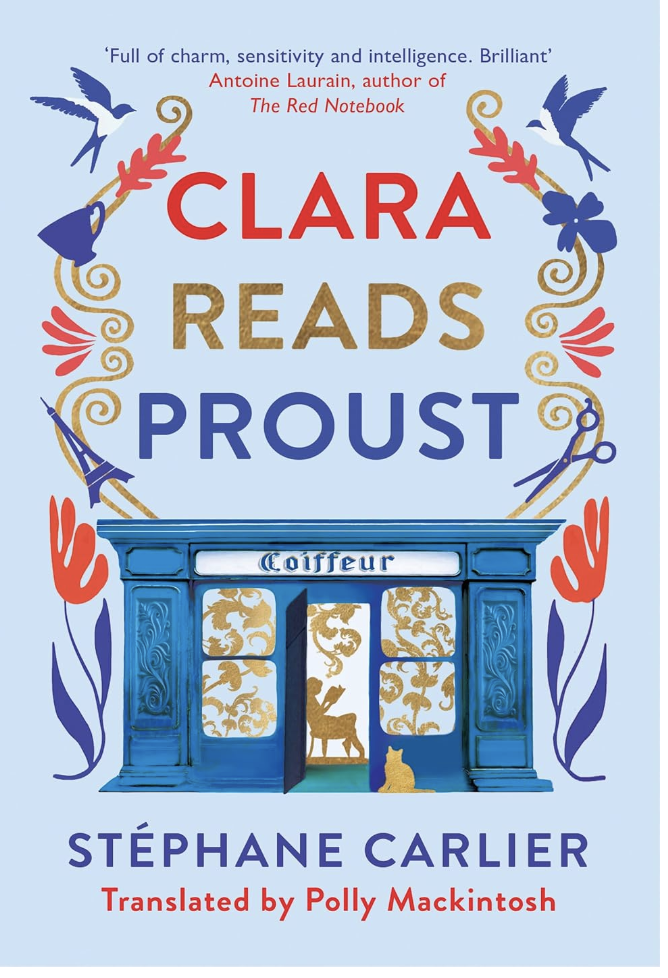

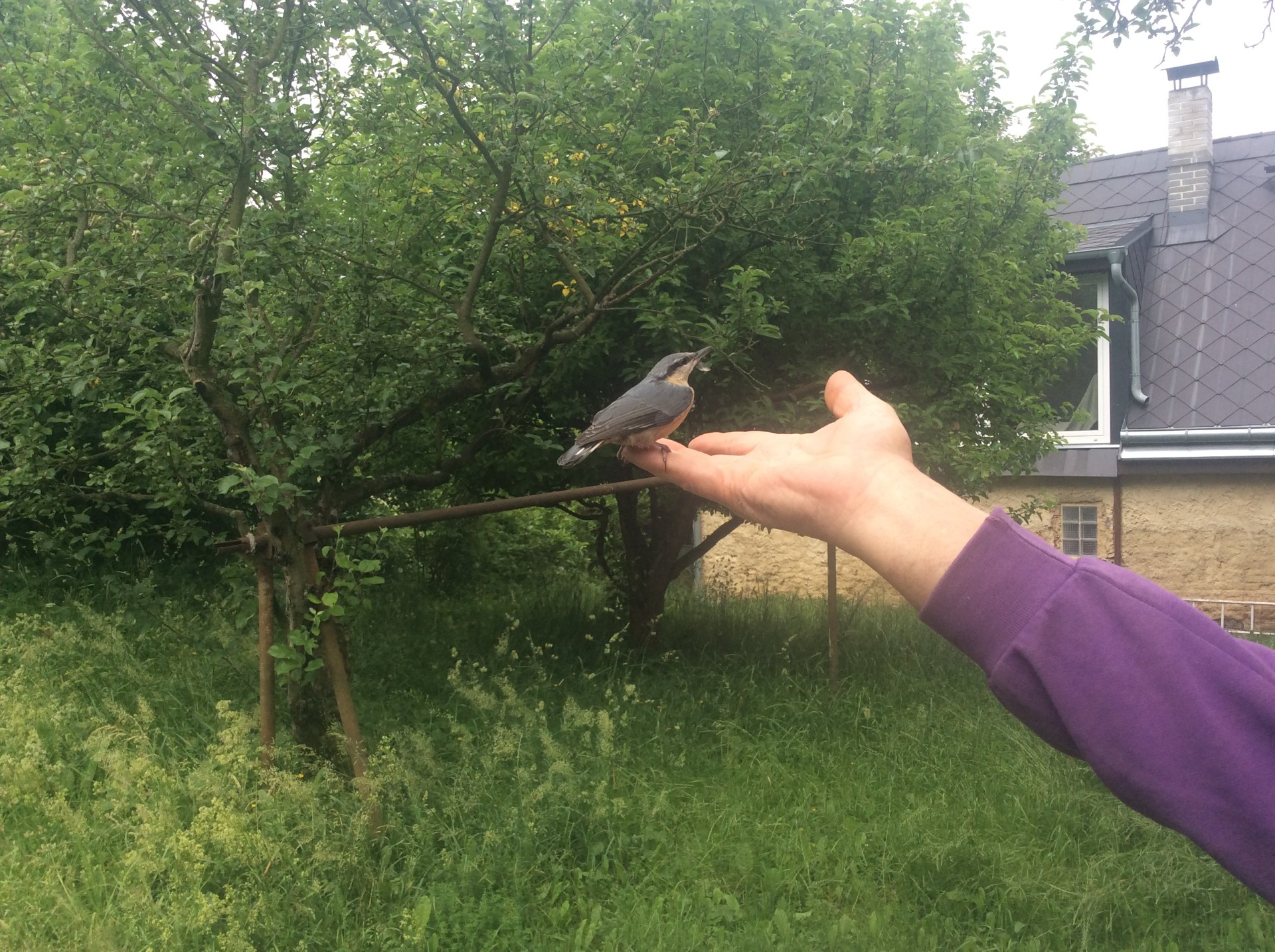

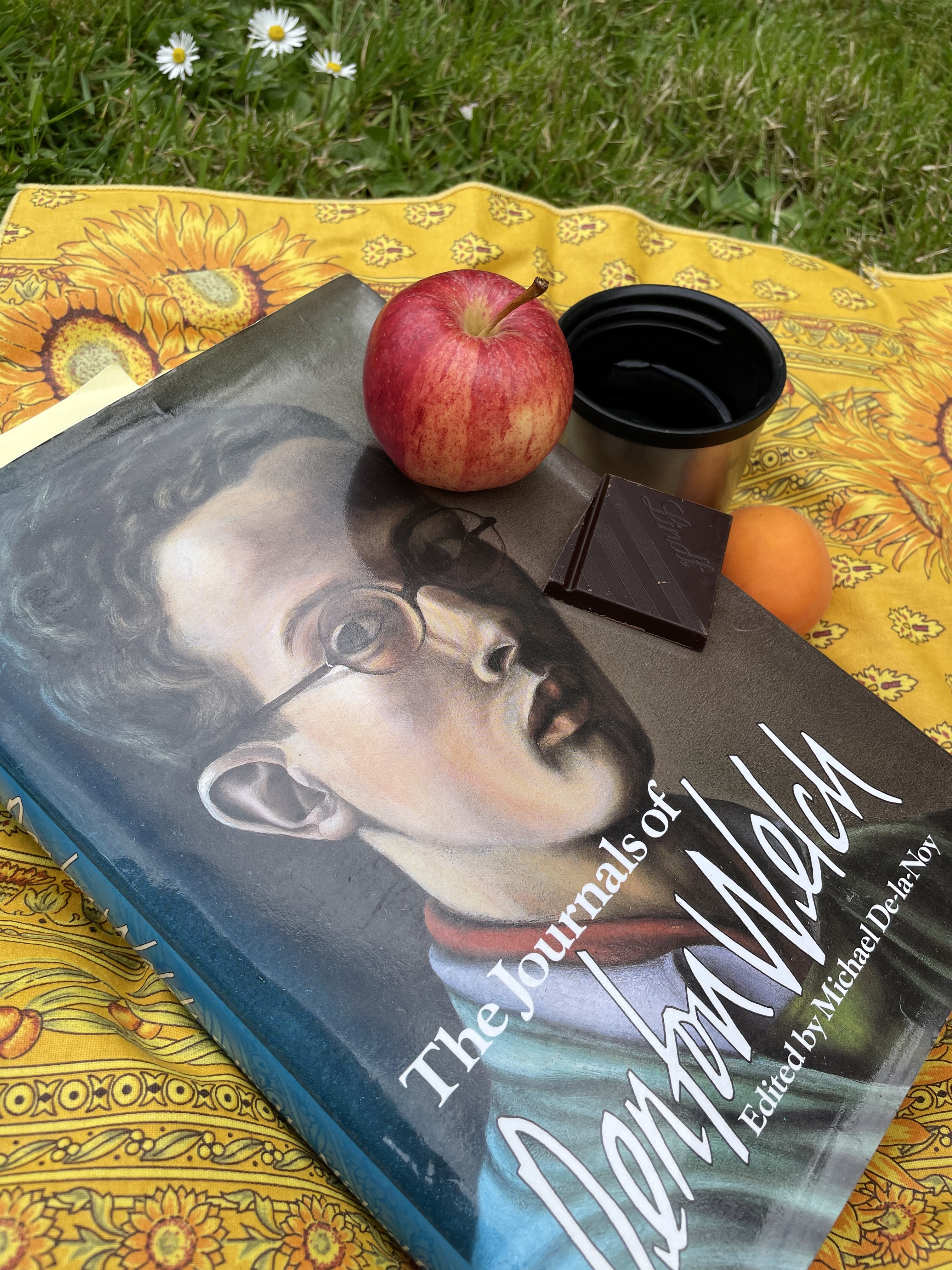


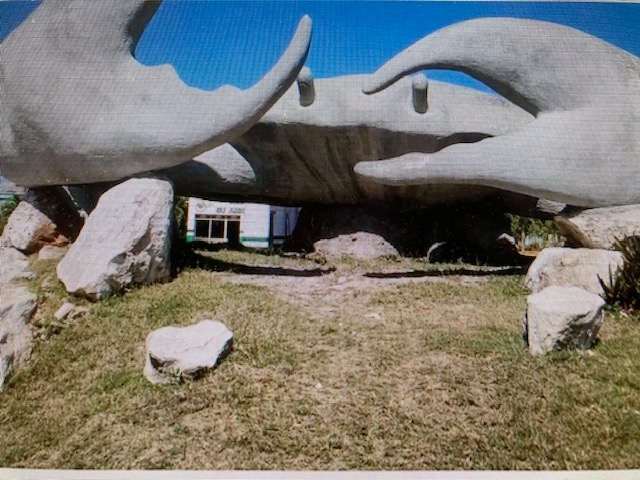
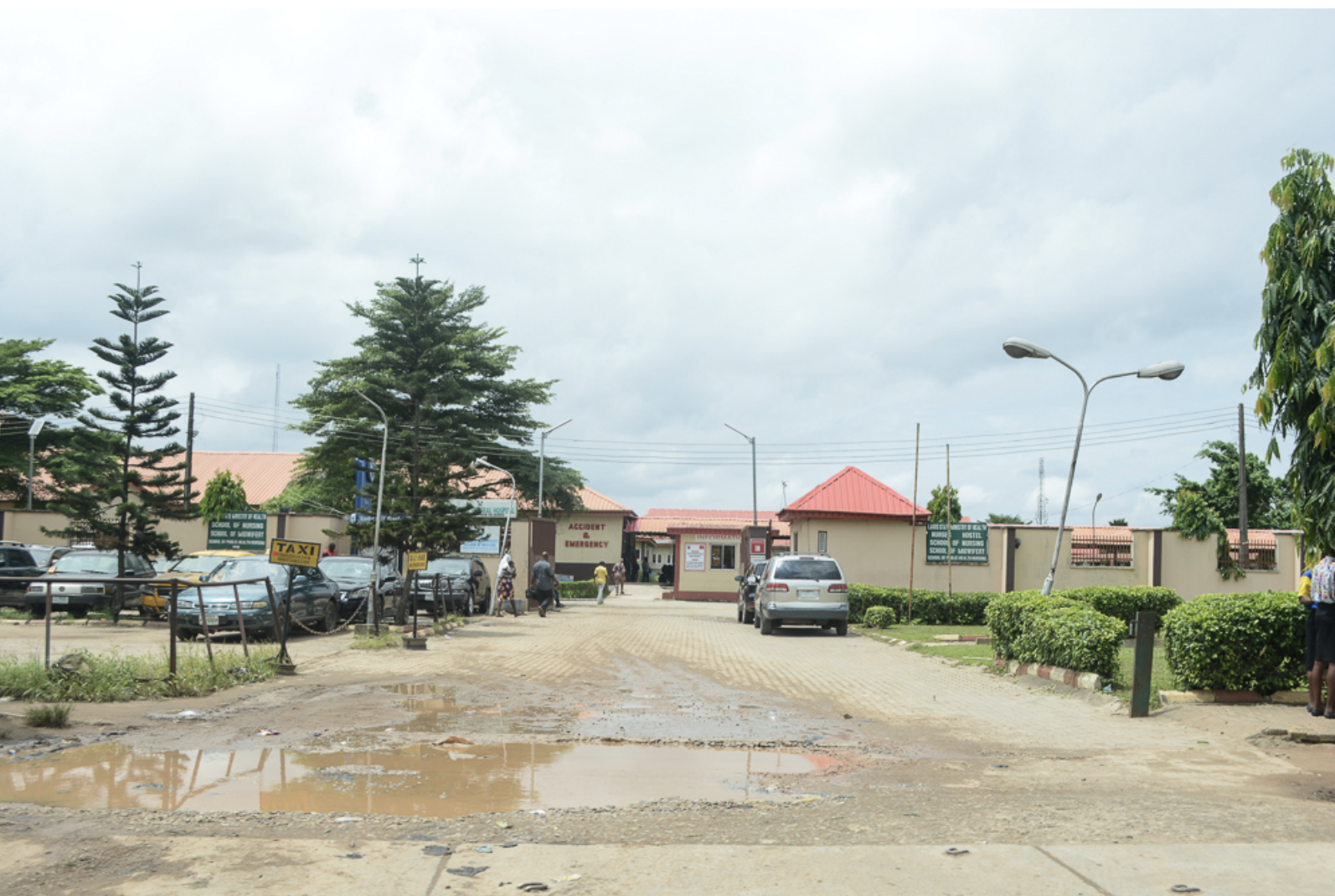
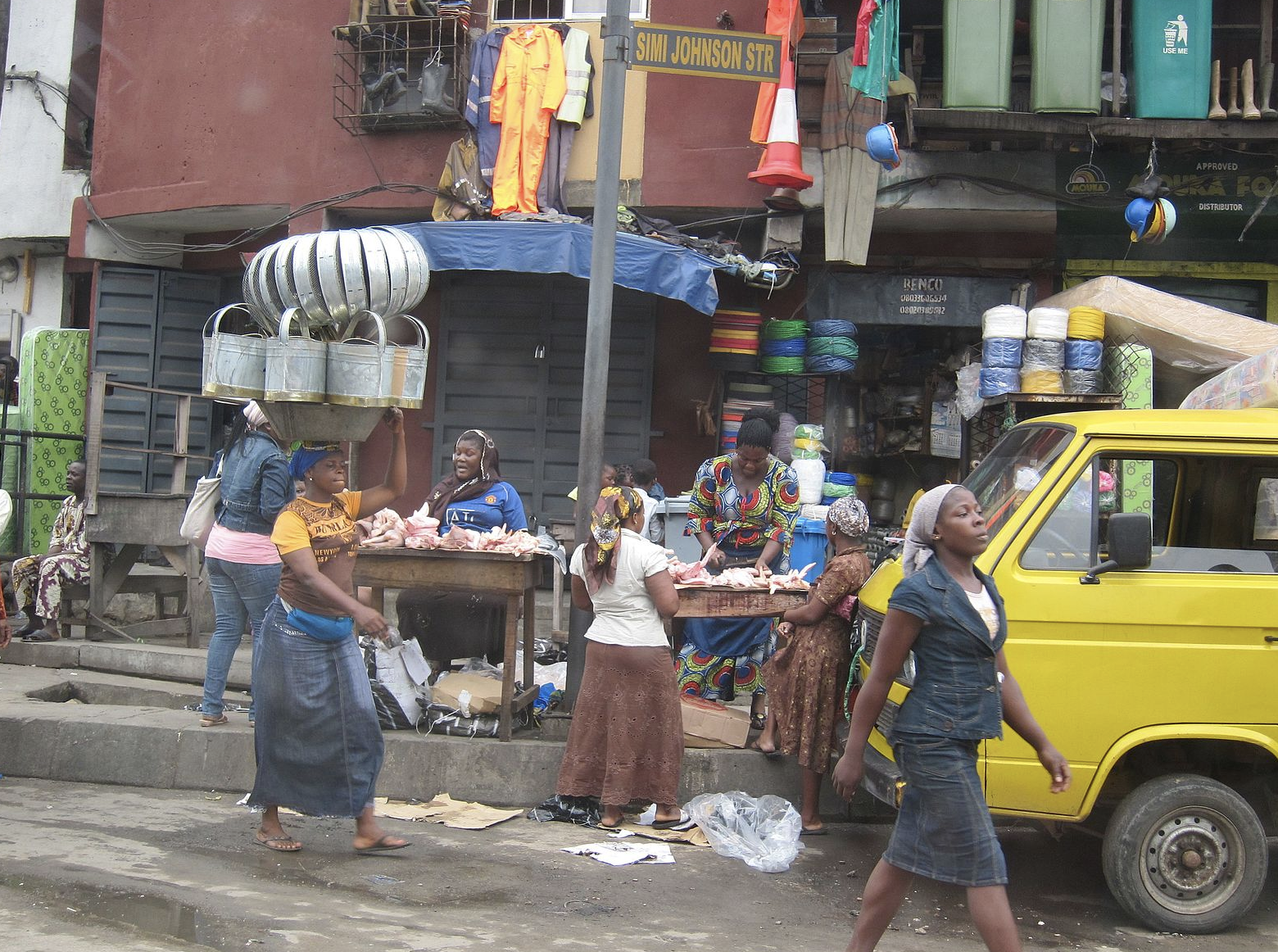

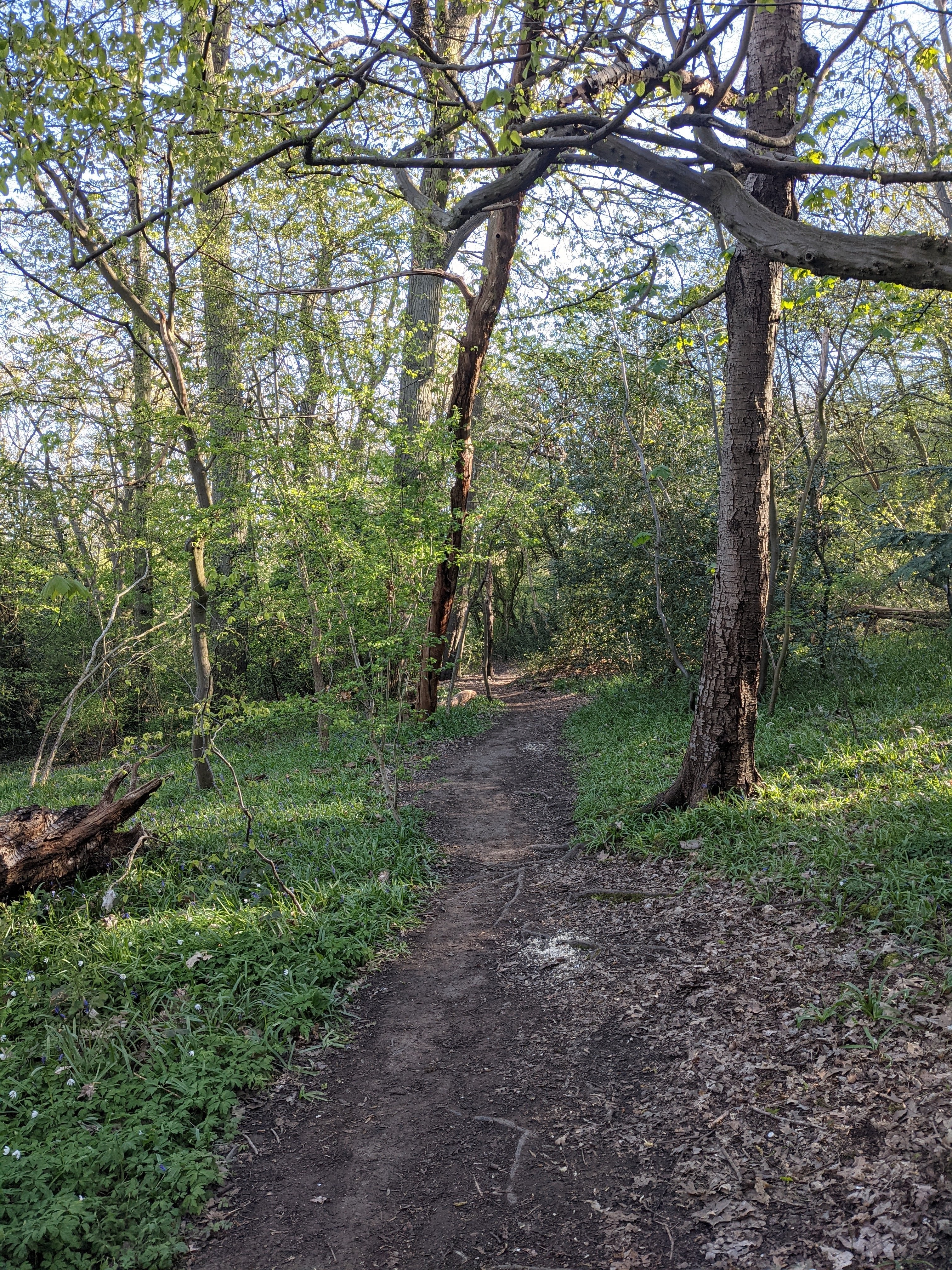


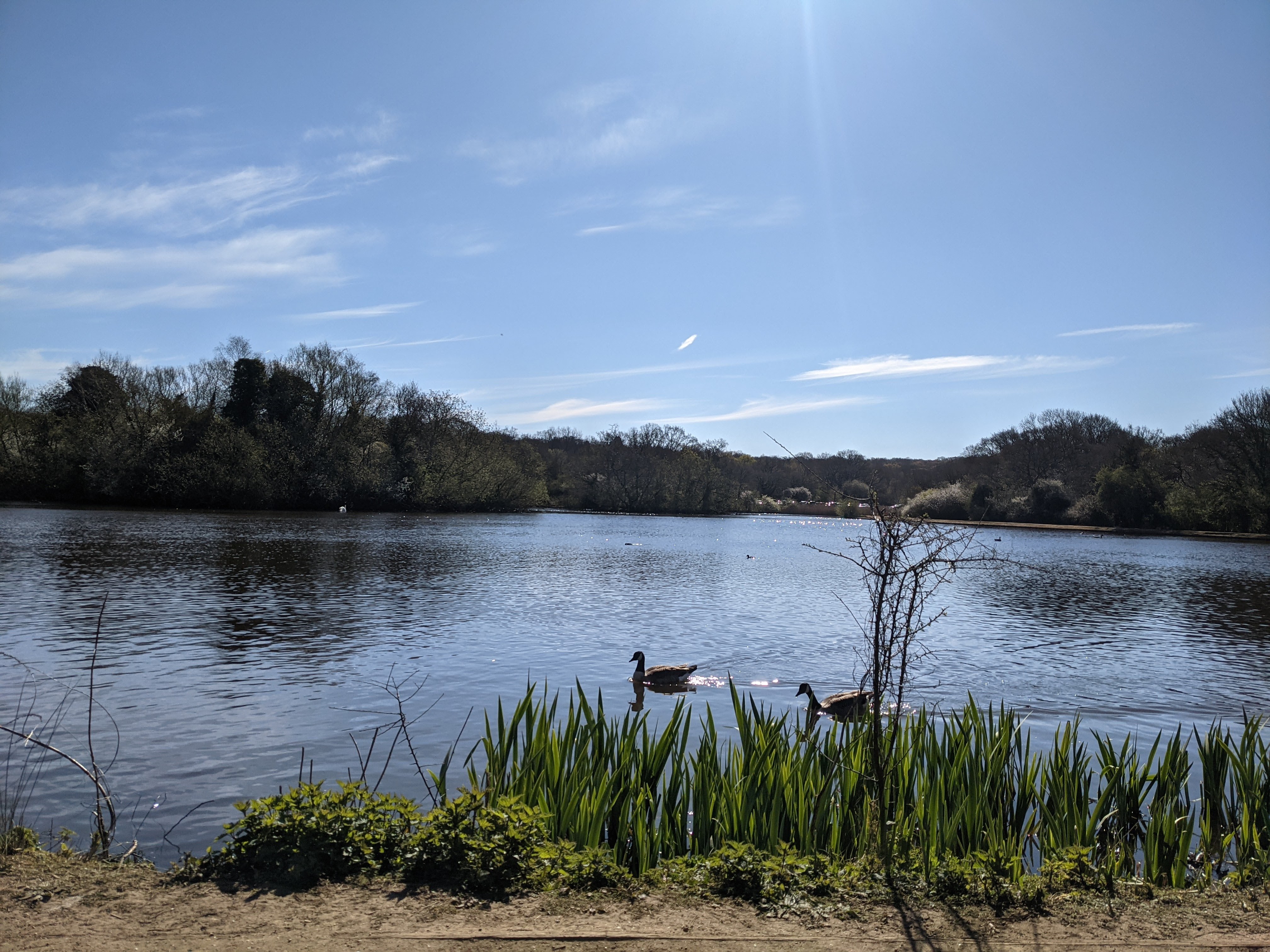
 Blue Door Press