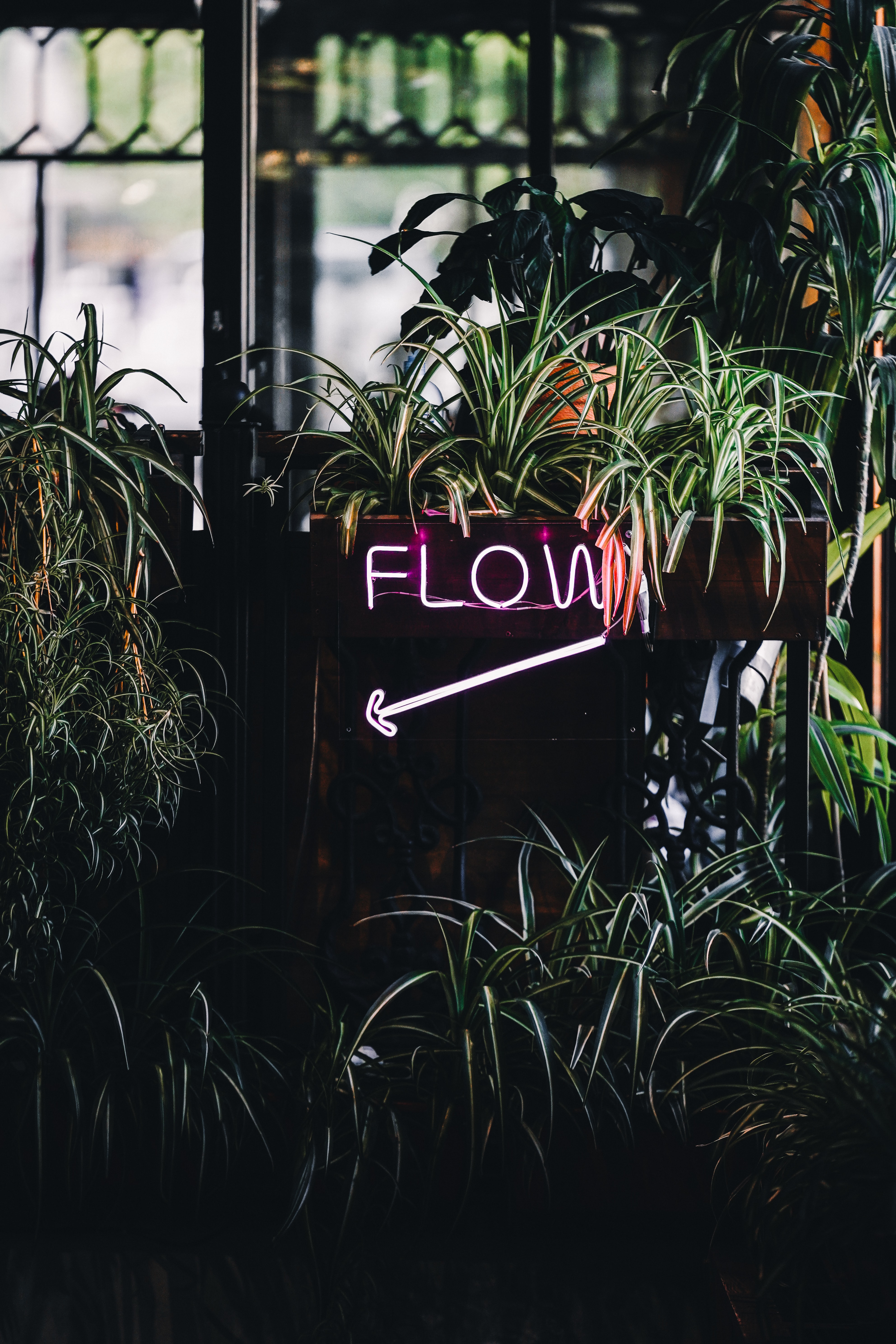
The American-based psychologist, Mihalyi Csikseztmihaliyi, first coined the term ‘flow’ in the specialist way that I will examine in this blog. For him, ‘flow’ is ‘the way people describe their state of mind when consciousness is harmoniously ordered, and why they want to pursue whatever they are doing for its own sake. In reviewing some of the activities that consistently produce flow – such as sports, games, art, and hobbies – it becomes easier to understand what makes people happy’ (2002: 6).
‘Flow’ is about people doing activities that they are completely immersed, these could range from making or eating food, talking in an engaged fashion, having sex, listening to or making music, doing exercise, playing games etc.
It is not necessarily about people doing things which are inherently relaxing. In fact, it can also be about participating in activities which can be significantly challenging, either physically or cognitively. In a section called ‘Flow and Learning’ in Creativity: Flow and the Psychology of Discovery and Invention (1997), Csikseztmihaliyi stresses the importance of humans finding states of ‘flow’ which is achieved when they undertake ‘painful, risky, difficult activities that stretch the person’s capacity and involve an element of novelty and discovery’ that cultivates an ‘almost automatic, effortless, yet highly focused state of consciousness’ (110). So, for Csikseztmihaliyi and the host of other researchers, finding flow is about engaging in creative activities which are difficult; it’s about ‘going for it’; it’s a bit like diving into a swimming pool and swimming fast enough to stop being cold. Doing an activity which is too easy may not generate flow because you could easily become distracted and think about other things. Finding flow is about having your concentration solely focused upon the experience of that activity. Flow experiences are about living in the moment, feeling deeply the experience that you are immersed in.
Csikseztmihaliyi’s research indicates that many top athletes, musicians, scientists and writers work most successfully when they are in ‘flow’ states. This is because finding that state of flow may be hard but it is also enjoyable. Csikseztmihaliyi writes of some research which examined people’s flow states at work and at home: ‘Whenever people were in flow, either at work or leisure, they reported it as a much more positive experience than the times when they were not in flow’ (2002: 159).
How do you find flow?
This is the big question. If Csikseztmihaliyi and his researchers are to be believed, finding flow is one of the keys to achieve what they call ‘optimal performance’. Can flow be taught? Can it be learnt? Csikseztmihaliyi would emphatically say yes. But it’s not about issuing people with a set of instructions on how to do it, it’s about liberating people so that they can figure things out for themselves.
In many ways, going to school and being ‘educated’ can inhibit flow. Many children become fearful of making mistakes at school and learn that it is the performance and appearance of learning that matters, not the process. Nurturing flow is about nurturing optimal processes. This is where skilful teachers and learners come in. A teacher who is constantly criticising learners will inevitably inhibit children’s flow experiences. A skilful teacher will unlock flow through a series of steps. So for example, a good teacher of reading will encourage children to take joy in turning the pages of a book, to look at the pictures, and will, in a step by step way, encourage children to read words on the page. If a child becomes frightened that they will punished or criticised for making a mistake, they may well stop feeling flow as they are reading. This is true for any learning. Carol Dweck, a co-researcher with Csikseztmihaliyi, developed her theory of ‘Growth Mindset’ to help understand how effective learners learn. For Dweck, learners who are effective enjoy challenges, and are not afraid to make mistakes, they see all learning as a form of ‘growth’, and have rich conceptions of learning, realising that it can happen all the time and in many spheres, not just school (Haimovitz & S Dweck 2017).
The implications for writers
There are many implications for writers if they are to take the theory of flow seriously.
The first might be that any writing activities which foster flow should be encouraged. A number of writing pedagogues – Dorothea Brande, Julia Cameron, and Peter Elbow – have all claimed that what is sometimes termed ‘freewriting’ is particularly effective. Elbow writes:
‘The most effective way I know to improve your writing is to do freewriting exercises regularly. At least three times a week. They are sometimes called ‘automatic writing’, ‘babbling’, or ‘jabbering’ exercises. The idea is to write for 10 minutes (later on, perhaps fifteen-twenty). Don’t stop for anything. Go quickly without rushing. Never stop to look back, to cross something out, to wonder how to spell something, to wonder what word or thought to use, or to think about what you’re doing. If you can’t think of a word or a spelling, just a squiggle or else write ‘I can’t think of it’. Just put something down. The easiest thing to do is put down whatever is in your mind.’ Peter Elbow, Writing without Teachers, OUP, 1998, p. 3
Freewriting generates flow because it requires writers to switch off their inner critic and use their learned experience of writing in a concentrated, uncensored fashion; it is the equivalent of an athlete sprinting, or a piano player practising scales. It exercises the muscle of writing without any interruptions.
Other strategies that might generate flow are things like concept mapping structures of stories, which deploy drawing to get writers thinking about the overall shape of their writing. The act of drawing an outline of a plot, the rudiments of a character or a poem can be liberating.
Getting writers to re-read their own work without making any changes – difficult as this might be – could also generate flow and enable writers to get a sense of the feeling of their work. This is not to say that they can’t go back and re-read their own work and edit it later, but this act of unfettered reading can again inculcate concentrated flow.
References
Csikszentmihalyi, M., (1997). Creativity: Flow and the Psychology of Discovery and Invention. 1st ed. New York: HarperPerennial.
Csikszentmihalyi, M., (2002) Flow: The Classic Work on How to Achieve Happiness. London: Random House.
Elbow P. (1998) Writing without Teachers, Oxford: Oxford University Press.
Francis Gilbert (2016) Aesthetic Learning, Creative Writing and English Teaching, Changing English, 23:3, 257-268, DOI: 10.1080/1358684X.2016.1203616
Haimovitz, Kyla, and Carol S Dweck, ‘The Origins of Children’s Growth and Fixed Mindsets: New Research and a New Proposal’, Child Development, 88.6 (2017), 1849–59
I’ve been thinking about audience recently. If you’re reading this, who are you? A reader, a writer, someone who’s come to this because you know me from my education work, a member of my family who reads whatever I write, either out of curiosity or familial reflected glory – what my Jewish mother would call shepping naches or kvelling. You don’t have to buy a book to read this blog, or make a big time investment. It will take you just a few minutes if you get to the end. It may be that you just happened upon it and, if I’m doing a decent enough job, hopefully I will have drawn you in well enough for you to stay.
A blog is a relatively rule-free thing, which makes it both a pleasure to write and frighteningly open. It can be an erudite argument, a serious commentary, or as in this one, just an accumulation of thoughts on a topic. In this sense a blog is a luxurious, wanton, delightfully unruly form. But the unknowability of the audience for a blog makes it hard to judge the tone and know whether you’re likely to be carrying anyone with you. With one decisive key stroke you might leave me.
If you’re still here, dear unknown reader, thank you very much. And now I’ll get back to why I’ve been thinking such a lot about audience. I’ve always written, from a very early age, but mainly just for myself, or for a teacher to mark or a parent to comment on. But then, after a long entirely audienceless period as a young adult, I started teaching, and found myself writing in small, experimental ways for other people – the occasional poem written specially for a class, a bit of doggerel for someone’s leaving do, a contribution to the Christmas panto.
It was when I had children that I suddenly found myself with a proper fully-fledged audience. I started telling stories and then writing ones that had the children in mind – Michaelmas Mouse stories for my toddler daughter and son, picture book ideas, and then later, when my son was at primary school, a book for him about a boy called Zachary, who is visited and befriended by a demanding, zany, perplexing but loveable grandpa-like figure who lands on his doorstep from outer space. I wrote a novel for my teenage daughter about a girl who is knocked down by a car and has to find new ways of living with a brain injury. I managed to get a children’s literary agent to take me on for these two books, but sadly, though I came close on a couple of occasions, I never managed to get a publisher for them – they didn’t think they’d attract a big enough audience.
When I started working for a teachers’ centre for English teachers, a few opportunities to write presented themselves. Running courses on classroom English, I always tried to weave in short writing experiments, exercises and activities that teachers could use with their students. Getting the teachers to try out the activities themselves was not only good fun for them, but also in my view gave them confidence and experience to apply in their teaching. I always joined in, and gradually accumulated a little collection of experiments in poetry and fiction – often sparked by another text – a parody mash-up of Pride and Prejudice and Cormac McCarthy’s The Road, a pastiche of William Carlos Williams’ ‘The Red Wheelbarrow’ all about an infuriating air-conditioning unit in a hotel, a memory in the style of a favourite writer (in my case Tim Winton’s opening of Cloudstreet).
These experiments had a fleeting audience, shared in sessions, laughed over and then put to one side. But I got a taste for some adult writing, shared with others in a workshop, and decided to do a Creative Writing MA. At Birkbeck, one night a week for two years, I began to take my adult fiction more seriously, and I’m sure that that was in no small part because there were people to share it with – a living audience for it.
The very first time I had to write a piece to share with my seminar group I had a sleepless night. Literally sleepless, which is quite unusual for me, someone who has had to face challenges at work, difficult classes and much more. I was terrified. But the terror was important. The fact of people reading my work was a catalyst for development. It forced me to up my game. I imagined the responses, stepping outside of myself to think about how someone else might react to that thing I’d just written.
Salman Rushdie said last year of a new writing project,
‘The infallible test of anything I write is embarrassment […] If I’m embarrassed to show it to you, then it’s not ready. There comes a point where I’m not embarrassed to show it and actually I’m kind of eager to show it.’
I love that idea of embarrassment as a driver for producing your best work! I will never be able to thank my fellow students enough, for their honest, open, serious engagement with my writing, whether it be to criticise, question, praise or, above all, to offer me opportunities not to embarrass myself.
I went on to write two adult novels and a collection of short stories, for which I have had a modest audience. Hooray! But now audience is right back in my head because, perhaps unsurprisingly, the arrival of two grandchildren has plunged me back into the waters of writing for children. I started telling a few stories and then writing some poems for my toddler grandson, Max. He has a wonderful device called a Tonie, where, by digital means, you can add stories and poems from afar. He can select Granny and Grandpa’s avatar, which sits on the top of the device, and by pressing it down onto the box, he can listen to whatever we’ve recorded for him.
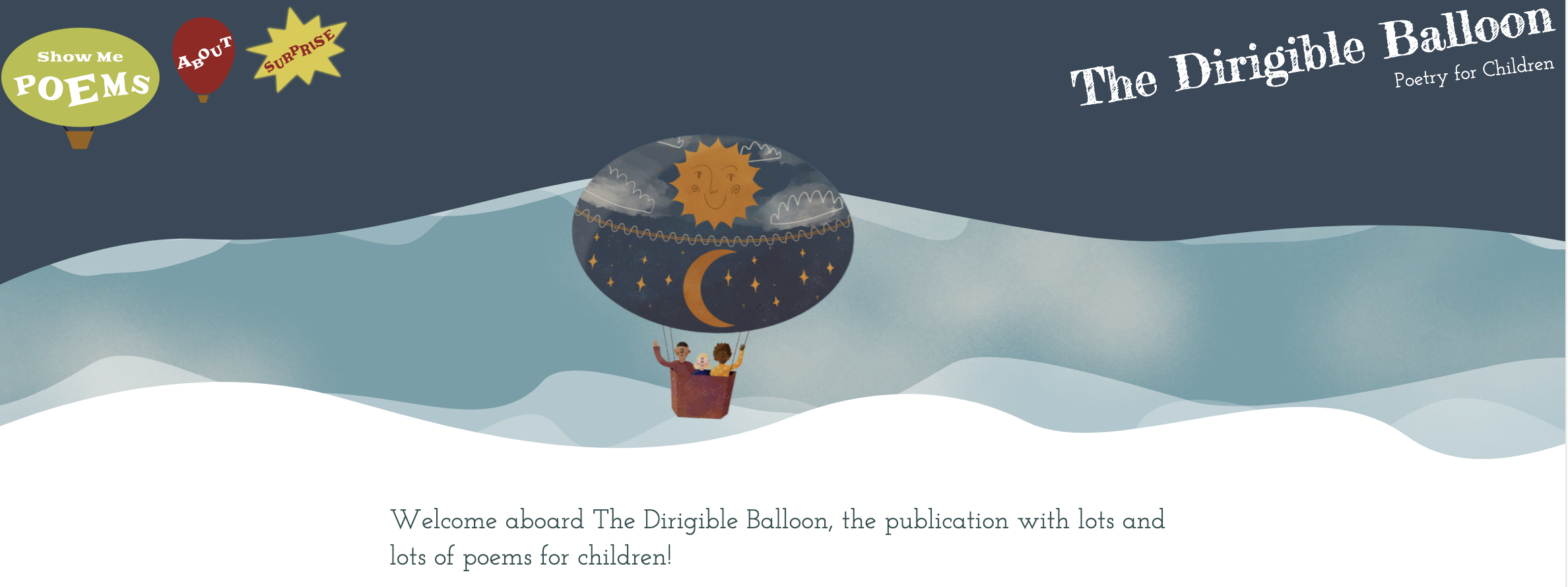
As one might imagine, he is the perfect audience for my efforts. He responds – with honesty. I know which of my efforts are his favourites and which barely get a mention, and the requests for more are an impetus to write. Recently I sent a couple of poems I’d written for him off to a wonderful children’s poetry website, The Dirigible Balloon, and was thrilled to have them accepted. Hopefully my audience will now encompass more children.
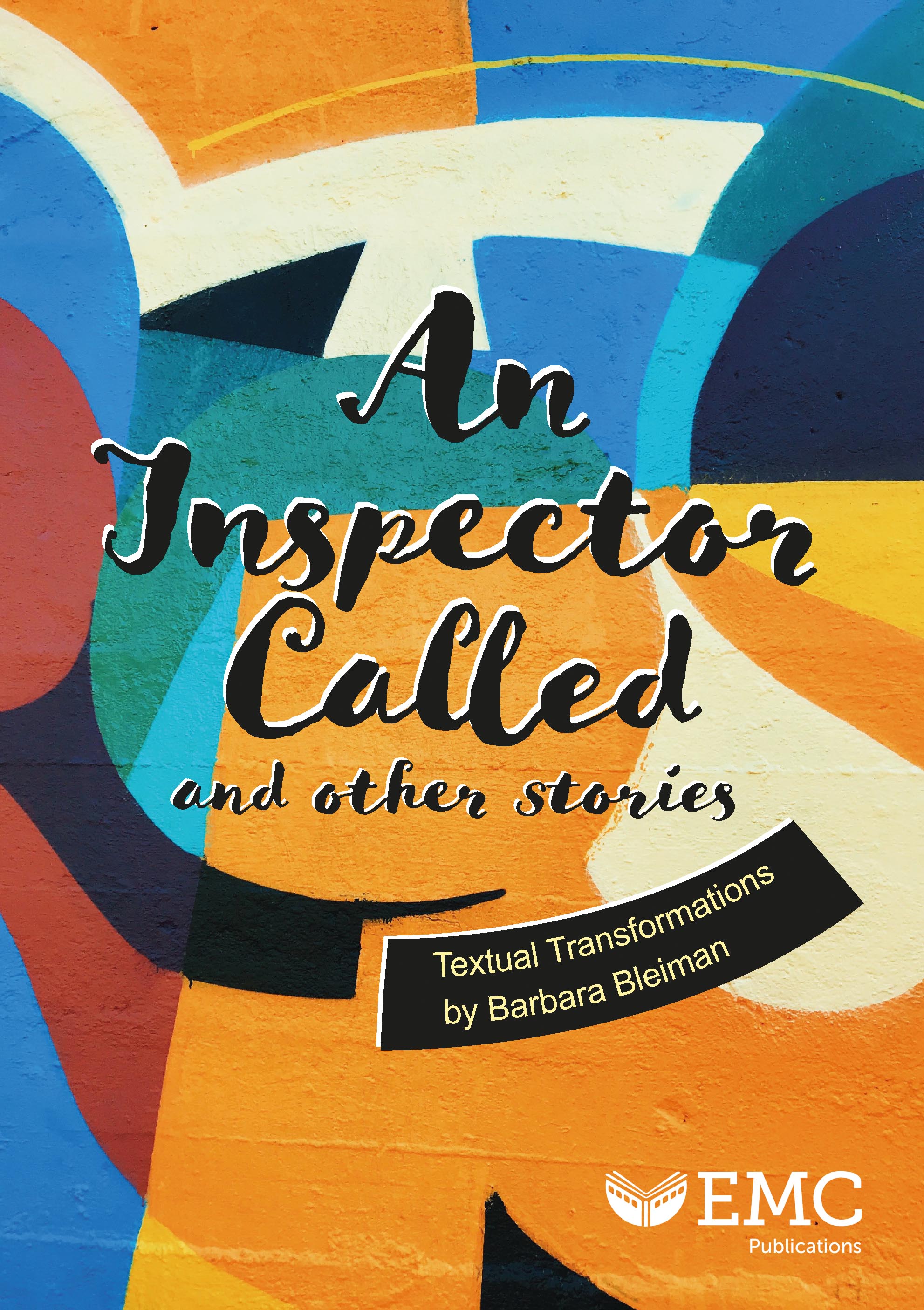
Just one last audience-related experience…I’ve written and had published a collection of short stories for young adults, An Inspector Called and Other Stories. (For more on this, see my blog) In the past, I might have bravely shared these with colleagues and, if they liked them, we might have gone straight to publication. But these days it doesn’t feel quite so simple. There’s a nervousness for writers and publishers about inadvertently causing offence, upsetting readers, saying something too edgy or writing in a way that is ambiguous enough to be misinterpreted. So, in this case, as well as sharing stories with colleagues, friends and family, as I always would, we put together a reading group of teachers to comment on the stories and the collection as a whole. Nerve-wracking, but thankfully the responses were very good and the book is now out. I’m especially excited that my audience this time will be young people in English classrooms.
My aim in the collection has been to offer interpretations and angles on texts that they are required to study, some of which they probably find quite heavy-going. My stories try to offer something that speaks more directly to them. Pretty soon, I’ll start finding out whether I’ve done a good job and whether I’ve judged my audience well.
So, for me, the audience for writing is essential. It is the spark, the catalyst, key to development, vital for stepping outside of oneself as a reader to understand how others might see things. It’s a reality check, a source of anxiety and sometimes, when something you’ve written is liked by others, of great joy. Truth be told, I don’t write just for myself – I want to be read.
If you’re still here, thank you for staying. If you stayed, do feel free to comment and even perhaps break the anonymity of the online audience and tell me who you are. Mum, that doesn’t mean you, though, of course, feel free to share your maternal pride (or embarrassment) in private!
It’s intriguing to find a book gathering its own stories besides the one contained between its covers
In 1948 D H Hardwick ordered a copy of Trees In Britain by L. F. J Brimble from WH Smith. It was to be sent to him in the Military Wing of Harefield County Hospital in Uxbridge.
In 2020, author Sarah Salway, recently discharged from hospital herself, came across that same copy of the book in a charity shop. Having been seriously ill with silent hypoxia in the first wave of Covid 19, Sarah was learning to breathe again. She’d become fascinated by trees, the breathing they do for us, and used the book to learn to identify trees in her local park on her daily walks.
However, a further fascination came when a postcard fell out of the book revealing the details of Hardwick’s original order to W H Smith 72 years previously.
Feeling an affinity with the hospitalised Hardwick, Sarah began to research him and discovered he had a distinguished career as a pilot in the RAF in WW2. As she was emerging from her ‘battle’ with Covid 19, She was pleased to discover this man was a survivor of many missions.
Sarah wrote about this experience in ‘Learning To Breathe with Trees,’ the first essay Blue Door Press published in the anthology, Altogether Elsewhere.
Unbeknown to Sarah, the story of the book was about to have a new chapter. It turns out that D H Hardwick was hero to another – his nephew Mike Hardwick. Mike was researching his uncle’s wartime career. His internet trawling led him to read Sarah’s essay on Blue Door Press. He contacted her via her website. They corresponded by email and spoke on the telephone.
Sarah learned much more about her tree book hero: the battles he’d survived, what an inspiring uncle he had been to the young Mike, the post-war life he’d led until his death in 1990. In turn, Sarah returned the book and the postcard to Mike Hardwick, who is thrilled to discover that his hero, uncle Den, had such a positive effect on Sarah’s recovery.
Why try to write a poem about the war in Ukraine? As Chamberlain said after Munich in 1938, Ukraine like the former Czechoslovakia is ‘a far away country’; it’s someone else’s tragedy.
But TV has put the invasion into our homes and the territory of war is difficult to ignore. It’s full of high-pitched language, opinions and propaganda, journalists and cameras. Or it was until the routine of brutality and death slipped from the front pages and other issues like an appalling UK government and new prime minister took over. Even so, the script while in London had been clear, we knew who was responsible.
Or not quite. It has become even more confusing. This might be because I’m now living in Prague and nearer the front line so there are more refugees. People are anxious about their own futures. Bread is more expensive, energy bills are soaring, the schools are full and can’t take Ukranian children. It is also that the script of the war seems almost as much domestic politics: duplicity, gas, NATO and the EU/Europe.
However, two Storyville documentaries about children in besieged towns that I watched while in London have stuck with me; I couldn’t shake off two fragments and once back in Prague made notes as I’d remembered these. The observations are highly selective; I can’t get Iplayer so might easily have re-scripted the events but I wouldn’t want to check anyway. My recollection expresses the persistence and intensity of my anxiety for these particular children. This might also be influenced by having to leave behind in London the two grandchildren I’d been living with, a six-year-old girl, and four-year-old boy. In particular my complicated feelings watching the boy becoming a boy.
When I first read the quote from Loznitsa that starts this blog I wondered if he was right, and in what way can words on a page be more effective than video, and always that ancient question can poetry be at all powerful? I took my fragments and looked at other ways of describing the horror.
I recently heard a well-known author mention a newspaper article in which she and others were accused of monetising their tragedies and demons by writing books and giving talks on challenges such as alcoholism, infertility and divorce.
Somehow, I doubt making money is typically the main driver behind exposing the stickier parts of one’s life, even for the small minority who actually can make some serious cash from it. Being vulnerable takes courage and is uncomfortable, as I know only too well. There’s also immense value in doing so.
Not so long ago, it was the norm to keep experiences such as miscarriage, cancer or a mental illness almost entirely to yourself. Today, what was once shrouded in secrecy and even shame is far more likely to be openly discussed. Social media platforms such as Facebook and Instagram have no doubt helped normalise sharing intimate details of our lives. Even so, sometimes after I’ve written something personal on Instagram, such as how it felt to have a double mastectomy, or to conceive by IVF, I recoil and think, do I really want people to know that?
Writing was something I did only for myself at first. In 2002, before social media was even invented, I was diagnosed with breast cancer, at 31. Soon after, I began writing about it in the privacy of my journal. Its pages were a safe haven where I could offload the torrent of emotions I experienced after my shock transition from hard-working London architect longing to find a boyfriend to unemployed hairless cancer patient longing to live. I assumed my outpourings would remain forever hidden in my journal. After all, I’d barely even told anyone I had cancer.
But while I was sick, I voraciously read memoirs by people who’d been through cancer and other serious illnesses, especially at a young age. Surrounding myself with their stories helped me feel less alone. For in real life, I knew no-one going through anything similar. Those stories also gave me hope that surviving cancer was not the impossibility I’d initially assumed. That thriving again, one day, might even be possible. There was such power in knowing someone else had walked through a fire similar to my own and come out the other end.
After I finished treatment, I returned to my journals, now curious to explore whether I could sculpt their raw content into a story. Stories had been my steadfast companions through a tough time, and I had a longing to create something positive out of its wreckage. Plus, awful as cancer was, it wasn’t uninteresting: wearing a blue ice-cap as scarlet liquid, the colour of the spring tulips in the park, dripped into my body through a vein in my right hand, and I held an egg sandwich in my left. These surreal moments deserved to be documented.
The process of writing what was eventually published as a memoir had a degree of discomfort to it: in order to create something authentic and honest, I had to dive back into the emotions I’d experienced at the time. But the greater discomfort came when I shared my words. Did I really want people – particularly the ones who know me on a superficial level – to know about how I’d puked twenty-five times after my first chemo session, or about the huge fight I had with my mum one day when, in frustration, I hurled a saucepan at her?
And when I was single and dating online, did I really want potential boyfriends googling my name and finding articles I’d published about having breast cancer – something I’d of course have shared had a relationship become serious, but not on the first or perhaps even the fifth date. When one guy I’d been seeing for a few weeks, and who I really liked, suddenly dumped me, I became paranoid he’d read an article I’d published in The Telegraph and didn’t want to date someone who’d had cancer. I even asked the newspaper to take the article off their website, so as not to deter any future suitors!
In spite of any discomfort I feel about having bared all, I know it was the right thing for me to do, both because the creative process of turning those journals into prose was an enriching one, and because, twenty years on, my story does appear to have turned out to be one of survival and thriving again in the wake of challenge. For those stuck in the trenches right now, stories such as this can offer a chink of light in the darkness.
Many of us will, at some point, have to bear something really hard. Many will choose not to speak publicly about it. But when those of us who do feel moved to speak offer our stories, what we are saying is, yes, you are heard, you are not alone. I too have been here. And that in itself can be powerful medicine.
I have been reading about emotional intelligence (EQ) for the past twenty years, ever since I picked up Daniel Goleman’s book on the issue in the late 1990s. As a writer and teacher, I was drawn to the concept because it suggested that it’s not so much how much we know that defines our intelligence, but how we conduct our relationships. At the heart of the idea of emotional intelligence or emotional quotient (EQ) as it’s sometimes known, is the idea that we need to understand our feelings: how and why we respond to people and the world in the way we do.
In a certain sense, EQ suggests that there is a vital role for writers to play in helping us understand the world because it’s writers/storytellers/poets who explore the world of emotions. Until quite recently, scientists avoided the topic, and deliberately stripped their practice of ‘emotions’ – as many still do. Scientists are supposed to be ‘objective’ in their observations, and look at the world without ‘feeling’. Recently there’s been a backlash against this approach, with feminists most notably showing how scientific research has been riddled with unexplored patriarchal assumptions and biases, one of which is its mistaken belief that ‘feeling’ can be taken out of scientific experiments. A practice which has led to all sorts of unethical experiments and problems. The award-winning book, Invisible Women, by Caroline Criado Perez explores these issues, exposing the data bias in a world designed for men.
For the writer exploring emotions is at the heart of their practice. One way of looking at much storytelling is to consider the ways in which writers depict characters who struggle to be who they want to be, who grapple with trying to know who they really are. From Hamlet to Margaret Atwood’s Handmaids, it’s this internal struggle to truly understand oneself and achieve one’s desires which motors so many stories. The skill of the writer is to show the tragedy and comedy of this struggle in different contexts. It’s a struggle because constantly our literary protagonists are being put into conceptual boxes by other people. Hamlet is put into the box of having to avenge his father’s murder by his father’s ghost and many other ones by other characters; the Handmaids in Atwood’s two novels set in a fundamental Christian dystopia are constantly battling against the patriarchy suppressing their desires, their bodies, their thoughts. Atwood skilfully and scarily shows a world where no woman can be who she truly wants to be.
In the oeuvre of Blue Door Press, this issue comes up again and again. In Pamela Johnson’s Taking in Water, the main hero Lydia can never be who she wants to be because of the terrible secret she has had to keep about a horrific flood she experienced as a child. Jane Kirwan’s Don’t Mention Her explores how the death of a young child in a family affects the child’s mother, Connie. The tragedy unleashes a new side to Connie, a thirst to pursue what she wants in her life, to escape the confines of a dead marriage. Connie’s example and the tragedy have knock-on effects with other characters too, one of whom emigrates to Nigeria to be with the person she thinks she loves. Annabel’s Chown’s Hidden – A Memoir is a searing account of one young woman’s quest for meaning, love and good health, after a devastating cancer diagnosis. Again, the theme of finding the person you want to be comes up because the cancer eats away at Annabel’s hope, her sense of identity as well as her physical health. Barbara Bleiman’s Kreminology of Kisses is an eclectic series of short stories which all explore in differing ways the problems of desire in its manifold incarnations: the desire of a woman, who is having her portrait being painted, to escape the confines of the suffocating Renaissance world she lives in; the desire of the bureaucrat in Soviet Russia to find meaning in a stultifying surveillance state; the desires of lovers, children, parents to express themselves fully.
It should come as no surprise then that my own novels, The Last Day of Term, Who Do You Love, and Snow on the Danube all are peopled by characters who are seeking to be different people, yearning for escape, release, for reciprocal love and attempting to seek it.
If you are interested in this theme then, there’s no better place to start than with Blue Door Press’s work!
Coming up with a new idea for a book is always exciting. My latest adventure in fiction, though, is quite different to anything I’ve done before. You see, although I write fiction, I also work for a teachers’ development centre for English teachers. While most of my time is spent working with teachers rather than students, and most of my writing is classroom resources about texts by other writers, I recently decided to have a serious, full-throttle go at writing fiction for students. I’ve written a few short stories for a YA audience in the past, one or two of which have found their way into anthologies but this time it’s a much more serious enterprise – writing a whole collection.
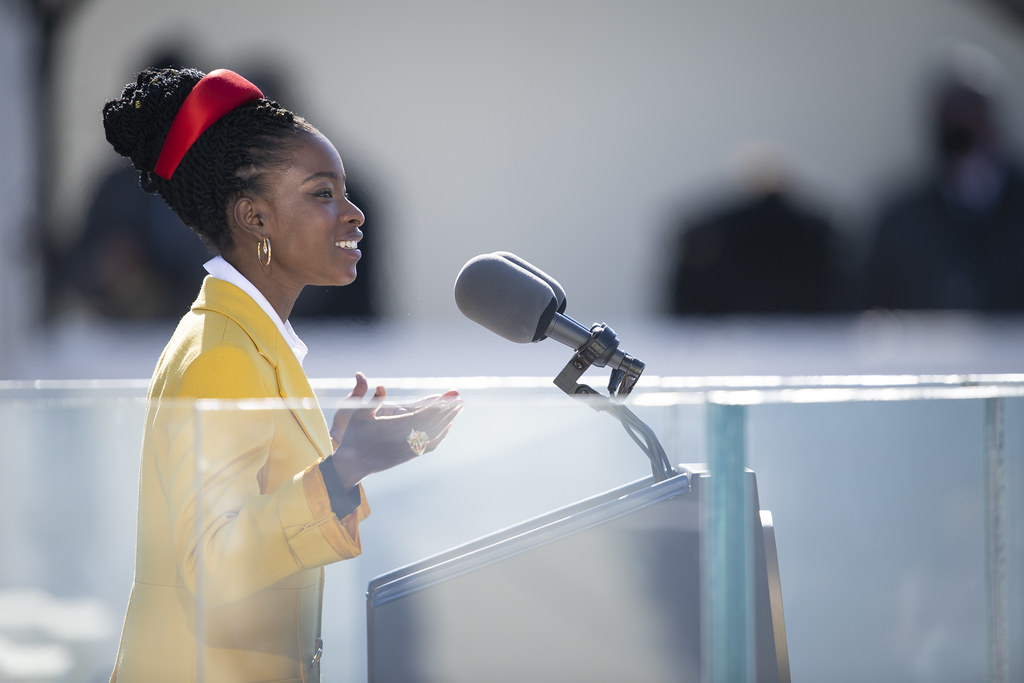
Where did the idea come from? I’ve been working recently on publications in a series called Cultural Conversations, the idea being to show students how texts talk to each other over time; how they’re part of long traditions, rather than standing in isolation. The resources bring together texts that are considered to be iconic and culturally significant with others that have been inspired by them, drawing on their themes, characters, narratives, archetypes and conventions. So, as an example, Homer’s Odyssey is brought together with the many contemporary re-envisionings by writers like Derek Walcott, Simon Armitage, Margaret Atwood or Madeleine Miller. And Amanda Gorman’s poem for the inauguration of Joe Biden is read alongside Maya Angelou’s ‘Still I Rise’ that inspired her work, and in relation to the other iconic American texts that she paid homage to.
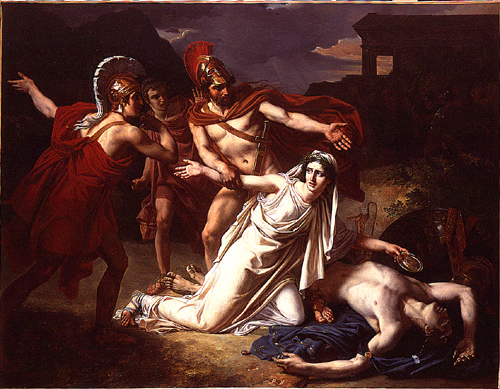
The most recent publication in the series, yet to be published, is on Antigone. Supported by a grant from the Classical Association, we commissioned four writers to produce new work based on Sophocles’ play. Poets Valerie Bloom and Inua Ellams, fiction writer Phoebe Roy and playwright Sarah Hehir have all written texts for 11-14 year olds inspired by the Greek play. While liaising with the writers and discussing their work, I thought I’d try my hand at a short story myself and ended up writing ‘Being Antigone’, a story about a contemporary school girl whose own life has some echoes of the original. I then wondered whether I might try doing some other ‘versions’, talking back to the famous texts that school students often find themselves studying.
Antigone – painting by Sébastien Norblin
I was instantly captured by the idea, in part because it tied in closely with something that’s been preoccupying me for quite some time . When Michael Gove was Secretary of State for Education, his mission was to radically alter the curriculum, especially at GCSE. Gone were American authors such as Arthur Miller or John Steinbeck. All students were required to study a pre-twentieth century novel. Some kinds of writing were proscribed, others were side lined, and in the supposed cause of ‘driving up standards’, ‘challenge’ and giving students ‘cultural capital’, lots of texts that enthused students and gave them a love of literature were ruthlessly excised. Ensuring a rich mix of diverse writers of different cultures and genders was not high up the minister’s agenda.
So, students are currently reading a diet of mainly canonical texts, which are not always suitable, not always accessible, often seriously hard work rather than pleasurable for all students in that age group. The majority of the texts are by dead white men.
My ‘versions’ idea suddenly sprang to life. What if I could write lots of different angles, re-tellings and interpretations of these texts , to open up new ideas and ways of reading them? My stories could act as fresh ways in; they could offer the viewpoint of a character left on the side lines, be prequels or sequels, pastiches or serious imitations, updated versions or adaptations. Equally, they could offer many different perspectives – for instance female views and voices alongside male ones, with characters and settings that are sometimes marginalised in those canonical texts, at least some of which reflect the realities of students’ lives.
I got started on the first stories soon before Christmas, sending them to colleagues for comment before committing to the whole project. Each time a story came back with a thumbs up, I was energised to have a shot at another, moving from Jekyll and Hyde and A Christmas Carol to The Tempest, from a Shakespeare sonnet to a poem by Thomas Hardy, from An Inspector Calls to Oliver Twist. It’s been a lot of fun writing them and the scope for writing in different genres – ones I’d never tried before – has been exhilarating, taking me out of my fiction-writing comfort zone. An Inspector Calls has become An Inspector Called, where a class, reading and studying Priestley’s play, suddenly find themselves, like the characters in the play, experiencing a spookily disturbing moral wake-up call. Oliver Twist is seen through the eyes of the Artful Dodger and for Macbeth, the story of the teenage Fleance, who only speaks a few words in Shakespeare’s play, is filled out. I thought that young people might be interested in the kind of dangerous world that a boy of their own age would have had to navigate to stay alive.
The Artful Dodger and Oliver
I have looked for angles that might be enjoyable for a young adult audience but not all the stories have a teenage perspective or protagonist. Hardy’s ‘Neutral Tones’, for instance, imagines the loss of love at the end of an adult relationship, the Nurse in Romeo and Juliet is given a narrative of her own, and one story is told by an ex-teacher, now a writer. In each case, I’ve been juggling lots of different elements – how to use the source text itself and do justice to it, the teenage audience (alongside the teacher audience who will read it in the first instance and then share it with their students) and my own aesthetic judgements about what might make a good story and how I want to write it. Not easy holding all these things in mind, all at once, but it’s been immensely enjoyable to have a go at it.
The idea of intertextuality is at the heart of all literary creative endeavour. It’s also at the heart of all literary study – we appreciate Shakespeare for what he’s done with source material, for how he uses and adapts existing genres, for how his representations of race or gender compare with that of his contemporaries, for how his work has been interpreted, re-fashioned, drawn on for inspiration across the centuries. Likewise, all writers are constantly re-inventing traditions of writing, ‘putting new wine into old bottles’, as Angela Carter described it. In this project, I’ve been putting some new wine – hopefully rich-bodied and tasty rather than unpalatable and vinegary – into a crate of bottles by a range of different writers and, along the way, offering new young readers an inviting way of tasting some old vintages.
Pamela Johnson reviews an essential guide to life writing …
‘Do it anyway.’ That’s the mantra Cathy Rentzenbrink, author of the bestselling memoir The Last Act of Love, uses to quell all writing doubts. Rentzenbrink is full of plain-talking writing wisdom which she has generously shared in her latest book, Write it All Down: how to put your life on the page.
Do you carry a story around in your head that you’d like to put down – an aspect of your family history or an unusual experience? If new to writing you may think your story is insignificant but if it’s significant to you then it could be worth the effort of telling it. Rentzenbrink’s philosophy is that everyone’s life would be improved by picking up a pen. She speaks from experience. It took her several attempts and a couple of decades before she finally wrote the story of her brother’s short life. Her new book shares all that she learned about writing in her struggle to get that story down, followed by two other books and a novel.
The book is in four parts with plenty of exercises to keep your fingers clicking on the keyboard or pen gliding across the page. It opens with a warm introduction, ‘Dear writer, I am so pleased to meet you. Welcome.’ The warmth of that voice permeates every section.
In part two, ‘Excavation’ she guides you through many ways to access memories, noting, ‘…it is the act of writing itself that dislodges memory and engenders meaning.’ You might need to write to find out what matters most. She is also very clear on a little-understood aspect of writing:
‘… the single biggest thing that trips up inexperienced writers is underestimating how much work, both on and off the page, goes into any project, and how much of that work doesn’t end up being reader-facing but is essential to the process.’
There’s a section on crafting and editing and another on forming good writing habits that work around daily life. The final section is what she calls ‘An Inspiring Addendum’, which consists of paragraphs of wisdom from other published writers of memoir. Here you will find Kate Mosse, Maggie O’Farrell, Lemn Sissay, Kit de Waal, Terry Waite and many more.
I asked Blue Door Press author, Annabel Chown, if all of this rang true to her writing experience. Aged 31 and working as an architect, she found herself with a cancer diagnosis. ‘I first started writing “morning pages.” It was awful but interesting. Alongside the therapeutic aspect, I had a desire to capture this surreal world I was now in, get it down on paper.’ Only several years later did material in the morning pages become something she could work with to produce her memoir, Hidden, now read by many others.
If you have a first-person story that niggles away and demands to be written, whether book length memoir, personal essay or article, and you find yourself hesitating Write It All Down might just be the place to start.
In January 2022 Joelle Taylor won the T.S.Eliot prize for her collection C+nto and Othered Poems. This prize, £25000, is considered the most prestigious award in UK poetry.
In this interview Taylor describes her winning collection: it’s the story of the butch counter-culture, mainly in London, in the late eighties, early nineties. There is passion and heartbreak on every page; hearing her perform focuses the intensity of the poetry. It is extraordinary, words imprinted by way of her body, both through her and through the listeners/readers:
“ … there are girls who have nothing to eat but themselves
their small spines flagpoles stuck into soft mattresses in Brixton bedsits all of our mothers are warnings.”
(the Unbelong mother C+nto)
Taylor is from a working class Lancastrian family. She has her roots in ‘physical theatre’, in drama, and through this she has become an educator, writer, performer.
In 2000 she became UK slam champion, founding the UK’s youth slam championships, SLAMbassadors, for the Poetry Society in 2001. When, five years ago, she interviewed Sabrina Mahfouz (for the Poetry Society), they compared notes and Taylor described her own first experiences as a poet. There were two camps: Slam Poetry was seen as dumbed down page poetry and she was one of these “illiterati” in the performance world. Sabrina and Joelle described an hierarchy, obsessed with ordering difference, allowing only the “top couple to have critical importance”. Spoken word was working class and page poetry was “for real clever people”.
But things changed and eventually they were performing “at the ICA not the back of the Betsy Trotwood1.” Now poetry venues are mixing page poets with performance poets, mixing different ways of reading. Taylor says of her performances, they act as
“……a ‘quite primal’ function of poetry: coming together in a space, and seeing how the poem inhabits the body….”.
Here Taylor reads from C+nto, describing this, the second chapter, as the origin of her winning collection. It is memoir, personal history, loss of friends: “written for all those wrong-walking women.”
“& now thirteen a man pulls you over the back seat of a bus
and stubs his kiss out on your cheek”
(Round three the body as trespass C+anto)
In her collection, Songs My Enemy Taught Me (Outspoken Press) Taylor describes her own story of surviving sexual abuse, and how using that experience she set up workshops with vulnerable women across the UK.
“some girls fall from sunlight skies straight down into flat-pack floral dresses grab their smiles from a hook behind the door rescue their faces from the rip-tides of mirrors
some girls are always falling” (C+anto)
The title linking the collection is taken from the Latin verb cuntare (to narrate, tell, or recount a story) an allusion that, apart from the obvious, points to Dante and then cantos by Ezra Pound, cantos being the sections of one long incomplete poem much as Taylor has done here. In the preface to the collection, she says
“This book is a walk through a maze of vitrines, one consistent narrative told in different parts.”
Taylor starts the preface with “This is a book of silences ….there is no part of a butch lesbian that is welcome in the world…we have regressed as a community.”
“We all walk around with legions of ghosts within us,” she says. “And sometimes they force their way through your mouth, your pen.” (C+anto)
These ghosts force their way through with imaginative and precise and playful language:
“we are untamed a wilderness of women we are waste ground nothing grows on us … snake boy come now, heretic healer where are the maths that solve us? How do we fit into your algebra your binary code?”
(Round Two the body as protest C+anto)
This story of the butch counter-culture – mainly in London, in the late eighties, early nineties – is told through four women, Duduzile, Angel, Valentine, and Jack Catch, composites of women Taylor knew. Those were the times “when we were handsome”. (C+anto)
“I’ll be in the back bar of heaven Cass will be getting a round in releasing that laugh a flock of wild birds
escaping her mouth and none of this will matter I’ll
be riding the ghost roads with Valentine bare back knee clench on her Harley I’ll be stretching skins with Jack
Catch or scuffing the city with Dudizile men will
stare like open shaft mines I’ll be walking white lines
with Angel tight mouth antelope heart.”
(from C+nto – Round Seven the body as uprising)
This collection is not just describing the ghosts of people but ghosts of places. O, Maryville follows the story of one night in a dyke bar (Maryville) that’s a recreated version of lesbian clubs and bars that have disappeared. It has stage directions, scenes, light, sound; these four butch lesbians, Duduzile, Angel, Valentine, and Jack Catch, protect the space:
“o, Maryville / let us walk alone at night / & let the night not follow us/…o Maryville / keep us alive this death/ keep us from prayer/ deliver us from ego/ for thine are the body / the birthing and the burning / forever and ever/ are you a man?”
(Scene One Psalm C+anto)
Taylor says that those lost clubs celebrated unity while “the internet celebrates difference”. She believes “The whole ethic of the live poet is to create poetry for people who don’t like ‘poetry’; it’s to bring people into an understanding of what they already know.”
“men are broken things breaking things”
(Round three the body as trespass C+anto)
In a Radio 4 programme2 looking at aspects of butch, Joelle describes it as an armour, walking out in the world and attempting to “avoid male attention, conceal vulnerability”.
“in the morning I dress in the reflection of the class
ceiling careful colours the shade of the UnBelong I
am my mother in my father’s suit still the girl with the
face of a man still wrong walking.”
(the Unbelong mother C+nto)
Yet trying to avoid attention, as opposed to willing it, seems just as dangerous, neither will defeat the fear and hostility. The butch world can be scary and violent, display doesn’t defuse the aggression. And it is mainly violence against butch lesbians. Butch women are murdered. There is rising global homophobia.
‘I ask all who are still at liberty, to take this message seriously and flee the republic as soon as possible.’
Final social media post from a LGBT group in Chechyna, 2017
(Scene eleven December C+anto)
And Taylor incants an extraordinary poem, ‘Eulogy’, the names of dead strangers – murdered lesbians across the world. With her recitation she absorbs each woman and distills an acknowledment of intense grief.
“This town is teeming with invisible women
they are not there everywhere”
(December viii C+anto)
In an interview for The Guardian, Taylor says: “Five hours away from London they are pulling lesbians on to motorways and beating their skulls open. It’s happening in Chechnya, in Hungary, in Russia. It’s happening in Uganda, in Ghana. Three-quarters of Poland now is an LGBT-free zone.
All these little things are very important on an individual level” – a reference to the internet infighting – “but they are literally murdering us. So could we just get together?”
Meanwhile, as Taylor says in Scene Eleven C+nto
“& as the cigarette is lit the smoke that dances from its end becomes a glass bead curtain & through it you are sat, quietly, reading this book.”
On a visit to Cuba in 2015 Pamela Johnson had an accident requiring emergency treatment. Friends back home remarked how lucky to be in Cuba – ‘they have so many doctors, such amazing healthcare.’ In this excerpt from a work in progress, she revisits the experience and reflects on why the pursuit of healthcare is central to the island’s history
Sunday 6 December, 2015
The bus to Havana isn’t due until nine-thirty. Last night I packed my suitcase so there’s nothing to be done but, at seven, I get up anyway. I want to savour one last outdoor shower in the tropical air of Cayo Santa Maria. David, my husband, dozes on.
We’ve no idea what the hotel in Havana will be like or even if the booking is confirmed; this might be my last shower before home. As it turns out, I won’t have another shower for two months. I head for the tiled area open to the sky. With slatted fencing all around and tropical vegetation on the other side, it’s entirely private and makes perfect sense in this climate.
Enjoying the play of water over my skin as I rinse shampoo suds, I study a line of ants marching up the yellow tiles. They navigate a route that carefully avoids my splashes.
It’s hard to believe it’s winter and only three weeks until Christmas. I’ve not even thought of cards or presents let alone bought any. There’s nothing to buy here apart from rum, cigars or cigar boxes and t-shirts displaying the image of Ché Guevara. There are no shops full of glitter and gifts.
Two weeks ago, en route to catch the Gatwick Express, a minicab zoomed us along Oxford Street at five-thirty a.m. With no crowds on the pavements we had an unimpeded view of the decorated storefronts. The excess of Christmas-stacked windows in the dawn light was unsettling. All that stuff. It was a relief to be lifted out of the festive frenzy to focus instead on this beautiful, complicated island; to visit its sites of revolutionary history; to attempt to compare first-hand present-day Cuba with my vivid childhood memories of the missiles crisis.
October 1962. There I am washing my hands in cold water that streams from the solid brass tap, trying to get some lather from the block of pink carbolic soap. Alone in the girls’ toilets in the basement of Bolton County Grammar School where six weeks ago I arrived in the first year, excited by the potential that lay ahead. I’m alone because my period came mid-lesson; alone with time to think about the news of ships heading for Cuba loaded with nuclear missiles. Everyone is talking about it; about a clock that is ticking. If the ships don’t turn back – Wooosh! A mushroom cloud. No one survives. If I’m going to die I want to be at home with Mum. President Kennedy has been on the news for days talking about the man with a big beard and soldier boots. Castro, everyone says, is a dangerous man, in league with bald Mr Khrushchev, who must be dangerous because he is Russian. Handsome President Kennedy will have no choice. If anyone can, he will save us.
So I’m given to understand and I believed it then, though, growing up and growing in political awareness I came to understand it had been more complicated. Still, the memory of that terrified child surfaced often during our two-week tour, especially at the start in Havana, at the Plaza de la Revolucíon where we’d stood opposite The Ministry of Defence, an unassuming slab of a tower block, site of 1962 operations. I wished I could have sent a message back to my eleven-year-old self as I listened to the Cuban version of the events that led to the unforgettable stand-off.
‘Always it was meant to be a green not a red revolution,’ explained Raul, our guide. ‘Cuba wanted nothing to do with USSR at the start. Ernesto Ché Guevara made a speech here in this place,’ he said pointing to the ground. Raul always referred to the revolutionary hero in this way. Never simply Ché.
In 1960 Ché said: Are we or are we not struggling to be a free nation among free nations, without belonging to any military bloc, without having to consult the embassy of any great power on earth?[i]
‘After Bay of Pigs, no choice,’ our guide continued, explaining how, in 1960, the CIA had plotted to invade the island having trained fifteen hundred Cuban exiles in Miami.
‘They even painted an American bomber in Cuban airforce colours! Kennedy didn’t want the world to know he’s behind it. He thought Cubans here would join his side.’ When the exiles landed at The Bay of Pigs, on the south coast, Castro had the Cuban air force ready, along with 20,000 ground troops. Over 1000 exiles were captured and imprisoned.
‘What did Castro do?’ Raul paused for effect. ‘He traded the prisoners for 50 million dollars worth of baby food and medicines,’[ii] he said with pride, to prove that, even after this affront, the welfare of the population remained a primary concern.
Following those events Cuba became piggy-in-the-middle of the Cold War. If the Revolution was to be about social justice – healthcare, education, housing – Cuba could not afford to spend already scant resources on defending a small island against a super power.
‘That’s why Castro agreed to missile bases on Cuba – self-defence. Did you know that the USA had secretly placed nuclear missiles along the Turkish border directed at Moscow before 1962? Self defence. Not aggression.’
When the crisis was averted Kennedy agreed to dismantle the missiles in Turkey but only if that fact was not made public. ‘Kennedy did not want to been known to the world as an aggressor.’ And he made sure it was kept that way so it was decades before the facts of USA missiles in Europe became widely known.
As I turn off the shower, I’m well aware that the floor is flooded and there’s no bathmat. Don’t step on wet tiles. I say to myself. I’m being cautious, as I had been round the pot-holes of Havana, the cobbles in the historic town of Trinidad and the showers in all the Casa Particulares where we’d stayed these last two weeks.
cobbles in the historic town of Trinidad
Recently recovered from torn ligaments in my left ankle, I know how easy it is to fall. The skin of my left foot is still purple from the bruising.
I reach for the beach towel that I’d hung to dry over the fence, fold it in half, the better to absorb the water, and lay it over the wet patch. Carefully, I step onto it, right foot first.
My heel skids as the layers of fabric separate and slide away from each other.
I’m falling. Falling. Falling backwards.
My head, my back –
I picture either or both taking a crack on the tiles. I wait for the impact. But there is no blow to the head, no pain. I’m on the floor. Relief! I’m not unconscious. I turn my attention towards my splayed legs. My right foot flops inwards, as if it will fall off my leg. And what is that raised red patch, that bulge, on my ankle? It’s a bone pushing against flesh, says a calm voice in my head. Keep still. A Girl Guide knowledge of not moving the injured surfaces. At the same time another part of my mind, the bit that’s still falling, hasn’t caught up, says, this isn’t happening. It’s doing a rewind, mentally fixing the foot back onto the leg, does not want anything to do with my hidden anatomy asserting itself.
How can it be broken? There is no pain, discomfort, yes, a clicking of shifting bones if I move any part of me but it’s nothing like the searing, out-of-body pain when I tore the ligaments on my other ankle. I’m amazed by this but also concerned. If I move will the bone protrude? Two thoughts: 1. If I can get a cast put on we might still be in time to catch the bus to Havana. 2. Bang goes the Christmas shopping and I certainly won’t be able to cook a turkey.
‘David,’ I call calmly. ‘Can you bring the first aid-kit? I need the crepe bandage.’ Though I already know that no amount of half-remembered Girl Guide crisscross strapping will be enough. How will I get up off the floor, never mind back to England?
In the last two weeks we have learned much about the health service in Cuba. Now I’m about to experience it first-hand, I try to recall another of Raul’s talks.
It’s easy to see why healthcare became central to the Revolution. The Cuban war of Independence in the 1890s might have seen off Spanish colonialism but not without some US backing. Although the Republic of Cuba existed from the early twentieth century America retained a prevailing influence. In the 1920s, Prohibition brought the Mob to Havana. Lucky Luciano controlled many casinos through which to launder money and trade cocaine. A few wealthy Cubans in the capital benefited while the majority of the population outside the city was illiterate, undernourished and in poor health. There was a high rate of infant mortality.
It was against this background that, in 1960, Ché Guevara gave his address, On Revolutionary Medicine. He described children he’d seen in the Sierra Maestra as ‘offspring of hunger and misery,’ who, ‘appeared to be eight or nine years old, yet almost all of whom are thirteen or fourteen.’ His vision was clear as he urged, ‘Our task now is to orient the creative abilities of all medical professionals towards social medicine … to find out what have been chronic miseries for years…The work entrusted to the Ministry of Health is to provide public health services for the greatest possible number of persons, institute a programme of preventive medicine … If we make war preparations the centre of our concern, we will not be able to devote ourselves to creative work,’ that being the health of the nation.
Five hundred, I remember from Raul’s talk, 500 polyclinics throughout the island, free primary healthcare for all with a doctor in even the smallest community. But we are on a far-flung archipelago off the north coast. We are forty-five minutes from the main island. The only way off here is via a causeway, flanked on either side by sea and mangrove. Will there be a clinic out here? If the main function of the polyclinic is primary, preventative care will they have A & E facilities?
Undisputedly I am in Cuba but I also inhabit a strange hinterland, the place-where-this-has-happened. In that place, I’m still naked and wet; my mind is still willing my foot back on to my leg and I need the loo.
David hauls me upright onto my left foot. Too shaken to hop, supported by him, I manage a swivelling movement into the bathroom. David is as shocked as I am and still half asleep.
‘Call Alex,’ I say. She’s an English woman on the tour who befriended us, a dentist also trained in facial fractures who regularly works in her local A&E. Over mojitos the other night she’d described how she had reconstructed the cheekbone of some high-up in the Air Force. In return he’d given her a ride in a Chinook helicopter. ‘Alex will know what to do.’
Alex’s arrives and her voice reaches me in my hinterland. She’s calming David. Now she’s encouraging me to raise my leg as she piles towels on the bidet which becomes a foot rest. She administers ibuprofen. I tell her I have no pain.
‘For the swelling,’ she says.
I can hear her on the phone talking to reception, asking them to call an ambulance, to bring ice and a member of staff to accompany us in the ambulance. She is calm, clear, polite, softly spoken yet authoritative. She brings me a t-shirt dress, slides it over my head. Putting on underwear is too complicated. It involves disturbing the clicking bones.
How will I get down the steps – there are at least six to ground level?
Now a man in a white medical coat appears with another man in a t-shirt. And there is Belkis, a member of the hotel staff. They are weighing up the options for a route out of the room. Several arms raise and support me on to one leg. The injured leg clicks uncomfortably as it dangles. I’m scooped into strong arms, carried down the steps to a waiting trolley, then fed into a white van. Apart from me on the trolley and the man in a white coat, nothing about the van says this is an ambulance.
‘Carlos,’ the man in the white coat introduces himself. He is a doctor. He lays a reassuring hand on my shoulder. ‘We go International Clinic,’ Carlos says and Belkis nods and smiles. This clinic is 7 km away. It sounds promising.
I wince as the van bumps over potholes, mainly at the fear of further damage rather than pain.
‘I find solution,’ says Carlos pointing to my foot, ‘I always find solution for my patients.’
Belkis smiles and nods and David explains to me that there is, indeed, a clinic out here on the Cayo. I silently give thanks to Ernesto Ché Guevara. Soon we are pulling up beneath a huge portico of what looks like a new building, the van parks beneath it. It protects us from the warm rain that has begun to fall as they slide me from van to clinic, which, a sign proclaims, is Clinica Internacional Cayo santa Maria.
The grandeur of the entrance disappears once inside. It is bare, as if not yet furnished, as if uninhabited. Then into a room in which there is a cumbersome machine that takes up most of the space. Nothing else except for a medical couch. Discussions in Spanish and broken English. I’m not to be lifted onto the couch. Instead, an awkward maneuvering of the trolley until they can swing the arm of the machine over my foot. Everyone leaves the room as the x-ray is taken. I can see David in the corridor on his phone, calling up the medical emergency service that comes with our travel insurance. I’m wondering, since Dr Carlos is now facilitating a ‘solution’ if a precious phone connection might be better spent alerting the tour company that, though not today, we will be in Havana in time for our flight tomorrow.
Once it emerges, several people gather round to discuss the x-ray; an almost two-foot square sheet of negative is held up to the light. Urgent talk in Spanish.
‘Santa Clara. Santa Clara,’ I hear mentioned several times. Santa Clara means a big town, possibly with a big hospital; it means a bumpy two-hour road journey; it means the site of the final defeat of Batista’s troops in 1959, the site where the Revolution was won by the derailing of a consignment of US-Supplied arms coming from Havana and meant to defeat the rebels. Loyal followers of Ché whispered along the track, sent word to say which train and at what time it was expected. A crowbar loosened the points, a yellow Caterpillar bulldozer slung across the track for good measure. The derailed carriages still lie where they fell, now house a small museum to this victory, the crowbar proudly displayed, and at the entrance to the site the bulldozer sits on a plinth – Este monumento a los combatients de la batalla de Santa Clara.
Now my personal derailment is going to send me back there. It’s thanks to the bulldozer and the crowbar that there will be a medical facility where I can be repaired. I steel myself for two hours of foot jiggling, bones clicking. Trying to ignore the fact that, though Dr Carlos, David and Belkis are all putting on a positive face, something in the mood has changed.
I begin to understand we are not going to Santa Clara, though I’m not sure where we are going only that it is much nearer.
‘Half an hour,’ says Belkis.
We are on the causeway, the road that skims the shallow sea, towards the main island. Through a grubby window I catch glimpses of mangrove, bits of sky, sea. Lying flat on my trolley, I feel as if I’m the one skimming the water.
Dr Carlos continues to smile and press a comforting hand on my shoulder each time I wince as we hit a bump. It’s not pain so much, rather the disturbing thought of bones set loose. I can’t bear the sound, the unnatural clicking, from a foot I can’t control, that no longer has any relationship to the leg to which it’s meant to be fixed.
Click, click, click.
It is not my foot, and I am not me.
‘Soon,’ Carlos says, ‘soon find solution.’
Solution? This could mean: amputation, death or, at the very least, surgery. The kind of surgery Tricia had last May. Oh, yes. Tricia. The woman I walked and talked with just 12 days ago as we toured the eco village of Les Terrazaz at Viñales. I push away thoughts of the image she’d shown me on her mobile phone. An x-ray of her repaired ankle – her fibula with its metal plate pinned in place, the tip of her tibia held secure by a stainless steel screw.
‘This is worse than the pavements in Havana,’ she’d said having spotted me being super-cautious over uneven ground.
‘Yea, you really need to concentrate.’
We’d stopped for a rest on a low wall. I’d rambled on about my left foot.
‘A nasty sprain, six weeks ago. Still purple, it swells in this heat,’ I held up my foot to demonstrate. That’s when she pulled out the image, trumped my sprain with her break. Walking in Wales she’d stumbled into a hole in the ground and a rock had fallen on to her ankle.
‘So easily done,’ she’d said. She’d been left to sit in the waiting room at A&E for several hours. Her ankle had swelled so much she needed ten days in hospital with her leg elevated for the swelling to reduce enough to make surgery possible. Surgery. Weeks in a wheelchair. Months of physio. No. This won’t happen to me. I have no pain, only clicking. No rock fell on me.
When he’s not reassuring me Dr Carlos is making hasty calls on his mobile. Belkis explains that the person we need is on his day off. Of course, it’s Sunday. We must collect him from his home. I pick up a tone, a look, the sense of an apology, that this is the only way they can help me, that this is some kind of makeshift option, which on the bright side means it can’t involve surgery.
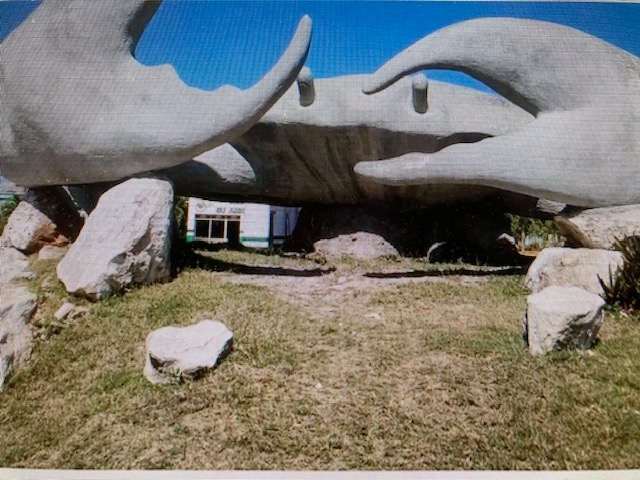
At last we are off the causeway and turning round a roundabout on which sits a giant concrete crab – through its massive pincers I see its bulging eyes. We are on the main island at the small town of Caibarién on the Atlantic coast.
We had commented on this crab, four days ago. And the blocks of flats on the edge of the town built in the 1960s. Once state-of-the-art homes, now in need of repair. They were built for workers in the sugar factory and the small harbour from which sugar was once exported, but no more.
Today, we keep stopping to ask directions. Carlos is not clear where our man lives. In this jumble of tracks, criss-crossed by wires sagging from telegraph poles, it can’t be easy to follow instructions. We drive along streets of much older, colonial style, one-storey houses, with crumbling porticos and faded, peeling paint in every shade: turquoise, yellow, pink.
Eventually, we pull up at one of these and into the van climbs a man in paint-spattered jeans and t-shirt. He has a two-day beard and large hands with which he’s been doing up his home, happily engaged in DIY, until we arrive. He smiles a reluctant sort of smile and Carlos tells me this man has no English. I don’t catch his name and begin to think of him as Dr DIY. He now directs the van to the clinic.
A crowd gathers, a woman holding a baby, children. It’s stopped raining and the sun shines right into the van. I try not to think of my lack of underwear as they lift me out. A horse and cart clip-clops past, hens scratch around the pavement. The kerb is broken; they must lift the trolley to a position where it can be wheeled into the clinic. I notice the words Policlinico II stencilled on the blue-washed wall. Thank you, Ernesto Ché Guevara. No chance of surgery at a primary healthcare centre. Whatever’s happened to my foot can’t be that bad.
There are colourful walls in the waiting room and many rows of chairs but only one woman waiting. There is a blackboard with a chalked handwritten list that seems to relate to today. I’m wheeled into a room off this waiting area. Along the far wall a sink unit and surface all white tiled but not clean. Above it a window barely covered with a tattered curtain.
Dr DIY finds a bucket and begins to mix what I take to be, hope is, plaster of Paris and try to block out the fact that I have an urgent need to pee. Instead, I begin believe this means an end is in sight – I have a broken bone and Dr DIY’s cast is the solution! He works swiftly, but what he puts on my leg is only half of a plaster cast.
‘Back slab,’ explains Carlos, ‘to hold foot in place.’ In this firm gutter my leg can rest, my foot will be restricted in its movement but clearly, and I see it on Carlos’s face, this not a solution.
Nobody has named the injury or explained the protruding bone or said how routine this might be or how serious. But it’s becoming clearer by the minute that treating what they’d seen on the x-ray is beyond this facility.
‘When plaster is set, he will bandage, make secure,’ explains Dr Carlos. Clearly Dr DIY is not an orthopaedic surgeon. He may not even be a doctor but a maker of plaster casts. Will there be a hospital in Santa Clara or Havana that can properly set the bone? With the right expertise bones can be manipulated into a cast, can’t they? What do I know – I’ve never broken a bone before. And, could I make a ten-hour flight with a tight cast on my leg?
I don’t want to be a nuisance but I’ve needed to pee since they wheeled me in. Now it’s urgent. I don’t want the indignity of peeing all over their trolley but, equally, I don’t want to make more demands. In the end I figure getting me to a toilet is less trouble than cleaning up after me.
‘Toilet? Is possible?’ I venture.
‘Soon.’ Dr Carlos puts a hand on my shoulder and points to Dr DIY preparing to swathe the plaster gutter in lint and bandages. He leaves the room as the last of the bandage is taped into place, returns with a shiny stainless steel bedpan. Relief.
Back in the van, there are rapid discussions in Spanish between Belkis, Carlos and DIY. I listen out for the words, Santa Clara. No. This is about money. I have the sense that my treatment has been unofficial. At the first clinic it was agreed we’d pay the hotel with a credit card and they would settle the account. The polyclinic is a place for free primary, preventative healthcare for Cubans not A&E for pesky tourists. Out of kindness they have brought me here rather than schlepped me all the way to Santa Clara. Out of kindness Dr DIY agreed to help.
As it’s our last day we are running low on Cuban currency. David counts all the CUCs[iii] we have and offers the notes to Dr DIY. We’ve been told a CUC is worth 25 times more than the local currency, the CUP. We can only hope the amount we give isn’t insulting. Dr DIY looks hesitant, awkward, pauses before he takes it. Why? Because it’s unofficial, because it’s too much, not enough?
For the first time he speaks. Pointing to my pristine plaster says:
‘You go your country. See doctor. Soon.’
Dr Carlos looks disappointed but has to agree.
When we pull up outside DIY’s place. He gestures for me to sit up, points towards his house and encourages me to wave to his wife. There, in the doorway, of a modest home that is under substantial repair, sits a smiling woman with a child on her lap. The child is all uncoordinated movement, limbs everywhere, severely disabled. I wave, and his wife waves back.
On the return journey to the hotel, back through the sea, Dr Carlos, with some translation from Belkis, explains that Dr DIY works very long hours. His wife finds it hard to cope on her own with the child and often calls him to come home. And I have taken precious time from his day off, time with his family.
I would like to know more – does Dr DIY work at the other clinics, does Carlos sometimes work at the polyclinic? Clearly they know each other well. Clearly both are committed to caring but are working with scant equipment, doing what they can with so little. I can’t ask complicated questions because I don’t have the Spanish. Even if I did I’m not sure I trust myself to speak because, after all, this isn’t really happening.
‘What time is it?’ Eventually I try out words that do seem to come from me.
‘Eleven-thirty.’
Over four hours since something unpleasant happened in the shower. Two hours since the bus left for Havana without us. Now, it seems we are travelling backwards, skimming through sea to the cayo and, hopefully, through time where I may unslip in the shower, watch as the foot realigns with my leg, climb back into bed to start Sunday again. In reality, as it’s December, high season, with hotels all fully booked, we will arrive at the hotel we should have checked out of to find our electronic room key no longer recognises us.
Part 2 of Footnotes was published on Thursday 31 December 2021you can read it Here
Pamela Johnson is the author of three novels Under Construction, Deep Blue Silence and Taking In Water, which was supported by an Arts Council Writers’ Award. Her poems appear in magazines and anthologies. She has also published short stories, art criticism and journalism.
From 2002-2018 she taught fiction on the MA in Creative & Life Writing, Goldsmiths, University of London, and has devised writing workshops in a range of contexts: schools, community groups, U3A, residential courses for The Arvon Foundation.
[i]On Revolutionary Medicine, Ernesto Guevara, originally spoken August 19, 1960 to the Cuban Militia. Online version at Ché Guevara Internet Archive, 1999, translated by Beth Kurti
[iii] back in 2015 Cuba operated a dual currency system. Tourists use Cuban Convertible Peso (CUC), locals use the Cuban Peso (CUP). The CUP is worth much less than the CUC; US dollars aren’t accepted as legal tender. From January 2021 this system is now being phased out.





 Blue Door Press